



































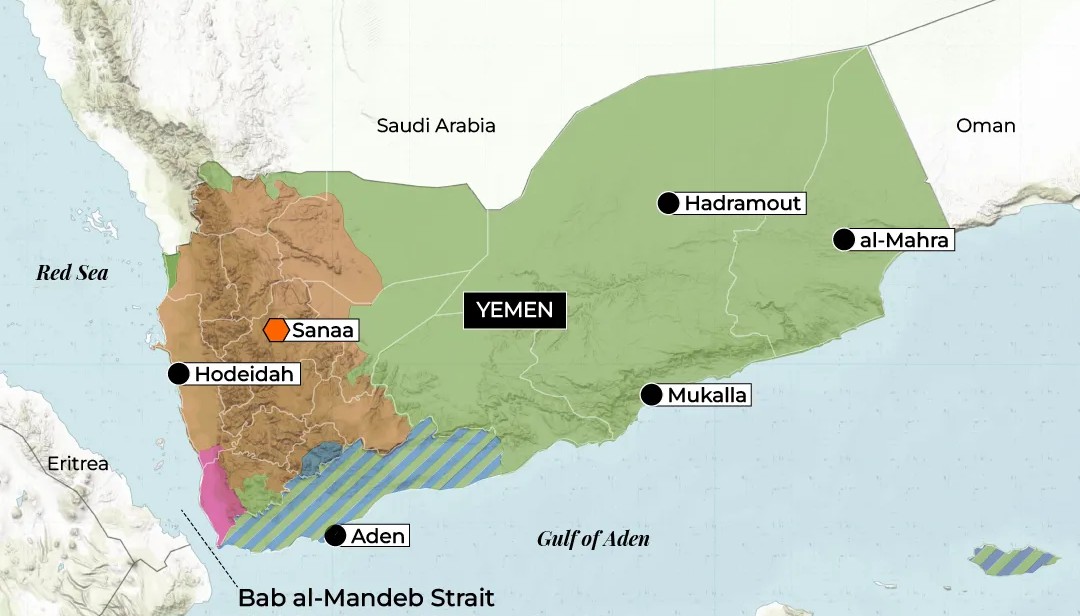
History of the Houthis
The roots of the Houthis trace back to the Zaydi Shia tradition, which has existed in the northern mountains of Yemen for over a millennium. Zaydism is known as the Shia sect closest to Sunnism in terms of core tenets, and it has historically formed the political and religious backbone of Yemen. With the collapse of the monarchy and the establishment of the republic in Yemen in the mid-20th century, Zaydi rule came to an end, and this community gradually became marginalized relative to the central government. By the 1990s, in the Saada region near the Saudi border, the fear of losing this sectarian identity, combined with backlash against Saudi-backed Wahhabi influence entering the region, laid the historical groundwork for the movement.
How Did They Emerge?
The group was founded in the early 1990s by Hussein Badreddin al-Houthi as a religious-cultural youth movement named the “Believing Youth” (Al-Shabab al-Mu’min). Initially gaining a grassroots following through summer camps, social welfare, and religious education, the movement quickly politicized due to the Yemeni government’s economic neglect of the Saada region. Shifts toward an anti-American and anti-Zionist stance following the 2003 US invasion of Iraq brought the Houthis into direct conflict with the administration of then-President Ali Abdullah Saleh. Engaging in six bloody wars with the government between 2004 and 2010, the group grew stronger despite the killing of their leader, Hussein al-Houthi. Capitalizing on the power vacuum created by the 2011 Arab Spring, they seized the capital, Sanaa, in 2014, becoming the country’s primary military force.
Saudi Arabia and Iran’s Proxy War
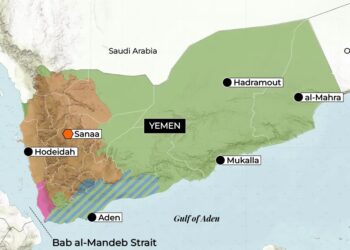
Yemen serves as the most critical proxy war theater between Iran and Saudi Arabia in their struggle for influence across the Middle East. In line with its “Axis of Resistance” strategy, Tehran supports the Houthis with ballistic missiles, drones, and military equipment. This allows Iran to maintain continuous security pressure on Saudi Arabia’s southern border while securing a strategic leverage point over global maritime trade via the Bab al-Mandab Strait.
Saudi Arabia and UAE Rivalry
Forming a joint coalition against the Houthis in 2015, Saudi Arabia and the United Arab Emirates (UAE) eventually came into direct friction due to diverging on-ground objectives. While Saudi Arabia advocates for a unified, centralized Yemeni state to ensure its own border security, the UAE has backed the separatist Southern Transitional Council (STC) in the south as part of its strategy to control ports and shipping lanes in the Red Sea and Gulf of Aden. This divergence led to clashes between proxy groups supported by the two Gulf coalition partners, plunging the coalition into a deep crisis.
Why Are They So Critical?
The fundamental factor setting the Houthis apart from an ordinary armed group and placing them at the center of the global agenda is their geopolitical position and regional dynamics. They are situated right along the Bab al-Mandab Strait, a vital artery of global maritime trade connecting the Red Sea to the Gulf of Aden. As one of the most active arms of Iran’s regional “Axis of Resistance,” they possess the capability to directly paralyze international maritime traffic using ballistic missiles, kamikaze drones, and armed speedboats. Because this threatens not only the security of Saudi Arabia and Gulf nations but also directly impacts global supply chains, energy prices, and Western economies, the Houthis represent one of the most critical squares on today’s global chessboard.
For an in-depth analysis of the regional rivalry and power balances, you can check Ismail El-Suhayli’s study published in January 2026, titled The End of Gray Balances: Eastern Yemen, Saudi Security Imperatives, and Yemeni Unity. The study analyzes the shift in eastern Yemen (Hadhramaut and Al-Mahrah) in late 2025 and early 2026 through the lens of the strategic rift between the Arab Coalition’s two primary actors, Saudi Arabia and the UAE.