

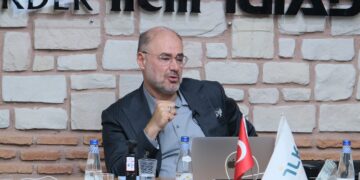
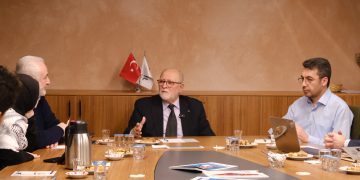
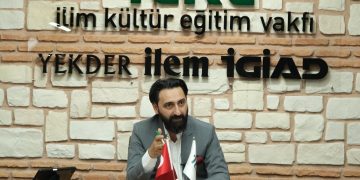
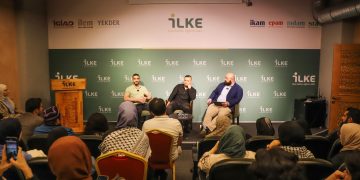


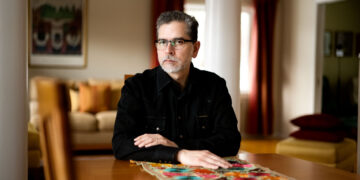


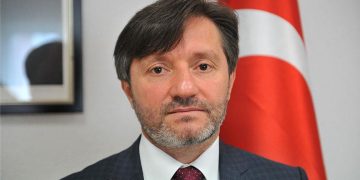


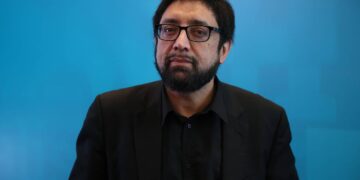


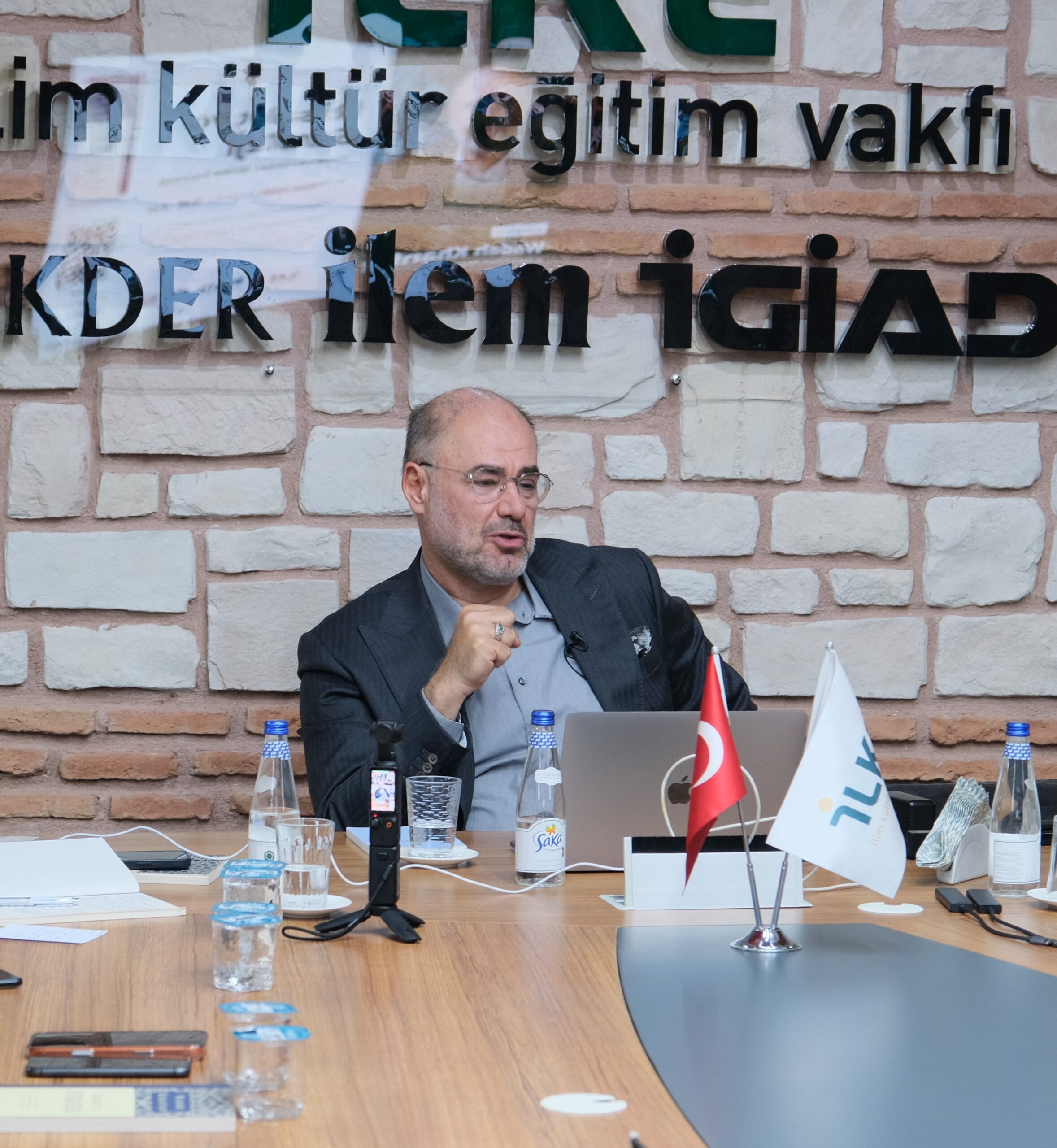
On October 7, we hosted Wadah Khanfar, President of Al Sharq Forum, in our seminar titled “Prophethood and Strategy: Thinking Ethics and Power Together.” Delivering the opening remarks, Atty. Ahmet Sait Öner, Chairman of the Board of the ILKE Foundation, emphasized the importance of rethinking prophetic strategy, noting that the discourse and stance challenges faced by foundations, associations, and Islamic movements in Turkey stem from an insufficient emphasis on the exemplary conduct of the Prophet. The seminar was moderated by Assoc. Prof. Elyesa Koytak, Vice Chairman of the Board of the ILKE Foundation. Koytak stated that Khanfar’s book, published in Turkish, moves the sirah beyond a mere chronological narrative and focuses on how the Prophet interpreted circumstances and determined his timing.
Wadah Khanfar began his speech by stating that the transformation the world is undergoing today signals not merely the end of a world order, but the end of a civilizational cycle. He noted that Western civilization, which established dominance through globalization on a scale unprecedented in history, has exhausted its foundational principles and values, and that the events following October 7 serve as moral and political evidence of this reality. Reminding the audience that the last six world orders were entirely Western, Khanfar stated that the emerging order, driven by China and other rising actors over the next fifteen years, will not be Western.
Pointing out that most civilizations in history, from China to Egypt and from Babylon to Islamic civilization, struck a balance between worldly affairs and divine purpose, Khanfar explained that he terms these “Civilizations of Mizan (Balance).” In contrast, he emphasized that Western civilization severed this connection over the past two centuries; starting with Machiavelli, politics was detached from morality and reduced to a matter of power balances and self-interest. He remarked that Machiavellian politics has become the norm across many societies today, including Muslim ones, and that politicians who do not conform to this approach are viewed as utopian. Khanfar stated that alongside the decline of the West, humanity now stands on the brink of a global debate over the true meaning of politics and strategy.
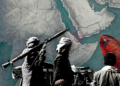
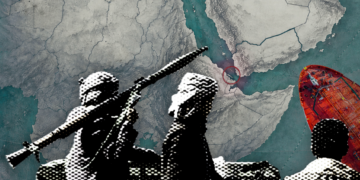
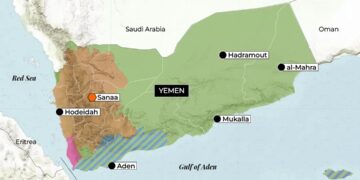
Projecting that a new world order will not emerge in the short term and will require at least ten to fifteen years, Khanfar noted that four distinct orders will interact during this transitional period. The first of these is the military-security order centered around the United States; the second is the economic order led by China, where all actors maintain a seat at the table; and the third is the artificial intelligence and technology order, currently controlled by only a handful of corporations. Describing the fourth order as the “out-of-system sphere,” Khanfar emphasized that actors challenging existing structures, ranging from the Houthis in Bab al-Mandab to the Taliban, and from non-state actors to rising right-wing nationalists in the West, will play a decisive role during this transition. He stated that the ability to challenge trillion-dollar fighter jets with drones costing a few thousand dollars demonstrates a fundamental paradigm shift.
Noting that the ummah has endured one of the worst geopolitical and strategic positions in its history over the past century, Khanfar recalled that throughout history, despite political divisions, the concept of the ummah always superseded the state, and an individual’s allegiance belonged to the ummah rather than the state. Citing Ibn Khaldun, who was born in Tunis and rose to become Chief Judge in Mamluk lands, Khanfar observed that even during the political decline of the Abbasids, the ummah was at its zenith through its scholars, philosophers, and jurists. He explained that after World War I, the West exported the concept of the nation-state to the Muslim world, while after World War II, it adopted the ideal of unity to establish the European Union. Noting that the nation-state severed memory in Muslim societies and sanctified borders, turning energy once directed outward into defense against neighbors, Khanfar emphasized that there can be no strategy without history. He argued that this rupture created a kind of “strategic dementia,” leaving strategic thinking in the Muslim world shallow.
Addressing the position of the Prophet in this debate, Khanfar stated that in an era where everything is changing rapidly, there is a need for solid ground to anchor oneself, and that this ground is the Quran and its earthly manifestation, the sirah. He remarked that for the Prophet, politics was an application of morality, noting that while Islamic civilization views corruption as a deviation from the truth, Machiavellian philosophy treats it as an inevitable reality to be accepted. Explaining that the Prophet was a realist whose realism aimed to elevate reality to a higher moral plane, Khanfar noted that he conceptualizes this approach through a theory of realism developed with reference to the objectives of Islamic law (maqasid al-Shariah).
In his study of the sirah, Khanfar stated that he identified how the Prophet consistently kept Al-Quds in mind as the next step after unifying Arabia. He noted that Surah ar-Rum was revealed in 614, the year Al-Quds was captured by the Persians, and that the journey of Isra carried guidance on statecraft and governance. He highlighted that even when the Persians were weakened, the Prophet directed his military expeditions toward Byzantium and Palestine rather than Persia, essentially drawing a strategic map through the treaties he concluded with regional populations at Tabuk, with his final command before his passing also pointing in this direction. Khanfar observed that Abu Bakr dispatching armies to Palestine immediately upon assuming the caliphate demonstrated that this strategy was clearly understood by the Companions, defining this region as the “sacred geography” that the ummah must safeguard to preserve its unity.
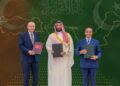
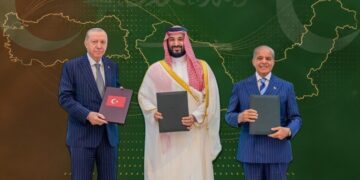
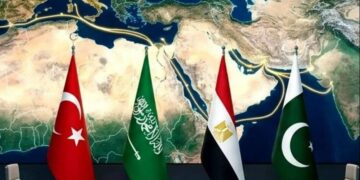
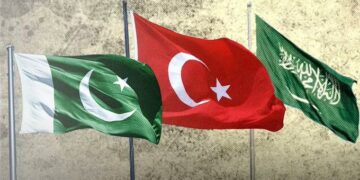
Answering a question in the Q&A session regarding the nation-state and social mobilization, Khanfar emphasized that dismantling nation-states would result in civil war and collapse, and that the real solution lies in integration. While he viewed the Mecca Agreement as a positive step, he noted that defense cooperation unsupported by economic integration and political coordination cannot be sustainable. In response to a question on divisions among Muslims, he stated that differences are natural, and the goal is not to unify ideologies, but to pool resources together. Pointing to France and Germany, who sat down together to forge unity shortly after World War II, Khanfar remarked that the belief that Muslims cannot achieve this is a product of a colonial mindset.
Responding to a question on whether the internet could serve as an antidote to the ummah’s memory loss, he replied that while we possess numerous tools, what we lack is a compass. Stating that historical knowledge remains merely informative unless tied to a grand strategy, Khanfar stressed that whenever the ummah turned toward integration, power and prosperity prevailed, whereas periods of fragmentation were dominated by weakness and poverty. Khanfar concluded his speech by calling on Muslim scholars working in international relations and strategy to develop alternative paradigms without remaining confined by Western frameworks. The program concluded with a book signing session.