













Like the cosmos (ʿālam) itself, the human being is a complex whole in which numerous elements exist in relation to one another. Understanding the inner world of a person is therefore no simple task. Yet how we define our inner world matters a great deal, for it shapes how we treat ourselves and the direction in which we seek to change. Concepts enable us to describe our inner lives, but their role does not end there: they also determine what we regard as healthy or problematic, and what we consider virtuous or mature. For this reason, the concepts through which we make sense of ourselves must both accurately reflect the reality of human nature and remain consistent with the truth we believe in and the maturity we aspire to attain.
The Conceptual Crowding of Psychology
Although the effort to understand the human soul and behaviour is ancient, psychology became institutionalised as an independent scientific discipline only in the late nineteenth century. Over its short history, this young discipline has produced a vast number of theories, constructs, and measurement instruments to explain human beings. Alongside a substantial body of knowledge, this output has also brought conceptual proliferation and, at times, a veritable crowd of concepts. The same phenomenon is studied under different names, the same term is used in divergent senses, and new constructs are developed without their relationship to existing concepts being adequately established. All of this makes it difficult for psychology to develop a shared language. Discussed in the literature as construct proliferation and the jingle-jangle problem, this situation hinders the comparison of research findings and the accumulation of knowledge on a common theoretical foundation.
I believe that at the root of this conceptual crowding lies the absence of a shared conception of the human being capable of guiding research. In the absence of an overarching framework concerning human nature, each theory explains a particular aspect of the person in its own terms; yet where these concepts belong within the human being as a whole, and how they relate to one another, remains unclear. As a result, knowledge multiplies but fails to become integrated to the same degree.
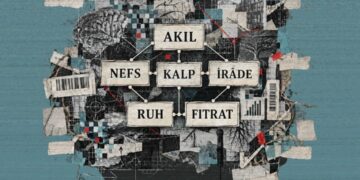
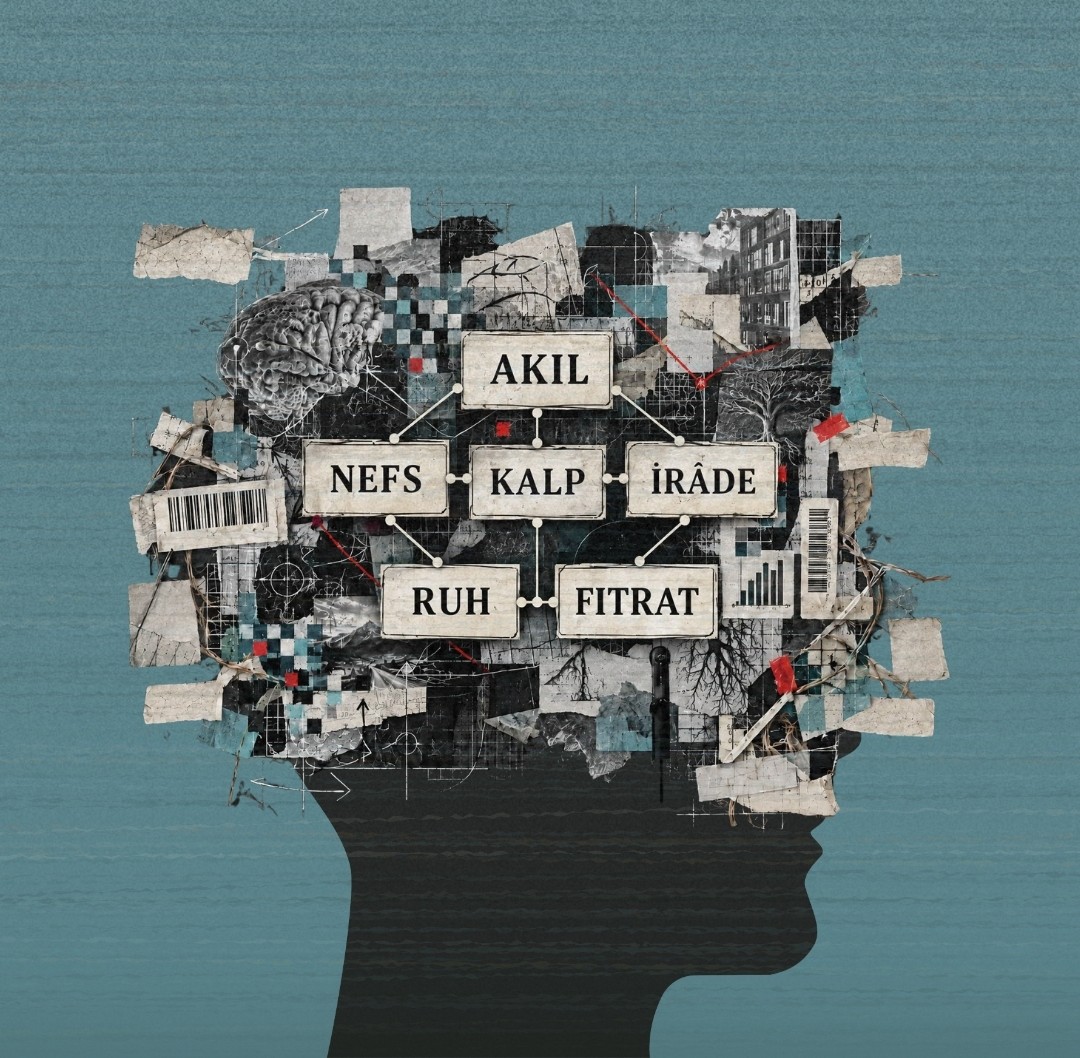
Islamic thought, by contrast, offers a framework concerning the structure of the human being, the purpose of creation, and the direction of human maturation. Concepts such as the self (nafs), the heart (qalb), the intellect (ʿaql), the spirit (rūḥ), the primordial nature (fiṭra), and the will (irāda) make it possible to understand the human being not as a collection of fragments but as an integrated whole. Yet although we Muslims have brought this rich understanding of human nature into the literature at the theoretical level, its reach remains limited, and we are still far from examining it empirically. In my view, through empirical studies that articulate the conception of the human being found in Islamic thought and that proceed from it, we can turn towards understanding the as-yet-unexplored dimensions of this whole rather than producing constructs in isolation from one another. In this way, we can develop a more holistic and cumulative understanding of the human being.
Towards What Do We Change as We Heal?
In response to this need for integration within psychology, psychotherapy theories have put forward relatively coherent explanatory frameworks concerning the human being. Indeed, a coherent account of human structure and functioning is essential both for individuals to cope with their psychological problems and for psychotherapists to deliver effective treatment. Here, too, combining concepts and techniques drawn from different schools without taking into account the understanding of the human being on which they rest may lead to theoretical confusion rather than a genuinely integrative approach. The central criticism directed at eclectic approaches in psychotherapy, which may emerge without regard for coherence among theory, concepts, and techniques, is likewise not that they draw on different schools as such. Rather, it is that such borrowing can turn into haphazard selectivity, thereby overlooking the fact that these theories sometimes rest on mutually incompatible conceptions of human nature and change.
At the same time, every mode of explanation, and hence every school of psychotherapy, foregrounds a distinct understanding of change and maturation. Psychodynamic approaches emphasise insight and the understanding of unconscious conflicts; cognitive-behavioural approaches emphasise more realistic and functional thinking; humanistic approaches emphasise self-actualisation and authenticity; and third-wave cognitive and behavioural approaches emphasise acceptance, awareness, and living in accordance with one’s values. Therapy thus ceases to be merely a process of symptom reduction; it also offers certain standards regarding what kind of person we ought to become and in which direction we ought to change.
It is precisely at this point that Muslims’ engagement with the language of psychology calls for a second kind of conceptual attentiveness. The Qur’an’s account of God teaching Adam the names points to the significance of the human capacity to recognise, distinguish, and name things (al-Baqara 2:31). Naming is not merely a matter of choosing a word; it also determines how we perceive a thing, how we situate it in relation to other things, and how we treat it. For this reason, when a Muslim names a state of his or her inner world or a psychological phenomenon, he or she should look not only to the current psychological literature but also to such questions as: “With what concepts does the Qur’an explain this state?” and “How have Muslim thinkers understood this aspect of the human being?”
This emphasis should not be understood as closing ourselves off from modern psychology or as an attempt to find a direct religious equivalent for every psychological concept. Psychology can offer valuable knowledge that explains certain aspects of human experience, and when speaking with the wider world, it may also be necessary to use a shared and contextually appropriate language. However, the fundamental conceptual world through which a person speaks to himself or herself, gives direction to his or her life, and determines what he or she will change towards must be consistent with his or her faith. The issue is not to abandon the language of psychology, but to remain aware of the understanding of the human being and of life from which the concepts we use arise, and of what they bring into view and what they leave out.
We may therefore say that, for Muslims, conceptual coherence has two dimensions: the internal integrity of the concepts used within their own theoretical framework, and the compatibility of that framework with religious and cultural values. Even if a school of psychotherapy is internally coherent, it may carry assumptions about human purpose, health, and maturation that are at odds with a Muslim’s world of faith. Attention should therefore be paid not only to the theoretical relationships among concepts themselves, but also to their relationship with the person’s world of truth and values.
What Path Might We Follow?
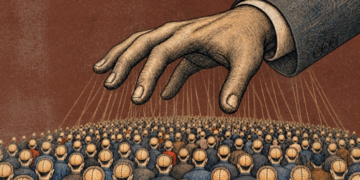
The theoretical integrity maintained in psychotherapy can be largely lost when psychological concepts migrate to social media and everyday language. In recent years, as the language of psychology has spread across social media, concepts and expressions such as “trauma”, “going back to childhood”, and “narcissistic spouse” have entered our everyday vocabulary. Mental health content on social media has also attracted the attention of researchers and become the subject of numerous studies. This research shows that such content can help people make sense of their experiences, but that detaching concepts from their contexts can lead to the pathologisation of ordinary human experiences, to people misdiagnosing themselves or others, and to the interpretation of relationships through ready-made templates.
We should therefore not embrace every psychological concept we encounter as a definitive truth that explains ourselves or others. Rather, we should seek to understand within which theoretical framework a concept acquires its meaning, what it explains, where its limits lie, and in which direction it calls a person to change.
In the therapeutic process, attention should be paid both to theoretical coherence and to religious and cultural compatibility. It is a Muslim client’s most natural right to wish for his or her beliefs and values to be taken into account in therapy. The therapist, in turn, should strive to understand these sensitivities and, if he or she feels insufficiently competent in this regard, should refer the client to an appropriate specialist. Attending to the client’s world of values should be regarded not as something merely desirable but as part of the therapist’s ethical responsibility.
In academia, too, there is a need to produce more knowledge that seeks to understand the human being on the basis of our own conceptual world. Islam and psychology studies, pioneered by Malik Badri and developing in recent years both in Türkiye and internationally, offer various responses to this need. Some of these studies explain the human being through the concepts of the Qur’an, the Sunnah, and the Islamic intellectual tradition; others integrate Islamic concepts and practices with evidence-based psychotherapy approaches; and still others adapt existing approaches to the religious and cultural sensitivities of Muslims. In Türkiye, where religious matters carry historical and social sensitivities, it is particularly important to develop a language that takes into account the form of a person’s relationship with religion and the place of religion in his or her life. The solution here lies in being able to engage with the wider world without setting religious knowledge against scientific knowledge and without becoming alienated from our own conceptual world.
Conclusion
The language of psychology enables people to recognise the difficulties they face, to put a name to what they are experiencing, and to seek help when needed. Yet no concept can fully explain the human being. Concepts are not truth itself; they are tools that allow us to see a particular aspect of the reality of human nature. For this reason, we should refrain from applying every concept we encounter on social media to ourselves or to others, and we should ensure that the approach used in therapy is both internally coherent and compatible with our world of values. In academia, meanwhile, we need to produce more knowledge that seeks to understand the human being on the basis of our own conceptual world.
For Muslims, the issue is neither to reject the language of psychology altogether nor to find a direct religious equivalent for every psychological concept. The issue is to benefit from what psychology has to offer without becoming alienated from our own understanding of the human being and of maturation. We may use a shared language when speaking with the wider world, but we must remain aware of the concepts through which we speak to ourselves, of what these concepts bring into view and what they leave out, and of what kind of person they call us to become.
Acknowledgements: The intellectual framework of this article was shaped in important ways by the research and consultations on the conceptual foundations of Islam, psychology, and psychotherapy that I have undertaken with Dr. Taha Burak Toprak and my colleagues at the Association for Psychology and Psychotherapy Research (Psikoloji ve Psikoterapi Araştırmaları Derneği). I am grateful to them for their valuable contributions.
References
Anvari, F., Alsalti, T., Oehler, L. A., Marion, Z. H., Hussey, I., Elson, M., & Arslan, R. C. (2025). A fragmented field: Construct and measure proliferation in psychology. Advances in Methods and Practices in Psychological Science, 8(3), 25152459251360642. https://doi.org/10.1177/25152459251360642
Hodson, G. (2021). Construct jangle or construct mangle? Thinking straight about (nonredundant) psychological constructs. Journal of Theoretical Social Psychology, 5(4), 576–590. https://doi.org/10.1002/jts5.120
Keshavarzi, H., & Haque, A. (2013). Outlining a psychotherapy model for enhancing Muslim mental health within an Islamic context. The International Journal for the Psychology of Religion, 23(3), 230–249. https://doi.org/10.1080/10508619.2012.712000
Podsakoff, P. M., MacKenzie, S. B., & Podsakoff, N. P. (2016). Recommendations for creating better concept definitions in the organizational, behavioral, and social sciences. Organizational Research Methods, 19(2), 159–203. https://doi.org/10.1177/1094428115624965
Reilly, J., Shain, C., Borghesani, V., Kuhnke, P., Vigliocco, G., Peelle, J. E., … Vinson, D. (2025). What we mean when we say semantic: Toward a multidisciplinary semantic glossary. Psychonomic Bulletin & Review, 32(1), 243–280. https://doi.org/10.3758/s13423-024-02556-7
Rizwan, B., & Weigle, P. E. (2025). Paging Dr. Influencer: Social media and psychiatric self-diagnosis. Pediatric Clinics of North America, 72(2), 267–278. https://doi.org/10.1016/j.pcl.2024.09.003
Rothman, A., & Coyle, A. (2020). Conceptualizing an Islamic psychotherapy: A grounded theory study. Spirituality in Clinical Practice, 7(3), 197–213. https://doi.org/10.1037/scp0000219
Safran, J. D., & Messer, S. B. (1997). Psychotherapy integration: A postmodern critique. Clinical Psychology: Science and Practice, 4(2), 140–152. https://doi.org/10.1111/j.1468-2850.1997.tb00106.x
Starvaggi, I., Dierckman, C., & Lorenzo-Luaces, L. (2024). Mental health misinformation on social media: Review and future directions. Current Opinion in Psychology, 56, 101738. https://doi.org/10.1016/j.copsyc.2023.101738
Toprak, T. B. (2021). İslam ve psikoterapi: Bir model ve uygulama örneği [Islam and psychotherapy: A model and a case application]. In T. B. Toprak (Ed.), İslam düşüncesinde psikoloji ve psikoterapi: Sağlam temeller ve yeni ufuklar [Psychology and psychotherapy in Islamic thought: Solid foundations and new horizons] (pp. 151–210). Muhit Kitap.
Toprak, T. B. (2023). Bir yol haritası denemesi [An attempt at a roadmap]. In T. B. Toprak (Ed.), Psikoloji tarihini yeniden düşünmek [Rethinking the history of psychology] (pp. 249–251). Muhit Kitap.
Toprak, T. B. (2024). Rethinking cognitive psycho-education—4T model—in the psychotherapy of religious obsessive-compulsive disorder: Report of three resistant cases. Spiritual Psychology and Counseling, 9(1), 75–105. https://doi.org/10.37898/spiritualpc.1319545
Toprak, T. B. (2025). Rethinking psycho-ontology in the context of Ilm an-Nafs (the study of self by Muslim scholars) and clinical applications. Spirituality in Clinical Practice, 12(2), 238–266. https://doi.org/10.1037/scp0000390
Toprak, T. B. (2026a). İki kanatlı hayat: Kendini anlama ve değiştirme sürecinde din ve bilim birlikteliği [A two-winged life: The unity of religion and science in the process of understanding and changing oneself]. In T. B. Toprak (Ed.), Yaşamı yeniden düşünmek [Rethinking life] (pp. 15–24). Muhit Kitap.
White, E., & Hanley, T. (2025). “What I share is not the same as therapy”: Psychologist experiences of Instagram use as a mental health influencer. Psychology and Psychotherapy: Theory, Research and Practice, 98(3), 624–642. https://doi.org/10.1111/papt.12585