İLKE Vakfı
Platform
tr Türkçe en English
No Result
View All Result
  • PLATFORM
  • NEWS
    İLKE Agenda: Wadah Khanfar ile Risalet ve Strateji: Ahlak ve İktidarı Birlikte Düşünmek

    ILKE Agenda: Prophethood and Strategy: Thinking Ethics and Power Together with Wadah Khanfar

    İLKE Agenda: Muzzammil Ayyub Thakur ile Keşmir’in “Filistinleştirilmesi”

    The Platform Talks: Palestine after October 7 with Azzam Tamimi

    İLKE Agenda: Muzzammil Ayyub Thakur ile Keşmir’in “Filistinleştirilmesi”

    The Palestine Talks: Syria after December 8 with Kinda Hawasli

    İLKE Agenda: Muzzammil Ayyub Thakur ile Keşmir’in “Filistinleştirilmesi”

    İLKE Agenda: The “Palestinization” of Kashmir with Muzzammil Ayyub Thakur

    İLKE Agenda: Muzzammil Ayyub Thakur ile Keşmir’in “Filistinleştirilmesi”

    Khaled Beydoun: “Islamophobia is a modern manifestation of the crusades”

    Filistin Sempozyumu: Filistin ve Küresel İlişkilerin Geleceği

    Palestine Symposium: Palestine and the Future of Global Affairs

    The Conference on Contemporary Muslim Thought

    The Conference on Contemporary Muslim Thought

    Filistin Sempozyumu: Filistin ve Küresel İlişkilerin Geleceği

    Exploring Islam’s View on Slavery and Blackness: Seminar by Jonathan A.C. Brown

  • ANALYSIS
    • All
    • Culture, Arts and Media
    • Economy
    • Education
    • Energy and Environment
    • Fundamental Rights and Freedoms
    • Migration
    • Opinion
    • Social Issues
    Doğu ile Batı Entelektüel Çevrelerini Etkileyen Alim ve Mütefekkir: Draz’da “Ümmet” Bilinci

    A Scholar and Thinker Who Influenced Eastern and Western Intellectual Circles: The Consciousness of the “Ummah” in Draz

    Antalya’da İklim Adaleti: COP31 İklim Müzakerelerinde Küresel Güney’in Sesi

    Climate Justice in Antalya: The Voice of the Global South in the COP31 Climate Negotiations

    Israel’s 27 October Elections: What the Ballot Box Changed, and What It Could Not

    Israel’s 27 October Elections: What the Ballot Box Changed, and What It Could Not

    Kavramsal Kalabalıkta Kendini Anlamak: Müslümanlar için Psikoloji Dilinin İmkanları ve Riskleri

    Understanding the Self Amid a Crowd of Concepts: The Possibilities and Risks of Psychological Language for Muslims

    11 Eylül Saldırılarının 25. Yılında Medyada Oryantalist Söylem

    Orientalist Discourse in the Media on the 25th Anniversary of the September 11 Attacks

    Why Do Military Developments in Bab al-Mandab Matter to the Region and the World?

    Why Do Military Developments in Bab al-Mandab Matter to the Region and the World?

  • INTERVIEWS
    Raşid Gannuşi’nin Düşünsel Mirası Üzerine Bir Söyleşi

    An Interview on the Intellectual Legacy of Rached Ghannouchi

    A Conversation with Dr. Fadi Zatari on Zionist Terrorism and the Palestinian Resistance

    A Conversation with Dr. Fadi Zatari on Zionist Terrorism and the Palestinian Resistance

    Veri Sömürgeciliği, Yapay Zeka ve Dijital Geleceğimiz: Prof. Ulises Ali Mejias ile Söyleşi

    Data Colonialism, Artificial Intelligence, and Our Digital Future: An Interview with Prof. Ulises Ali Mejias

    Casir el-Bergusi ile Filistin Mücadelesi ve Esaret Yılları Üzerine Bir Röportaj

    An Interview with Jaser Albarghouthi on the Palestinian Struggle and the Years of Captivity

    The Decolonization of Knowledge: Interview with Professor Souleymane Bachir Diagne

    The Decolonization of Knowledge: Interview with Professor Souleymane Bachir Diagne

    A Possible New Breath in Regional Balances: The Alliance of Türkiye, Pakistan, Egypt, and Saudi Arabia

    A Possible New Breath in Regional Balances: The Alliance of Türkiye, Pakistan, Egypt, and Saudi Arabia

    From the Ballot Box to the Street: The Rising Social Wave in Tanzania After the Election

    From the Ballot Box to the Street: The Rising Social Wave in Tanzania After the Election

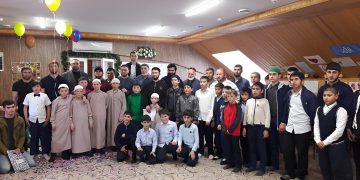
    Kafkasya’da Müslümanlar ve İslami Eğitim: TCDİB Kuzey Kafkasya Koordinatörü Selim Akburak ile Söyleşi

    Muslims and Islamic Education in the Caucasus: An Interview with Selim Burak North Caucasus Coordinator in Directorate of Religious Affairs

    Göçü Yönetmek: Dr. Mehmet Köse’yle Söyleşi

    Interview with Mehmet Köse

  • VOICES
    Anas Altikriti | Voices from the Muslim World | Türkçe Altyazılı

    Anas Altikriti | Voices from the Muslim World | Türkçe Altyazılı

    Basil Mustafa (Oxford) | Voices from the Muslim World | with Turkish subtitles

    Basil Mustafa (Oxford) | Voices from the Muslim World | with Turkish subtitles

    OMAR SULEIMAN | VOICES FROM THE MUSLIM WORLD

    OMAR SULEIMAN | VOICES FROM THE MUSLIM WORLD

    Paul Williams | Voices from the Muslim World

    Paul Williams | Voices from the Muslim World

  • DATABASE
    • All
    • Institutions
    • Movements
    • People
    • Q-A
    Birleşmiş Milletler Nedir?

    What is United Nations?

    COP31 Nedir?

    What is COP31?

    7 Ekim Aksa Tufanı Operasyonu Nedir?

    What is Operation Al-Aqsa Flood?

    Şevket Ali Han

    Shaukat Ali Khan

    Mekke Ortak Savunma Anlaşması Nedir?

    What is Makkah Joint Defence Agreement?

    Husiler Kimdir?

    Who are the Houthis?

    Afrika Haritalarda Neden Küçük Görünüyor?

    Why Does Africa Appear Smaller on Maps?

    Salman Sayyid

    Salman Sayyid

    Muhammed Abdullah Draz

    Muhammad Abdullah Draz

  • DISCOVER
  • AUTHORS
No Result
View All Result
Platform
No Result
View All Result
tr Türkçe en English
Home Interviews

An Interview on the Intellectual Legacy of Rached Ghannouchi

Tasnim Ghannouchi by Tasnim Ghannouchi
24 November 2026
in Interviews
Raşid Gannuşi’nin Düşünsel Mirası Üzerine Bir Söyleşi
Share on FacebookShare on Twitter

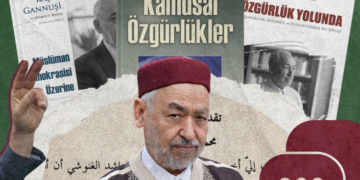
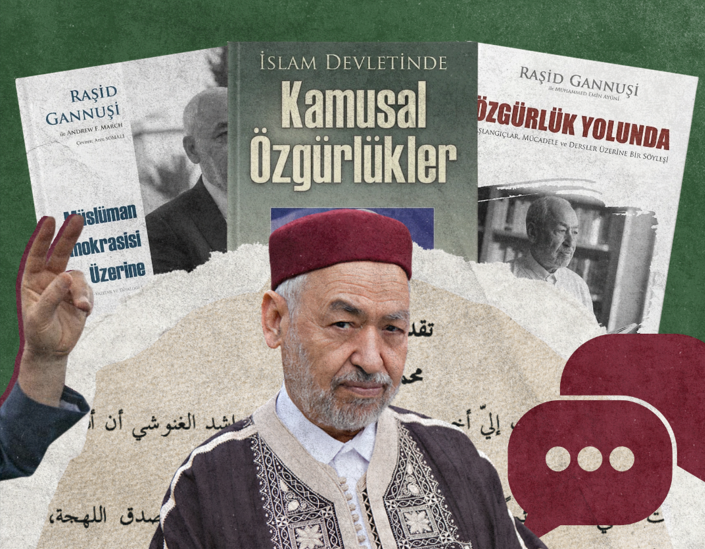
In this interview, we spoke with Tasnim Ghannouchi about how Rached Ghannouchi’s thought treats freedom not merely as a right to be won against political authority, but as a condition for human beings to realise their own will and moral responsibility. We discussed what this understanding of freedom offers today’s young Muslim generation, which themes should be emphasised in passing his intellectual legacy on to future generations and which aspects call for critical re-evaluation, and how decades of exile, political upheaval and imprisonment shaped his theoretical writings.

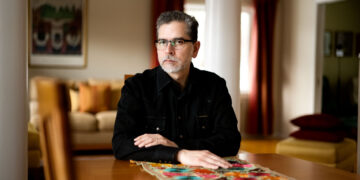
Tasnim Ghannouchi is the daughter of Rached Ghannouchi, co-founder of Tunisia’s Ennahda movement, former Speaker of the Assembly of the Representatives of the People and one of the leading figures of contemporary Islamic political thought. Since her father’s arrest in April 2023, she has brought his trials and his health to public attention through statements and letters issued on behalf of the family. Living abroad, she herself faces prosecution in Tunisia. In this interview, drawing on works such as Public Freedoms in the Islamic State and On Muslim Democracy, she reflects on what her father’s thought means for young people today.

1. In Ghannouchi’s works, freedom is addressed not merely as a right to be won against political authority, but also as a condition for human beings to realize their own will and responsibility. In your view, what is the most important message that his understanding of freedom can offer to today’s young Muslim generation?

I think the most important message my father’s understanding of freedom offers young Muslims is this: your capacity to think, choose and act responsibly is essential to your dignity and to your responsibility before God.

In Public Freedoms in the Islamic State, he connects freedom to moral accountability, or taklīf. If human beings are accountable for their choices, they must have a genuine ability to choose. Faith and virtue acquire their moral significance through that freedom; coercion cannot substitute for conviction. This is also central to his understanding of istikhlāf: human beings are entrusted with responsibility on earth, and fulfilling that responsibility requires the freedom to exercise judgment and initiative.

For young Muslims today, I believe this means developing their own understanding, asking questions and taking responsibility for their decisions. In an environment shaped by political pressure, polarisation and the constant influence of social media, this is a call to resist conformity and cultivate informed, independent judgment. Freedom, in this sense, carries an obligation to consider what we do with our choices and how they affect others.

A second message concerns how young people understand their place in the world. In Public Freedoms, he places justice, dignity and freedom of conscience at the centre of his discussion of Dar al-Islam. The implication is that we should judge societies by how people are treated, rather than by religious labels alone. Whether young Muslims live in Muslim-majority countries or as minorities elsewhere, they can contribute to building a more just society where they are.

Finally, his discussion of democracy and human rights connects freedom to public responsibility. Participation, respect for commitments and resistance to injustice are ways of fulfilling an ethical trust, or amānah. For a generation understandably frustrated with politics, his thought offers a reason to remain engaged: their judgment and contribution matter.

The message I would draw from his work is: exercise your freedom thoughtfully, defend that same freedom for others, and use it to help shape the society you want to live in.

2. A thinker’s legacy survives not only through the reading of their works, but also through the discussion and reproduction of their ideas by new generations. In your view, which issues need to be particularly emphasized in transmitting Ghannouchi’s intellectual legacy to future generations? In what aspects should his thought be critically re-evaluated?

I believe the most important task is to help young people understand my father’s thought as a living invitation to think and take responsibility for their societies. Reading his books is the starting point. His ideas remain alive when young people discuss them, connect them to their experiences and use them to develop responses to the challenges of their societies.

I would emphasise three contributions.

The first is the connection between freedom, human dignity and responsibility. In his thought, freedom is fundamental to the human condition and to our responsibility before God. This provides young Muslims with a strong foundation for defending freedom of conscience, independent judgment and protection from arbitrary authority—for themselves and for others.

The second is equal citizenship. Across Public Freedoms in the Islamic State and On Muslim Democracy, he develops the argument that a country belongs equally to all its citizens, regardless of religion or political background. Drawing on the Charter of Medina, he presents shared rights and commitments as foundations for political community. This is particularly important for young people growing up amid polarisation: belonging to a common country does not require having identical beliefs.

The third is the peaceful, democratic organisation of political life. Elections, accountable institutions, limits on power and the peaceful transfer of office give people ways to manage disagreement without exclusion or violence. His distinction between religious work and party politics is important here too. Faith can inspire public service, while political parties remain accountable for their choices and policies. No party owns religion, and political disagreement should not become a judgment on someone’s faith.

As for re-evaluation, I would frame the task for younger generations as one of renewal and further development. My father’s own intellectual journey involved returning to questions, learning from experience and developing his understanding. Continuing that work means asking what his principles require under the conditions young people face today.

How can equal citizenship become an everyday reality in universities, workplaces and public institutions? How can dialogue and consensus produce agreements that protect rights and remain accountable to citizens? How can young people build organisations in which responsibility is shared and new generations have a meaningful voice? And how can freedom and dignity guide responses to unemployment, inequality and the insecurity that shapes so many young lives?

These are ways of carrying his project forward. They connect the principles he defends in his books to the practical work of making societies more just.

For me, this has a particular meaning while he is imprisoned. His absence is painful, but seeing young people engage with his ideas gives me hope. I would want them to carry forward his conviction that peaceful political participation remains worth defending—even in the most difficult circumstances.

3. Throughout decades of exile, political upheaval, and imprisonment, how did Ghannouchi’s lived experiences reshape his theoretical writings, and what does that interplay between thought and struggle reveal about his character?

I think the relationship between my father’s thought and his lived experience is essential to understanding him. Freedom, political authority and pluralism were questions he explored as a thinker, but they were also realities that shaped his life- as a prisoner, an exile, a political leader and now a prisoner again.

What stands out to me is his willingness to continue thinking through those experiences. His convictions gave him direction, while his encounters with different people and circumstances helped him develop their meaning.

Imprisonment gave the question of freedom a profound urgency. In the first-edition preface to Public Freedoms in the Islamic State, he explains the historical and personal circumstances behind a work that began taking shape in the 1970s and matured through imprisonment in the 1980s. Experiencing repression made the consequences of unchecked authority painfully concrete. How could people be protected from arbitrary power? What guarantees would prevent a ruler from taking away their rights?

His response was to develop the argument that freedom requires institutional protection. A society needs accountable government, rights and limits on authority. For young readers, this connection matters: the principles discussed in the book concern what happens to actual human beings when those protections disappear.

Exile deepened his engagement with pluralism and citizenship. During more than two decades away from Tunisia, much of that time in London, he encountered the everyday realities of life within a constitutional democracy and the experiences of Muslim minorities. These encounters gave practical depth to questions about belonging, religious freedom and participation in a society whose citizens hold different beliefs.

They also strengthened thinking about political community through shared rights and commitments. Working and speaking with people from different intellectual and political backgrounds reinforced his commitment to dialogue across ideological differences. His concern was how people could remain faithful to their convictions while building a common civic life.

Returning to Tunisia after the 2011 revolution brought another kind of test. Ideas developed through opposition and exile now had to guide decisions in a fragile democratic transition. Dialogue meant negotiating with real political opponents. Pluralism meant sharing institutions with people who wanted different things. Democratic responsibility meant seeking agreements while accepting that no single movement could speak for the whole country.

This gave his writing and political thinking a continuing relationship with practice. Experience raised new questions and required further judgment. For young people, I think there is an important lesson here: commitment to principles requires the patience to work through difficult circumstances with others.

His renewed imprisonment makes that relationship between conviction and experience especially painful for our family. Yet his continued commitment to peaceful political change expresses something enduring in his character. After so many years of struggle, he has remained attached to the possibility of a shared national future.

As his daughter, I see in this steadfastness joined to a capacity to learn. He has held firmly to freedom and human dignity while continuing to develop his understanding of how they can be realised. His faith has been a source of strength in that journey.

For the younger generation, that may be the most meaningful example: allow experience to deepen your understanding; listen beyond your own circle; and hold on to your principles without allowing injustice to determine how you treat others. My father’s journey shows the persistence required to keep thinking, contributing and believing in peaceful change, even when the personal cost is very high.

Previous Post

A Scholar and Thinker Who Influenced Eastern and Western Intellectual Circles: The Consciousness of the “Ummah” in Draz

Popüler Seçkiler

Raşid Gannuşi’nin Düşünsel Mirası Üzerine Bir Söyleşi

An Interview on the Intellectual Legacy of Rached Ghannouchi

24 November 2026
Doğu ile Batı Entelektüel Çevrelerini Etkileyen Alim ve Mütefekkir: Draz’da “Ümmet” Bilinci

A Scholar and Thinker Who Influenced Eastern and Western Intellectual Circles: The Consciousness of the “Ummah” in Draz

16 November 2026
Antalya’da İklim Adaleti: COP31 İklim Müzakerelerinde Küresel Güney’in Sesi

Climate Justice in Antalya: The Voice of the Global South in the COP31 Climate Negotiations

10 November 2026
Israel’s 27 October Elections: What the Ballot Box Changed, and What It Could Not

Israel’s 27 October Elections: What the Ballot Box Changed, and What It Could Not

2 November 2026
Kavramsal Kalabalıkta Kendini Anlamak: Müslümanlar için Psikoloji Dilinin İmkanları ve Riskleri

Understanding the Self Amid a Crowd of Concepts: The Possibilities and Risks of Psychological Language for Muslims

27 October 2026
Birleşmiş Milletler Nedir?

What is United Nations?

26 October 2026
İLKE Agenda: Wadah Khanfar ile Risalet ve Strateji: Ahlak ve İktidarı Birlikte Düşünmek

ILKE Agenda: Prophethood and Strategy: Thinking Ethics and Power Together with Wadah Khanfar

22 October 2026
COP31 Nedir?

What is COP31?

20 October 2026
11 Eylül Saldırılarının 25. Yılında Medyada Oryantalist Söylem

Orientalist Discourse in the Media on the 25th Anniversary of the September 11 Attacks

19 October 2026

 Platform: Current Muslim Affairs was established under the İLKE Foundation for Science, Culture and Education as a publication aimed at following and analyzing the intellectual, political, social, economic, and cultural agendas of Muslim societies, while offering original perspectives on the Muslim world.

  • ANALYSIS
  • NEWS
  • INTERVIEWS
  • VOICES
  • platform@ilke.org.tr
  • (0216) 310 43 18
  • Aziz Mahmut Hüdayi Mah. Türbe Kapısı Sk. No: 13 Üsküdar, İstanbul
Instagram X-twitter

2025 @ PLATFORM is an İLKE Foundation organization. All rights reserved.

No Result
View All Result
  • Analyses
  • Interviews
  • Database
    • Q-A
    • People
    • Institutions
    • Movements
  • Voices
  • News
  • DISCOVER
  • Authors