






























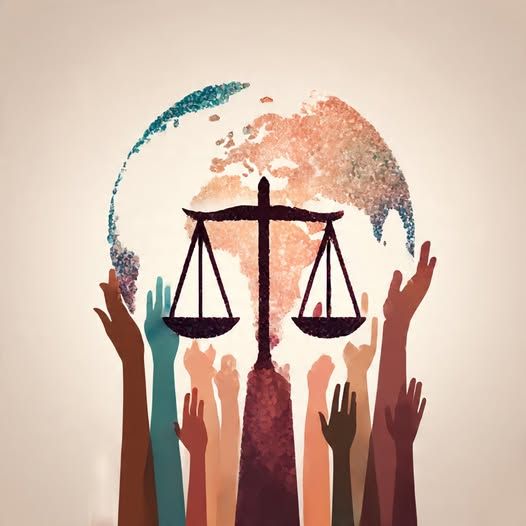
Human rights are commonly described as universal. In recent years, however, this characterization has increasingly been questioned. Are human rights understood and interpreted in the same way across different cultural and social contexts?
What Are Human Rights?
Human rights are the fundamental rights and freedoms that every person possesses simply by virtue of being human. This understanding became a global norm with the adoption of the Universal Declaration of Human Rights (UDHR) by the United Nations in 1948.
Article 1 of the Declaration states: “All human beings are born free and equal in dignity and rights.” This principle reflects the foundational values of equality and justice at the heart of the human rights framework. Accordingly, human rights apply to all individuals regardless of their identity and are considered to exist independently of state authority.
Why Are They Being Questioned?
Critics argue that the contemporary human rights framework, shaped largely by the historical experiences and intellectual traditions of the West, may not be as culturally neutral as it is often presented. As a result, it may not fully reflect the values, priorities, or social understandings of non-Western societies.
The debate over the universality of human rights therefore concerns whether these rights are truly universal or whether they primarily reflect a particular philosophical and cultural perspective. From this viewpoint, the language of “universality” can sometimes create the appearance of neutrality while also serving as a political instrument.
What Do Cultural Differences Mean?
Rights and freedoms may be interpreted differently according to the cultural, historical, and social characteristics of individual societies. Questions such as Should the individual or the community take priority?, Should order come before liberty?, or Should religion play a role in law? often lead to different conceptions of human rights and their implementation.
Can Universality Be Reconciled with Local Contexts?
This raises the broader question of whether human rights can be both universal in principle and locally interpreted in practice.
One possible answer is that universality does not necessarily require uniformity. Some scholars argue that while fundamental rights should be universal, their implementation may legitimately vary across different cultural and legal contexts. In this view, societies can reinterpret universal principles in ways that are consistent with their own historical and social realities.
At the same time, critics argue that Western states have often used the language of human rights as a strategic tool while applying these principles selectively in international affairs. This perceived double standard, particularly in relation to Muslim-majority and other non-Western societies, has weakened the credibility of claims to universality. It is within this context that discussions surrounding the decolonization of human rights have gained increasing prominence.
In Brief
Although human rights are commonly described as universal, there remains significant debate over what universality actually means and to what extent it is reflected in practice. The challenge is not only to define universal rights but also to determine how they can be interpreted and applied fairly across diverse cultural and political contexts.