






















In recent years, the term decolonization has become increasingly prominent in academic debates, street protests, and global political discussions. But what does the concept actually mean, and why has it returned to the forefront today?
What Is Decolonization?
At its most basic level, decolonization refers to the end of colonial rule. In its classical sense, the term is associated with the independence movements of African and Asian countries during the twentieth century. From this perspective, decolonization is the process through which formerly colonized societies achieve political independence.
Is It Only a Political Process?
Today, decolonization extends far beyond political independence. It also refers to efforts to free societies’ ways of thinking, cultural heritage, and educational systems from the enduring influence of colonialism.
Contemporary discussions of decolonization encompass issues such as rethinking educational curricula, challenging Western-centered approaches to knowledge production, and debating the restitution of cultural heritage and artifacts.
What Is the Aim of Decolonization?
Decolonization is not simply a rejection of the West. Rather, it is an active intellectual project aimed at liberating systems of knowledge and thought from colonial frameworks. Its goal is to move beyond conceptual boundaries established through colonial domination and to develop new ideas capable of imagining alternative futures.
By encouraging societies to construct intellectual frameworks that reflect their own cultures, traditions, and historical experiences, decolonization seeks to foster greater pluralism in knowledge production. This transformation has implications not only for education and academia but also for domestic politics and international relations.
Why Is It Receiving Renewed Attention Today?
Criticism that non-Western societies remain underrepresented in global knowledge production has become increasingly prominent in academic discourse. At the same time, debates surrounding racism, identity politics, and historical injustice have intensified.
Calls for the return of cultural artifacts held in Western museums, as well as legal claims for reparations brought by some African states against former colonial powers, are among the most visible contemporary manifestations of decolonization.
The renewed interest in decolonization also reflects the belief that colonial relationships have not disappeared but have instead taken new forms. Phenomena such as Islamophobia and Orientalism are often viewed as products of Western-centered systems of knowledge and representation, illustrating how colonial patterns may persist culturally and epistemologically.
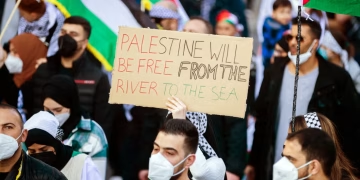
Moreover, many countries that experienced colonial rule continue to struggle with political instability, economic hardship, and external intervention long after formal independence. More recently, developments in Gaza have once again highlighted global power asymmetries, giving fresh momentum to debates on decolonization.
In Brief
Decolonization is a framework for questioning often invisible structures of power while enabling societies to rethink and reclaim their own intellectual and cultural heritage. In particular, the decolonization of language and knowledge has become increasingly important for fostering intellectual freedom and encouraging more diverse forms of scholarship.
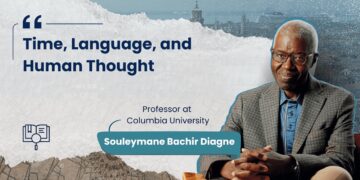
For a deeper exploration of this topic, readers may consult our interview with Professor Souleymane Bachir Diagne of Columbia University, available both on YouTube and in written form.