































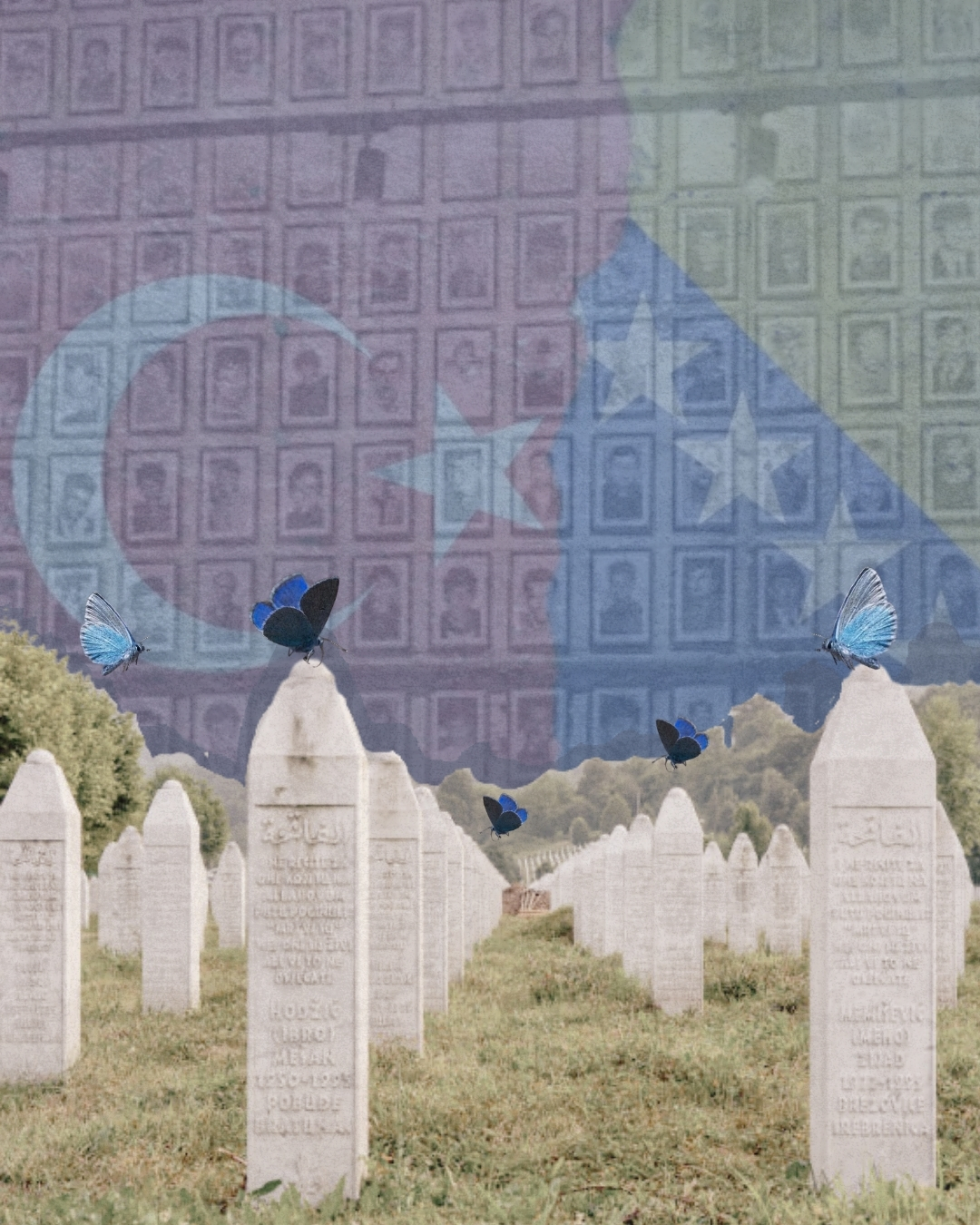
Thirty years after the Srebrenica genocide, preserving the memory of the crimes committed in July 1995 has become a central issue in international efforts to protect historical truth and prevent genocide denial. Although international courts have conclusively established that genocide was perpetrated in and around the United Nations “safe area” of Srebrenica, attempts to deny, relativize, or reinterpret these crimes continue to challenge established historical and judicial facts. As a result, the responsibility for safeguarding the memory of Srebrenica has increasingly extended beyond survivors, victims’ families, and memorial institutions, becoming an important element of state policy and international diplomacy.
Within this context, Türkiye has emerged as one of the leading international actors supporting the preservation of the memory of the Srebrenica genocide. In recent years, Ankara has complemented its long-standing political support for Bosnia and Herzegovina with two particularly important initiatives: active diplomatic engagement in support of the United Nations General Assembly Resolution proclaiming the International Day of Reflection and Commemoration of the 1995 Genocide in Srebrenica, and support for the establishment of the permanent genocide exhibition at the Srebrenica Memorial Center.
Taken together, these initiatives illustrate the evolving nature of remembrance policy. The memory of the Srebrenica genocide is no longer expressed solely through annual commemorations but is increasingly embedded within international human rights advocacy, genocide prevention, and educational initiatives aimed at preserving historical knowledge for future generations.
Memory Under Challenge
Unlike many historical atrocities whose fundamental facts are no longer subject to serious dispute, the Srebrenica genocide continues to be challenged through organized campaigns of denial and historical revisionism despite an extensive body of judicial evidence. The International Criminal Tribunal for the Former Yugoslavia (ICTY), the International Court of Justice (ICJ), and the International Residual Mechanism for Criminal Tribunals (IRMCT) have each concluded that genocide was committed against the Bosniak population in and around Srebrenica in July 1995. Nevertheless, denial persists across parts of the Western Balkans and has found new channels of dissemination through political rhetoric, segments of the education system, and digital media.
Within genocide studies and transitional justice scholarship, denial is widely regarded as an integral phase of genocidal processes because it seeks to obscure responsibility, discredit judicially established facts, and marginalize the experiences of victims and survivors. For this reason, preserving the memory of genocide extends beyond commemorative practice. It constitutes an important mechanism for defending the historical record, countering revisionist narratives, and reinforcing international standards of accountability for mass atrocities.
Türkiye’s recent initiatives should be understood within this broader framework. Its support for remembrance has been presented not simply as an expression of solidarity with Bosnia and Herzegovina, but as a contribution to protecting historically established facts and strengthening international efforts to confront genocide denial.
From Commemoration to Memory Diplomacy
Over the past several decades, the preservation of historical memory has assumed an increasingly important place within international relations. Alongside traditional instruments of foreign policy, such as diplomacy, economic cooperation, and security partnerships, states have increasingly employed historical remembrance to promote international norms, strengthen bilateral relations, and support universal human rights principles. This development has given rise to what scholars commonly describe as memory diplomacy– the incorporation of commemorative practices, memorial institutions, educational initiatives, and historical narratives into the conduct of foreign policy.
One of the most prominent examples of this approach emerged after the Second World War, when Germany integrated Holocaust remembrance into both its domestic political culture and its international engagement. More recently, Rwanda has pursued a similar policy by promoting international recognition of the 1994 genocide against the Tutsi through diplomatic initiatives, educational programs, and the development of memorial institutions. These examples illustrate that remembrance has become an increasingly important dimension of international cooperation, extending beyond national commemorative practices to shape broader international discussions concerning genocide prevention, accountability, and human rights.
Türkiye’s recent engagement with the memory of the Srebrenica genocide should be understood within this wider context. Rather than limiting its support to participation in annual commemorative ceremonies, Ankara has increasingly invested in initiatives intended to produce lasting institutional effects. Its support for international legal recognition through the United Nations, together with its contribution to strengthening the educational role of the Srebrenica Memorial Center, reflects a broader approach in which the preservation of historical memory has become an element of long-term foreign policy rather than an expression of symbolic solidarity alone.
Investing In Education and Remembrance
Dipplomatic initiatives alone are insufficient to preserve the memory of genocide. Lasting remembrance depends upon institutions capable of documenting historical events, safeguarding evidence, and educating future generations. Within this broader framework, Türkiye has also supported one of the most significant projects undertaken by the Srebrenica Memorial Center in recent years: the establishment of its permanent genocide exhibition.
The exhibition considerably expands the educational role of the Memorial Center. Rather than serving exclusively as a place of commemoration, it presents a historically grounded account of the persecution of Bosniaks, the establishment and eventual collapse of the United Nations “safe area,” the systematic execution of more than 8,000 Bosniak men and boys in July 1995, and the subsequent efforts to establish criminal responsibility before domestic and international cou rts.
Contemporary memorial museums occupy an increasingly important place within the field of genocide remembrance. Beyond commemorating victims, they preserve documentary evidence, facilitate scholarly research, and provide historical interpretation based on archival sources, survivor testimonies, forensic investigations, photographs, multimedia materials, and judicial records. The permanent exhibition at the Srebrenica Memorial Center reflects these principles by integrating diverse categories of evidence into a coherent historical narrative designed for both public education and academic engagement.
Türkiye’s support for this project therefore represents more than a financial contribution. It has strengthened the institutional capacity of the Memorial Center to preserve, interpret, and communicate the history of the Srebrenica genocide. As direct witnesses inevitably become fewer with the passage of time, memorial institutions assume an increasingly central role in safeguarding historical knowledge, ensuring that documentary evidence and judicially established facts remain accessible to future generations.
Supporting International Recognition
The adoption of United Nations General Assembly Resolution A/RES/78/282 in May 2024 marked a major step in the international recognition and institutionalization of the memory of the Srebrenica genocide. By proclaiming 11 July as the International Day of Reflection and Commemoration of the 1995 Genocide in Srebrenica, the General Assembly established an annual framework for global remembrance while simultaneously condemning genocide denial, the glorification of convicted war criminals, and promoting educational initiatives based on judicially established facts.
Throughout the diplomatic process, Türkiye consistently supported the initiative. Working in coordination with Bosnia and Herzegovina, Germany, Rwanda, andd numerous other member states, Turkish diplomacy actively advocated for the resolution despite sustained political opposition and organized disinformation campaigns that sought to portray the initiative as an attempt to assign collective responsibility rather than to reaffirm internationally established legal findings.
Türkiye’s contribution extended beyond its support during the General Assembly vote. Its diplomatic engagement reflected a broader commitment to preserving the international legal and historical consensus established through decades of proceedings before the ICTY, the ICJ, and the IRMCT. Given Türkiye’s longstanding political and historical ties with Bosnia and Herzegovina and the wider Western Balkans, its role also underscored that the preservation of the memory of the Srebrenica genocide constitutes an international responsibility rather than an issue confined to the region in which the crimes were committed.
The resolution itself introduced no new legal conclusions concerning the Srebrenica genocide. Instead, it reaffirmed judicial findings that had already become part of international law and sought to ensure their continued presence in education, public discourse, and commemorative practices. By establishing an annual international day of remembrance under the auspices of the United Nations, the General Assembly further strengthened the institutional framework through which the historical record of the Srebrenica genocide can be preserved and transmitted to future generations.
Memory As a Form of Prevention
International efforts to preserve the memory of genocide increasingly emphasize prevention rather than commemoration alone. Remembering Srebrenica is important because it honors victims and survivors, but it also provides future generations with an opportunity to understand how exclusionary nationalism, dehumanization, discrimination, and institutional failures can culminate in mass atrocity.
The Srebrenica genocide occupies a unique place within international discussions of atrocity prevention because it occurred despite the presence of United Nations peacekeepers and extensive international awareness of the conflict. It therefore continues to inform debates concerning civilian protection, peacekeeping mandates, international responsibility, and early warning mechanisms.
Both initiatives supported by Türkiye contribute directly to this preventive dimension of remembrance. The United Nations resolution establishes an annual international platform through which governments, universities, schools, and civil society organizations can educate new audiences about Srebrenica. Meanwhile, the permanent exhibition provides a permanent educational infrastructure capable of reaching thousands of visitors annually through evidence-based historical interpretation.
Together, these initiatives strengthen the resilience of historical memory against denial while encouraging international engagement with one of Europe’s most significant post-Holocaust atrocities.
New Chapter with TİKA-Transforming the Srebrenica Memorial Center
Türkiye’s contribution to preserving the memory of the Srebrenica genocide extends beyond diplomatic initiatives and support for international recognition. Through the Turkish Cooperation and Coordination Agency (TİKA), it has also played a central role in the physical and institutional transformation of the Srebrenica Memorial Center. The establishment of the permanent Genocide Exhibition, completed as the third and final phase of a multi-year partnership between the Memorial Center and TİKA, represents one of the most significant museum development projects undertaken by the institution since its establishment.
The exhibition has fundamentally expanded the role of the Memorial Center. While the institution has long served as the principal site of commemoration for the victims of the Srebrenica genocide, the new permanent exhibition has strengthened its capacity as an educational, research, and museum institution. Drawing upon contemporary approaches in museum studies, genocide studies, and memory studies, the exhibition combines archival documentation, survivor testimonies, forensic evidence, judicial findings, multimedia installations, and historical interpretation into an integrated narrative of the genocide. Rather than functioning solely as a memorial space, it enables visitors to examine the broader political, military, and humanitarian context of the crimes committed in July 1995 and the subsequent international efforts to establish accountability.
The project also reflects a broader investment in the long-term institutional development of the Memorial Center. By supporting the creation of a permanent museum exhibition built according to contemporary international museological standards, TİKA has contributed to strengthening the Center’s capacity to preserve historical evidence, facilitate academic research, and educate future generations. As the number of survivors and direct witnesses inevitably declines, such institutions assume an increasingly important role in safeguarding documentary evidence and ensuring that historically and judicially established facts remain accessible to the public.
The significance of this partnership is also reflected in the Memorial Center’s growing international profile. Visitors from the Republic of Türkiye consistently constitute one of the largest groups of international visitors to the Center, illustrating the depth of public interest in preserving the memory of the Srebrenica genocide. In this respect, Türkiye’s support has extended beyond infrastructure and funding, contributing to the development of the Memorial Center as an internationally recognized institution dedicated to remembrance, research, and education.
Beyond Symbolic Anniversaries
Thirty years after the Srebrenica genocide, preserving its memory has become an increasingly complex task. As the generation of survivors and eyewitnesses gradually diminishes, responsibility for transmitting historical knowledge rests ever more heavily upon educational institutions, memorial centers, archives, museums, and international organizations. At the same time, genocide denial and historical revisionism continue to adapt to new political and digital environments, underscoring the need for sustained institutional engagement rather than reliance on annual commemorative ceremonies alone.
Türkiye’s recent initiatives illustrate this long-term approach to remembrance. Through its support for the United Nations General Assembly Resolution establishing the International Day of Reflection and Commemoration of the 1995 Genocide in Srebrenica, together with its contribution to the permanent exhibition at the Srebrenica Memorial Center, Türkiye has supported both the international recognition of judicially established facts and their preservation within educational and memorial institutions. These two dimensions are mutually reinforcing: international recognition strengthens the legitimacy of historical truth, while memorial institutions ensure that the documentary record remains accessible to scholars, educators, and the wider public.
The significance of these initiatives extends beyond the bilateral relationship between Türkiye and Bosnia and Herzegovina. They contribute to broader international efforts to preserve the historical record of the Srebrenica genocide and to resist attempts to deny or distort crimes that have been conclusively established before international courts. In this respect, remembrance is not only an act of commemoration but also an essential element of historical responsibility. Protecting the integrity of the historical record remains indispensable for advancing education, supporting accountability, and reducing the space within which genocide denial and revisionism can flourish.
References
1. Bassiouni, M. C. (Ed.). (1996). Final report of the United Nations Commission of Experts established pursuant to Security Council Resolution 780 (1992). New York: United Nations.
2. International Court of Justice. (2007). Application of the Convention on the Prevention and Punishment of the Crime of Genocide (Bosnia and Herzegovina v. Serbia and Montenegro): Judgment of 26 February 2007. The Hague: International Court of Justice.
3. International Criminal Tribunal for the Former Yugoslavia. (2001). Prosecutor v. Radislav Krstić (IT-98-33): Trial judgment. The Hague: ICTY.
4. International Criminal Tribunal for the Former Yugoslavia. (2004). Prosecutor v. Radislav Krstić (IT-98-33): Appeals judgment. The Hague: ICTY.
5. International Residual Mechanism for Criminal Tribunals. (2019). Prosecutor v. Radovan Karadžić (MICT-13-55): Appeals judgment. The Hague: IRMCT.
6. International Residual Mechanism for Criminal Tribunals. (2021). Prosecutor v. Ratko Mladić (MICT-13-56): Appeals judgment. The Hague: IRMCT.
7. Subotić, J. (2019). Yellow star, red star: Holocaust remembrance after communism. Ithaca: Cornell University Press.
8. Srebrenica Memorial Center. (2025). Permanent exhibition at the Srebrenica Memorial Center. Potočari: Srebrenica Memorial Center.
9. Republic of Türkiye Ministry of Foreign Affairs. (2024). Press release regarding the adoption of the United Nations General Assembly Resolution on Srebrenica. Ankara: Ministry of Foreign Affairs.
10. Turkish Cooperation and Coordination Agency (TİKA). (2025). Support for the permanent exhibition at the Srebrenica Memorial Center. Ankara: TİKA.
11. United Nations General Assembly. (2024). International Day of Reflection and Commemoration of the 1995 Genocide in Srebrenica (A/RES/78/282). New York: United Nations.
*Opinions expressed in this article are the author’s own and do not necessarily reflect Platform: Current Muslim Affairs’ editorial policy.