





































Information pollution, conspiracy theories, fake scientific studies, and disinformation campaigns circulating on social media have increasingly become the subject of academic and intellectual debate under the concept of agnotology. At a time when access to information has never been easier, yet the truth has never been more blurred, the Information Age appears to have entered a profound paradox.
What is Agnotology?
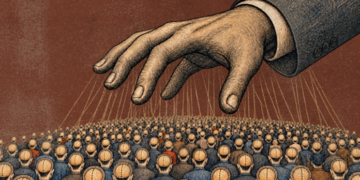
Agnotology is the study of ignorance—the idea that ignorance, uncertainty, or doubt is not merely a natural condition but can be deliberately manufactured and disseminated by powerful actors. The term combines the Greek words agnosis (ignorance) and ontology (the study of being). Rather than focusing solely on the censorship of information, agnotology examines how societies are confused through an overwhelming volume of false data, manipulative research, and contradictory arguments. While one side funds media outlets, selected scientists, and other actors to protect its interests, the broader public becomes increasingly uncertain about what to believe, leading to passivity and confusion.
Is it simply lying or disinformation?
Not at all. Agnotology is a powerful instrument of perception and risk management in both geopolitics and free-market systems. For powerful institutions, completely concealing or banning the truth has become nearly impossible and often carries significant political and legal risks. Instead, placing hundreds of false “alternative truths” alongside the real one creates strategic ambiguity and provides institutions with plausible deniability whenever necessary.
Perhaps the most well-known example of agnotology is the tobacco industry. Beginning in the 1950s, tobacco companies were confronted with mounting scientific evidence linking smoking to cancer. In response, they financed their own researchers and widely publicized supposedly scientific debates to cast doubt on the evidence. One tobacco company famously declared, “Doubt is our product,” reflecting its strategy of creating the perception that the relationship between smoking and cancer remained unproven.

Why is it receiving so much attention today?
Agnotology has returned to the forefront in a far more destructive form because the Information Age has increasingly evolved into an “industry of ignorance.”
Today, struggles for influence among major powers and perception managers are no longer conducted primarily through censorship. Instead, they unfold through clickbait, the manipulative environment of social media, and algorithmic amplification. The ability of artificial intelligence to generate convincing fake content (deepfakes) within seconds, combined with troll networks and the dynamics of the post-truth era, has made the production of ignorance more systematic than ever before. Behind the widespread uncertainty surrounding many contemporary issues often lies sophisticated algorithmic engineering driven by political, economic, or ideological interest groups.
In Brief
The paradox of information transforming into its opposite at the height of the Information Age is examined under the concept of “manufacturing ignorance.” In today’s digital environment, corporations, lobbying groups, and other powerful actors often seek to preserve the status quo and protect their interests by creating information pollution or overwhelming the public with excessive and conflicting data. The result is an ecosystem in which ignorance is deliberately produced, sustained, and instrumentalized through disinformation.