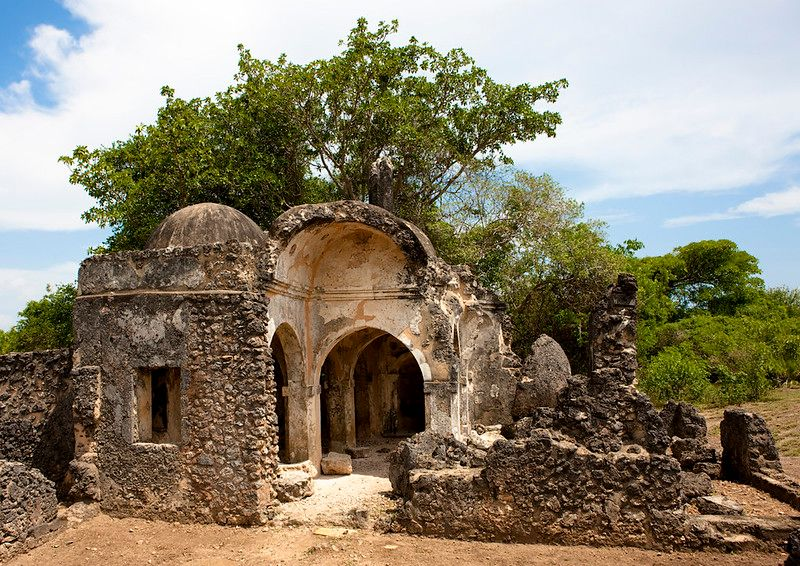





































One of the most magnificent pieces of evidence that fundamentally dismantles the colonial narrative and the Eurocentric historical thesis that portrayed Africa as “uncivilized” and “without history” lies hidden beneath the turquoise waters of the Indian Ocean: Kilwa Kisiwani.
Located off the coast of present-day Tanzania, this ancient island city possessed extraordinary intellectual and economic prosperity long before colonial conquest. From the 11th century onward, the Sultanate of Kilwa emerged as a flourishing maritime Islamic civilization, connecting the immense wealth of Africa’s interior with the wider world. Today, Kilwa Kisiwani has been a UNESCO World Heritage Site since 1981.
The City That Amazed Ibn Battuta
Kilwa stood at the heart of an immense maritime trading network that carried gold, ivory, iron, and precious timber from the African interior to the Arabian Peninsula, India, and even China. Minting its own gold and copper coins, this luxurious port city played a pivotal role in the global economy of the medieval world.
When the renowned Muslim traveler Ibn Battuta arrived on the island in 1331, he was captivated by its splendor and recorded in his travel account:
“Kilwa is one of the most beautiful and best-built cities in the world.”
Architecture Rising from the Sea
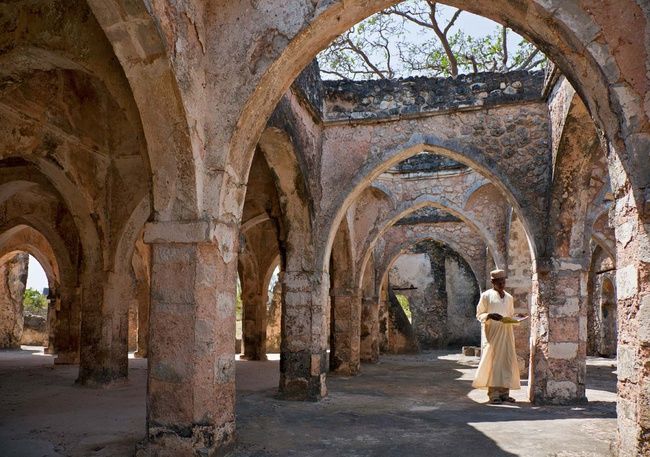
What makes Kilwa unique in the history of world architecture is the remarkable method by which its buildings were constructed. The island’s architects employed an innovative technique rarely seen elsewhere, using living coral stone quarried from the ocean together with lime mortar to create monumental structures.
The Great Mosque of Kilwa
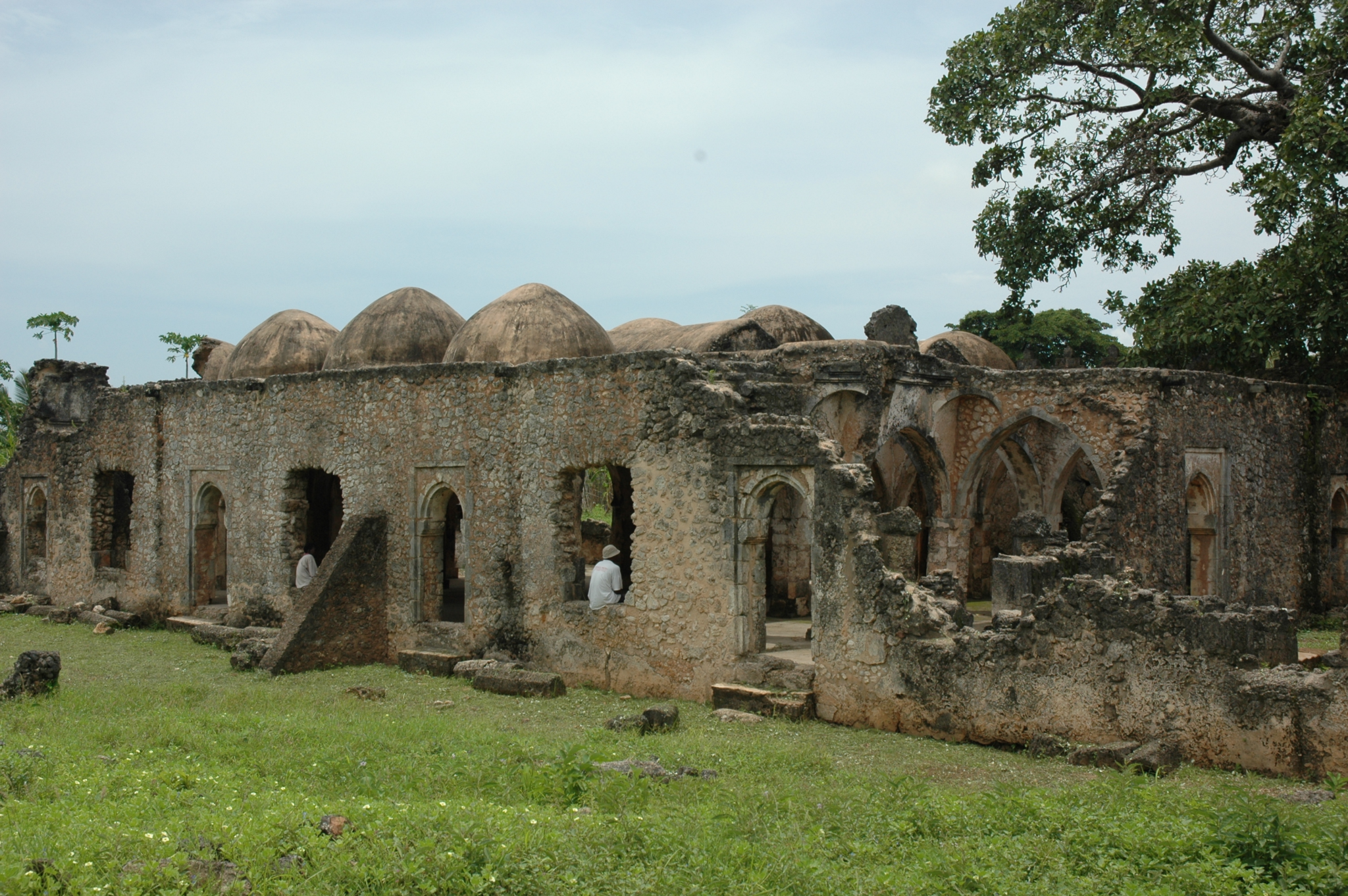
The Great Mosque of Kilwa is the oldest surviving and largest medieval mosque on the East African coast. Its coral-stone columns, imposing domes, and vaulted ceilings demonstrate the seamless fusion of Islamic architectural traditions with the ingenuity of local African craftsmanship.
Husuni Kubwa Palace
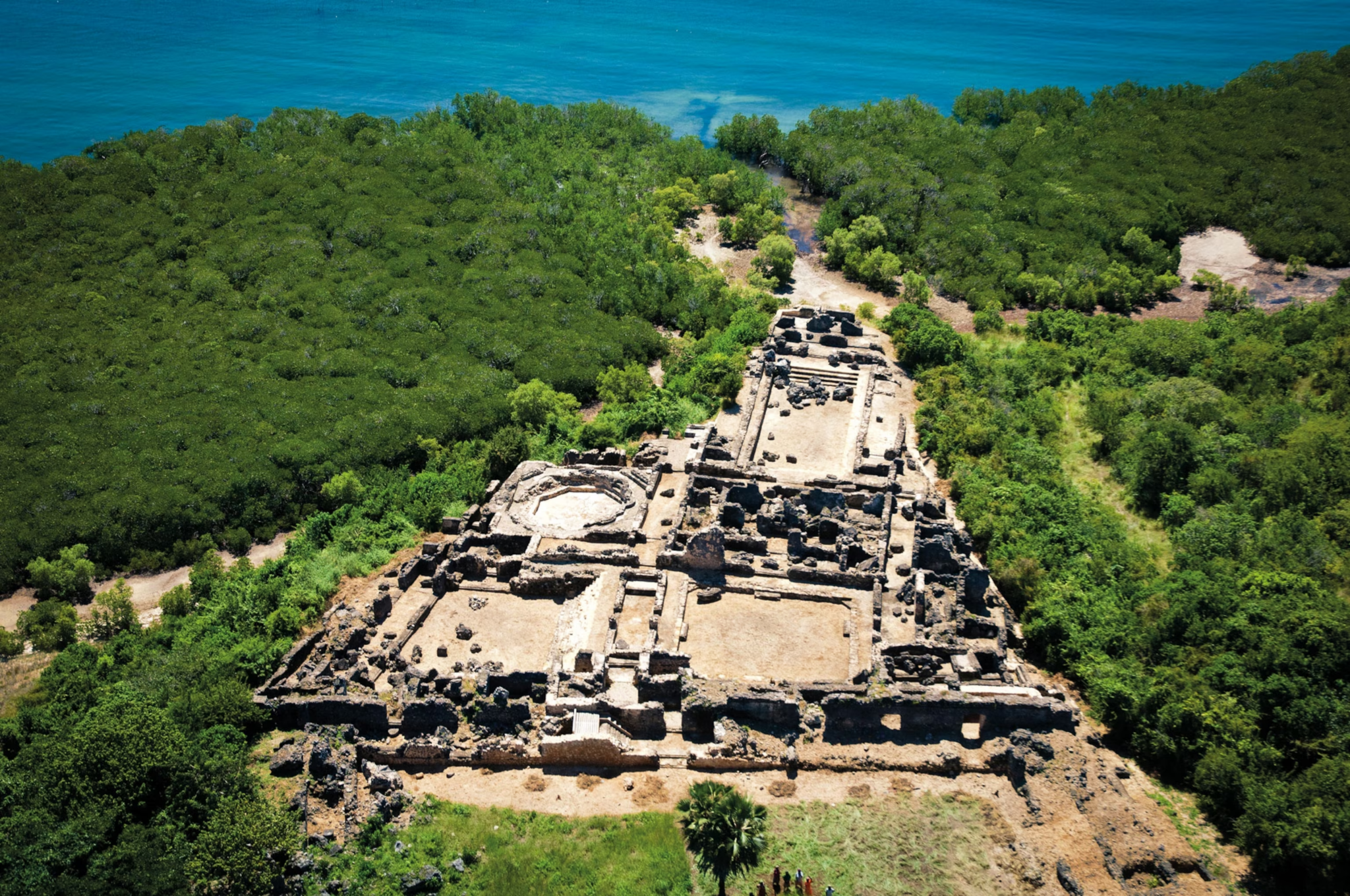
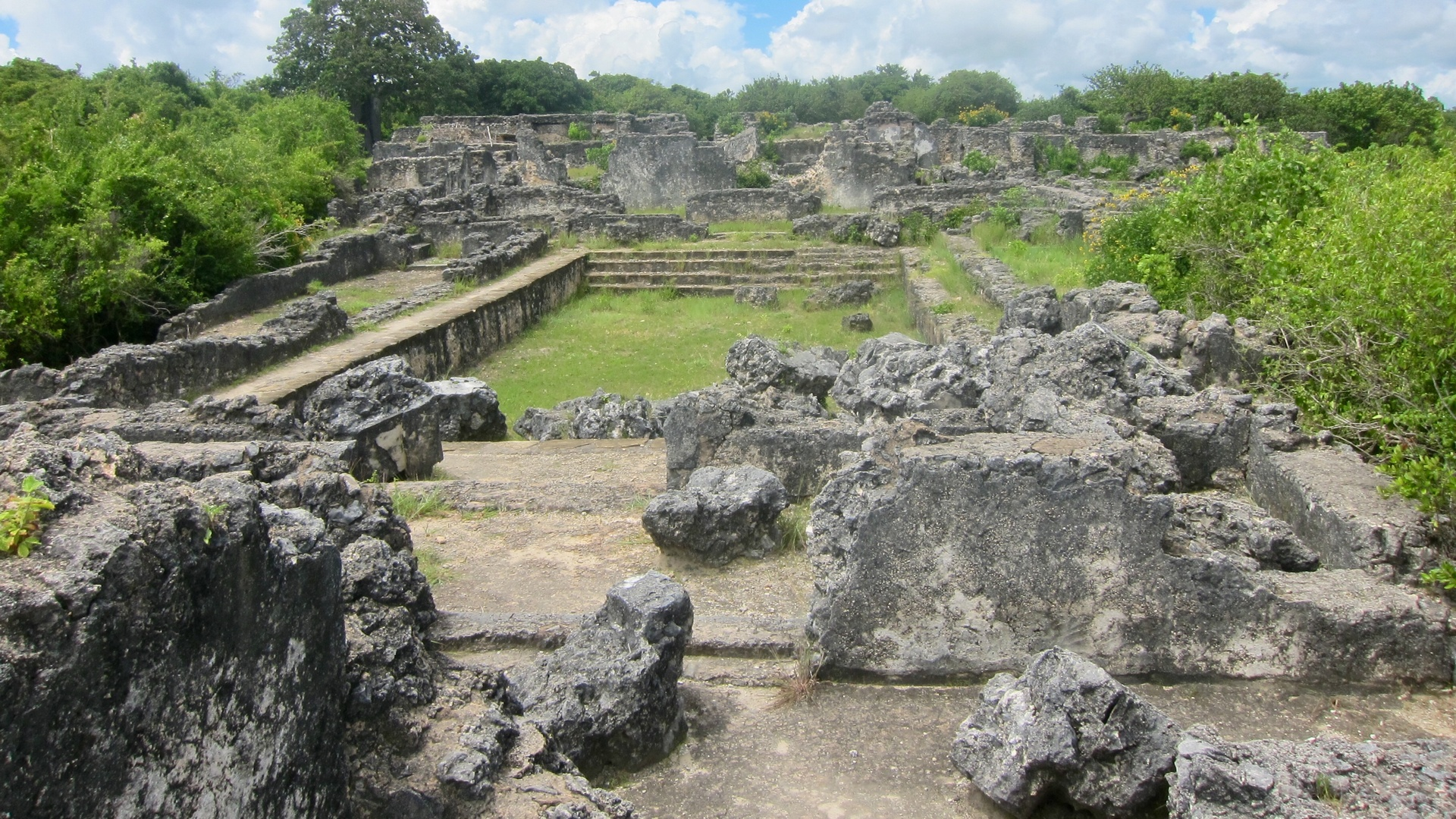
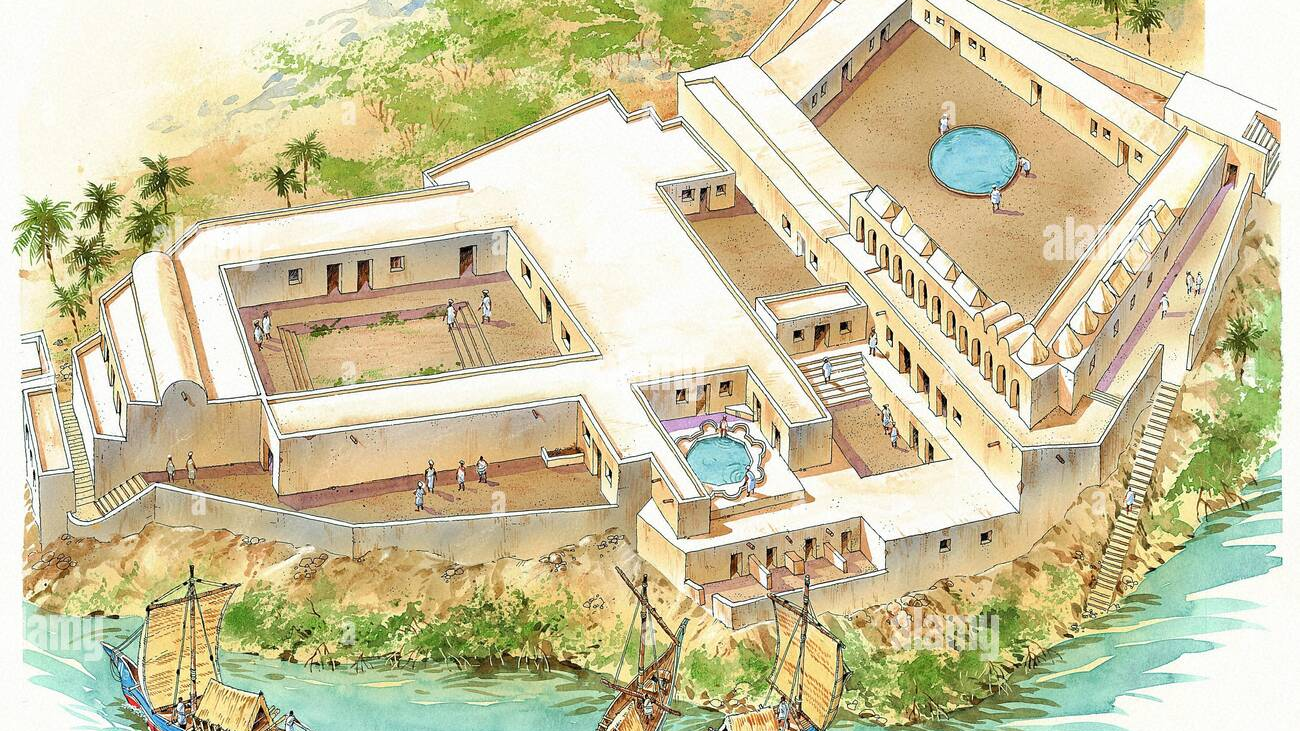
Commissioned by Sultan al-Hasan ibn Sulayman, this extraordinary palace complex, with more than one hundred rooms, ocean-facing terraces, an amphitheater-like marketplace, and a massive octagonal swimming pool, was the largest known pre-colonial palace in sub-Saharan Africa. Built of gleaming white coral stone, it shimmered brilliantly in the sunlight, appearing to approaching sailors like a lighthouse rising from the middle of the ocean.
Kilwa’s peaceful and prosperous golden age, during which it managed its own global commercial networks, came to a violent end in the early sixteenth century with the arrival of Portuguese colonial forces led by Vasco da Gama in the Indian Ocean. Armed with heavy cannon, Portuguese warships brutally attacked this largely defenseless trading city, looted its wealth, set its coral palaces ablaze, and seized control of its trade routes. In the centuries that followed, colonial narratives largely erased the memory of Africa’s brilliant maritime civilization, recasting the continent as a place supposedly in need of “civilization” and salvation.
Yet the coral ruins of Kilwa Kisiwani, preserved today as a UNESCO World Heritage Site since 1981, continue to challenge those colonial myths. Weathered by centuries of ocean winds, these stone walls stand as enduring testimony that Africa was never a “dark continent.” Rather, it was once home to one of humanity’s most prosperous, sophisticated, and globally connected civilizations.