





































Today, the market valuations of technology companies are reaching record highs, while the digital platforms they have created are permeating every aspect of daily life. In this context, the concept of techno-feudalism has become increasingly common in the social sciences. Yet there is still no consensus on what the term actually means. Some scholars view these developments as a new phase of capitalism, while others argue that they signal the emergence of an entirely different social order.
What is Techno-Feudalism?
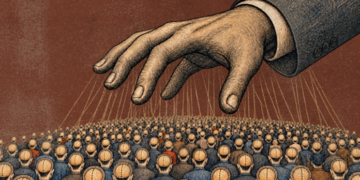
Under feudalism, landowners determined economic and political power. Techno-feudalism is a critical concept suggesting that those who control technological infrastructure, data, and digital networks today wield a level of influence over society comparable to that of feudal lords. Dominance over technology and data is seen as creating a new form of power relationship.
There are three major perspectives on this concept.
1. Techno-Feudalism as a New Stage of Capitalism
According to the first perspective, today’s transformation does not mean that capitalism has come to an end. After all, major technology companies remain capitalist actors: they are privately owned, profit-driven, and operate within market economies.
From this viewpoint, technology represents capitalism’s newest field of capital accumulation. Data, algorithms, and digital platforms have become the new mechanisms of production and profit, replacing factories and traditional financial assets as the primary engines of value creation. Consequently, the term “techno-feudalism” is considered unnecessary because the current system can still be adequately explained within the framework of capitalism.
2. Those Who Argue That a New Feudal Order Is Emerging
One of the leading proponents of this perspective is Yanis Varoufakis, who argues that capitalism is gradually being replaced by a techno-feudal system.
According to this view, large technology companies are no longer merely businesses that sell goods and services. They own the digital spaces where people work, communicate, shop, and create content. Individuals and businesses wishing to access these platforms must comply with rules established by the platform owners.
From this perspective, the issue is not simply generating profits through market exchange, but establishing digital sovereignty and extracting rent from the economic activities of others. For this reason, some scholars describe technology giants as the “digital lords” of the modern era.
3. Critics of the Concept
A third perspective questions the explanatory power of the term techno-feudalism itself. According to these critics, the problems often associated with the concept—such as monopoly power, income inequality, and the growing influence of large corporations—are long-standing characteristics of capitalism.
Rather than introducing a new concept, they argue that it is more accurate to describe today’s system as a more digitalized and more concentrated form of capitalism. While the analogy with feudalism is rhetorically striking, they contend that it does not accurately capture the nature of the current transformation.
What Is the Core Debate?
At the heart of the techno-feudalism debate lies a fundamental question:
Is technology simply a new instrument of capital, or has it become a new form of domination distinct from capitalism?
For one side, technology represents capitalism’s latest evolutionary stage. For the other, it marks the emergence of an entirely new social order.
Why Is the Concept Receiving So Much Attention Today?
The debate has become increasingly prominent because digital technologies now occupy a central role in both economic and social life. From the way people work and consume to how they access information and participate in politics, technology is reshaping nearly every sphere of society. This is why discussions have emerged around the idea that “Data is the new oil.”
The possible future consequences of concentrated technological power increasingly resemble the dystopian worlds depicted in novels and films. The anxiety generated by these scenarios often overshadows the technical debate surrounding the concept itself. Whether technology has merely become an instrument of capital or has effectively replaced capital as the primary source of power, one conclusion is difficult to dispute: a profound social transformation is underway.
In Brief
Techno-feudalism is less an established reality than an ongoing debate about how power operates in the digital age. Some argue that the digital era represents a new phase of capitalism, while others believe that a new “feudal” order is emerging under the dominance of technology giants.
According to a modern interpretation of Hesiod’s myth of Prometheus and Pandora, humanity gained immense power the moment it acquired fire—the tool that enabled it to master nature. Yet the real question has never been merely possessing power, but how that power is used. Pandora’s Box can be understood as a symbol of the destructive consequences that may accompany humanity’s technological and intellectual achievements. Standing at a similar threshold today with artificial intelligence and other transformative technologies, humanity faces essentially the same question it did thousands of years ago:
Will we be able to use this new power wisely and justly?