






















(The original Turkish version of this article was published by the Platform: Current Muslim Affairs on June 29, 2026)
Introduction
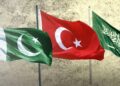
The central question guiding the historical analysis of Turkiye-Saudi Arabia relations is: “What are the primary factors shaping the bilateral relationship between these two states?” These relations have been shaped, on the one hand, by Turkiye’s ties with the West and by domestic political developments, and on the other, by the policies pursued by major powers, by the mutual interests of both states, and by the trajectory of Turkiye’s relations with regional actors -most notably the Arab states. The development of bilateral relations has been influenced by shared religious affiliation as well as by common cultural and historical bonds. At the same time, the fact that Turkiye and Saudi Arabia were founded upon distinct political and societal foundations long engendered mutual suspicion and a disposition toward caution in their dealings with one another. Nevertheless, relations between the two countries never reached the point of complete rupture.
The period spanning 2024 to 2026 represents a phase in which Turkiye-Saudi Arabia relations transcended a merely conjunctural improvement and underwent a structural historical turning point. In particular, the Modern Hejaz Railway agreement, which materialized in June 2026, along with the concurrently implemented visa-exemption arrangements, formally attested to the capacity for shared strategic reasoning that the two capitals have developed in response to regional crises. At a time when the security of global logistics corridors has been severely undermined and traditional routes have grown increasingly congested, this integration initiative between Ankara and Riyadh has become not merely a diplomatic choice but an inescapable geopolitical imperative for regional peace.
Concrete Policy Steps and Diplomatic Rapprochement (2024-2026)
The bilateral relationship along the Ankara–Riyadh axis acquired a more institutionalized character between 2024 and 2026 through a series of concrete diplomatic and political steps. Throughout this period, the rapprochement between Turkiye and Saudi Arabia deepened in tandem with efforts to develop common positions on regional crises. The Palestinian question and the reconstruction of Syria, in particular, have emerged as the principal agenda items foregrounding the two countries’ diplomatic coordination. At a time when Israel has continued to pursue its systematic genocidal campaign across Palestinian territories – most notably in Gaza – as well as escalatory actions heightening violence across the region, both Ankara and Riyadh have adopted a stance oriented toward supporting negotiation mechanisms and prioritizing ceasefire and humanitarian aid initiatives. Concurrently, the two states converged on a platform of cooperation in the context of post-2024 state-rebuilding in Syria. Turkiye and Saudi Arabia have moved toward a more aligned diplomatic posture with regard to supporting the political transition process in Syria, addressing fragile fault lines, and engaging with reconstruction efforts.
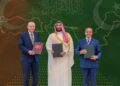
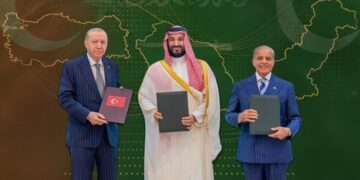
President Recep Tayyip Erdoğan’s visit to Saudi Arabia on 3 February 2026 stands as one of the significant indicators of the accelerating diplomatic rapprochement that has characterized the Ankara-Riyadh relationship in recent years. The “Joint Communiqué” issued in the aftermath of the visit articulated the resolve of both countries to act in a coordinated manner on regional developments and energy security. Among the principal items featured in the communiqué were the institutionalization of regular high-level consultation mechanisms, the expansion of bilateral trade and investment flows, operational cooperation in counter-terrorism, joint projects in the fields of energy security and transportation infrastructure, and the adoption of a coordinated stance on regional crises-most prominently the Palestinian question. In this context, the high-level contact in question lends itself to interpretation not as a one-off diplomatic initiative, but as a constituent element of the institutional calendar established between the two countries in the post-2022 period. Working groups conducted between the respective Ministries of Foreign Affairs, business dialogue platforms at the level of the Ministries of Trade, and technical consultations in the field of the defense industry together constitute the institutional backbone of this calendar.
Through an agreement signed in Ankara on 6 May 2026 and published in the Official Gazette on 13 June 2026 following ratification by President Erdoğan, the visa obligation for holders of diplomatic and special passports was mutually abolished. Under the arrangement, eligible individuals are exempted from visa requirements for stays not exceeding 90 days within any 180-day period, with the aim of removing bureaucratic impediments and enhancing strategic mobility. The entry into force of the visa exemption is expected to generate strong momentum in economic relations and to yield an increase in bilateral tourism flows. Given that Saudi Arabia is a country with significant investment in Turkiye, and that Turkiye provides services to Saudi Arabia in the tourism and construction sectors, the visa exemption opens a period of opportunity from multiple perspectives for both states. Through reciprocal steps and within the framework of Saudi Arabia’s Vision 2030, the conditions appear conducive to the emergence of new areas of cooperation between the two countries across numerous sectors, most notably industry and tourism. Turkiye, in pursuance of its objective to diversify long-term energy supply, appears well-positioned to develop robust cooperation with Saudi Arabia in both renewable energy and conventional hydrocarbon imports. Saudi Arabia’s investments in solar and wind energy present domains in which Turkish energy companies may draw upon their capacities in technology and project management.
Turkiye’s development of a defense industry that has attained global competitiveness over the past decade, combined with Saudi Arabia’s efforts to diversify its arms suppliers, has contributed to the emergence of a new foundation for cooperation in defense technology within the Ankara–Riyadh relationship. In particular, unmanned aerial vehicles (UAVs) developed by Turkiye are attracting growing interest in the Gulf market. Several UAV platforms-most notably the Bayraktar TB2-along with armored systems such as the Altay tank, are being evaluated as products that could be integrated into the Saudi military modernization agenda.
Geopolitical Necessity: 2026 Crises and Logistical Alternatives
The first half of 2026 witnessed developments that fundamentally altered the balance of power in Middle Eastern geopolitics. The military strike carried out by the United States and Israel against Iran on 28 February 2026 resulted in the closure of the Strait of Hormuz and rendered the Suez Canal route increasingly insecure.
In this climate of crisis, the India-Middle East-Europe Corridor (IMEC) project -backed by Washington and Tel Aviv and designed to circumvent Turkiye- sustained a severe blow. Saudi Arabia’s decision to formalize the “Modern Hejaz Railway” project, connecting Europe via Anatolia, in place of this precarious and exclusionary corridor, constitutes not only a strategic preference but also a disposition toward developing a distinct alternative to the IMEC initiative framed by Israel. Riyadh’s move amounts to a declaration of intent to transfer responsibility for regional security away from the initiatives of global actors and toward the partnership of regional ones.
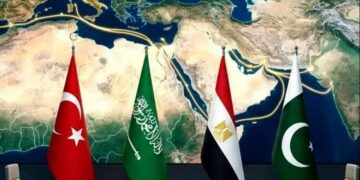
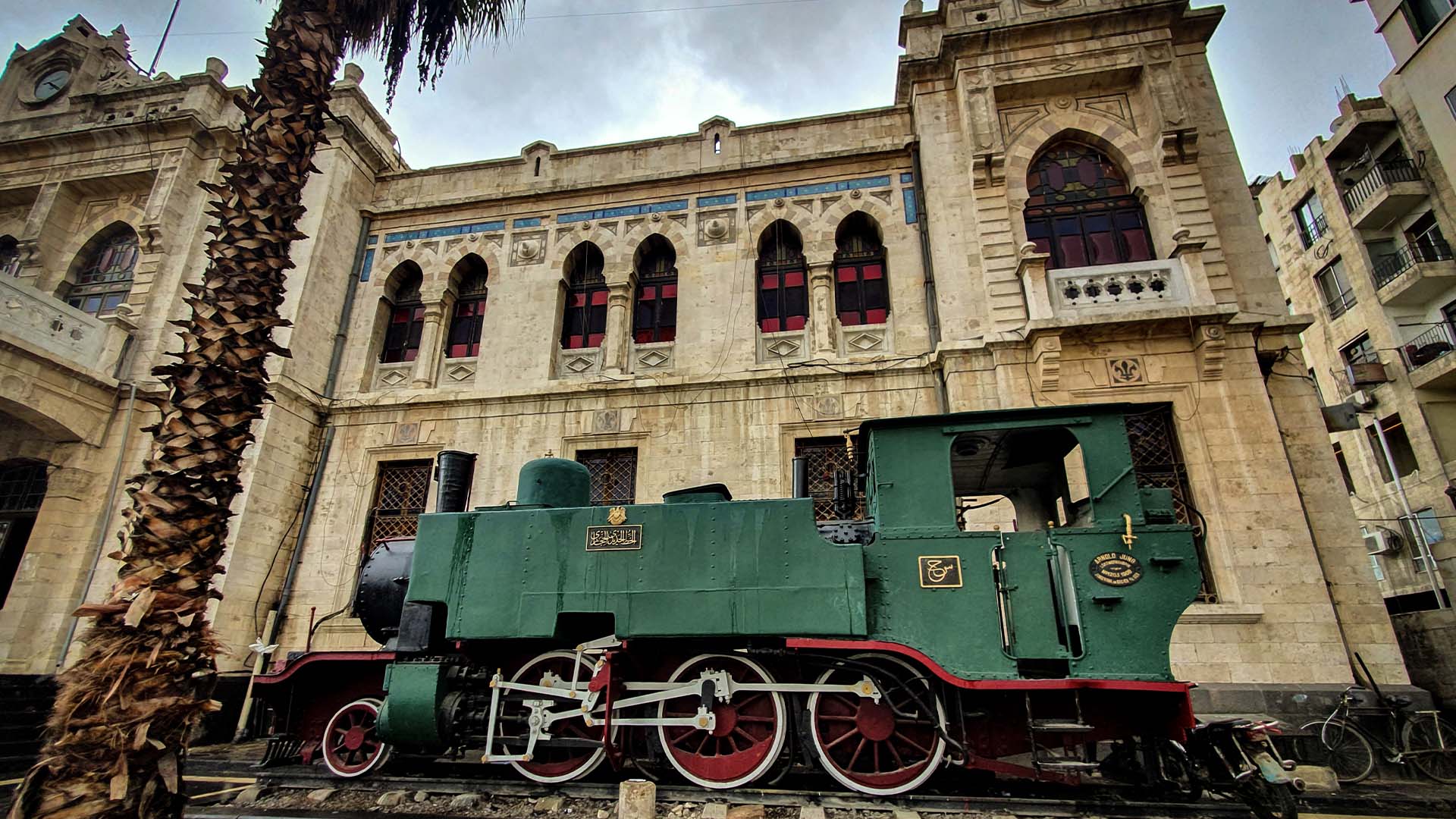
Formalized through an agreement signed between Turkiye, Syria, Jordan, and Saudi Arabia in June 2026, the Modern Hejaz Railway represents the technological and strategic revival- 126 years later -of the ‘Hamidiye Hejaz Railway’ vision from the reign of Sultan Abdülhamid II. The line, which will originate in Istanbul and extend through Damascus and Jordan to the holy lands of Mecca and Medina before continuing onward through Oman to the Indian Ocean, symbolizes the logistical reunification of a geography that had been shattered into fragments.
This project constitutes a vast multimodal energy and logistics corridor encompassing high-speed rail lines, motorways, and, most significantly, pipelines for the transportation of Gulf oil and natural gas. By bypassing the risks of maritime blockade, the corridor reduces transit time between the Gulf and Europe by twelve to fifteen days.
| Feature | Hamidiye Hejaz Railway (1900-1908) | Modern Hejaz Railway (2026) |
| Route | Damascus-Medina (Mecca and Yemen targeted) | Istanbul – Damascus – Jordan – Mecca/Medina – Oman |
| Funding | Completely Ottoman resources and Muslim donations | Common capital and logistics cooperation of regional states |
| Strategic Goal | Strengthening the caliphate bond, breaking the British hegemony in Suez | Global supply chain security, multimodal energy and logistics corridor |
| Logistics Diversity | Steam locomotives and military shipment | Rapid railway, highway and energy pipelines integration |
Table 1: Hejaz Railway: Historical and Modern Comparison
Common Cultural Memory
Archaeological fieldwork conducted in June 2026 in the Mehd district of Medina -encompassing the sites of Suwayriqa, Muwayhi, and Haze- lent the spiritual bonds between the two countries a dimension of scholarly depth. The discoveries, comprising a total of 1,774 finds dated to the pre-Uthman period, shed new light on early Islamic history. In terms of their content, the archaeological findings consist of the following inscriptions and archival documents:
• A historic rock inscription bearing the carved text of Quranic verse An-Nisa 4:58: “Indeed, Allah commands you to render trusts to whom they are due and, when you judge between people, to judge with justice.”
• A rare document written in the Hejazi script, composed by an individual named Ibrahim, containing the phrase: “Allah is the friend of Omar ibn al-Khattab in this world and in the hereafter.”
• The remains of three historic palaces and architectural structures were identified in the region, along with 461 Islamic inscriptions bearing the collective memory of the early years of the Islamic state.
The expansion and extension of these fieldwork activities is of considerable importance for the concretization of early Islamic history through archaeological and anthropological evidence. Concerning bilateral relations between the two countries, the surfacing of the architectural, social, and cultural heritage offered to the shared civilizational basin through Ottoman agency carries particular significance, insofar as it renders more legible the contributions made by the Ottoman state to that common heritage. The prompt completion of the restoration of Medina Railway Station -the terminus of the Hejaz Railway constructed between Damascus and Medina during the reign of Ottoman Sultan Abdülhamid II to shorten the pilgrimage journey for those undertaking the Hajj and Umrah- along with the expansion of the inventory of the museum housed within it, where select artifacts belonging to the Ottoman State and the House of Saud are currently displayed, would constitute a concrete step in support of this process.
Result
The future of Turkiye-Saudi Arabia relations will depend, to a considerable degree, on the trajectory of regional developments and on the policies pursued by the leaderships of both countries. Issues such as the possible outcomes of US–Iran tensions, the future of Iraq, the secure marketing of energy resources, and the Palestinian Question bear directly on both states; accordingly, keeping channels of cooperation and coordination open in these areas is of a nature to yield mutual benefit. Within this framework, a positive transformation is also discernible at the perceptual level. As the Kingdom of Saudi Arabia’s newly initiated process of identity construction in recent years has contributed to a positive evolution of Saudi Arabia’s image in Turkish public opinion, so too has Turkiye’s image in Saudi Arabia trended toward a pragmatic and institutionally grounded perspective. The sustenance of this mutual shift in perception carries the potential to augment the regional and global standing of both countries across religious, political, economic, and cultural registers.
The most tangible manifestation of the cooperation that has materialized between the two countries in the recent period is the large-scale logistics and economic corridor projects currently being brought to fruition. Initiatives such as the Development Road and the Modern Hejaz Railway essentially signify the re-establishment of the historical integrity of the Anatolia-Mesopotamia-Hejaz axis a century later, through modern transportation and energy technologies. Viewed from this perspective, these projects transcend the status of merely economic ventures and also symbolize a tendency toward the restoration of the natural unity of a geography that had been fragmented by artificially imposed political boundaries. The realizability of this vision, however, is contingent upon regional conditions -foremost among them the consolidation of political stability in Syria- unfolding in a manner conducive to the advancement of these projects. Throughout this process, the shared political will that Turkiye and Saudi Arabia demonstrate in the interest of securing regional, global, and domestic stability will constitute the foundational basis upon which everything else rests.
In conclusion, the shared political will demonstrated by Turkiye and Saudi Arabia carries a significance that extends beyond the bilateral relationship itself. On the one hand, it reinforces the regional and global standing of both countries; on the other, it serves to reconsolidate the weight of the Islamic world within the international balance of power. For this reason, the institutionalization and deepening of the bonds between the two countries ought to be regarded as a strategic priority both for bilateral and for broader regional stability.
Bibliography
Anadolu Ajansı. (2026, 13 Haziran). Türkiye ile Suudi Arabistan arasında vize muafiyeti kararı Resmi Gazete’de. https://www.aa.com.tr/tr/gundem/turkiye-ile-suudi-arabistan-arasinda-vize-muafiyeti-karari-resmi-gazetede/3965783
Anadolu Ajansı. (2026, 12 Haziran). Suudi Arabistan’da Kur’an ayetlerinin de yer aldığı Hz. Uthman dönemi öncesine ait buluntular keşfedildi. https://www.aa.com.tr/tr/kultur/suudi-arabistan-da-kur-an-ayetlerinin-de-yer-aldigi-hz-Uthman-donemi-oncesine-ait-buluntular-kesfedildi/3964929
Anadolu Ajansı. (2025, 14 Haziran). Hacılar, Uthmanlı yadigarı Medine Tren İstasyonu Müzesi’ni ziyaret etti. https://www.aa.com.tr/tr/gundem/hacilar-Uthmanli-yadigari-medine-tren-istasyonu-muzesini-ziyaret-etti/3597973
Al Arabiya. (2026, June 10). الربط السككي بين السعودية وتركيا بديل استراتيجي للممرات البحرية https://ara.tv/fgfx2
Al Arabiya. (2026, June 9). السعودية وتركيا توقعان مذكرات تفاهم لتعزيز الربط السككي والخدمات اللوجيستية. https://ara.tv/f4apm
Ataman, M. (2009, Eylül). Türkiye-Suudi Arabistan ilişkileri: Temkinli ilişkilerden çok-taraflı birlikteliğe. Ortadoğu Analiz, 1(9), 72–81. https://www.orsam.org.tr/d_hbanaliz/8muhittin.pdf
Bostancı, M. (2020). Türkiye–Suudi Arabistan İlişkileri, 1926–1990. Türk Tarih Kurumu Yayınları.
Bostancı, M. (2023). Turkish-Arab Relations in the Axis of the Question of Palestine and the Establishment of Israel State. Tarih ve Gelecek Dergisi, 9(2), 244-257. https://doi.org/10.21551/jhf.1294348
Kingdom of Saudi Arabia, Vision 2030 Secretariat. (2026, 13 Haziran). https://www.vision2030.gov.sa/en
NTV. (2023, 30 Aralık). 10 soruda Suudi Arabistan’daki Süper Kupa krizi. https://www.ntv.com.tr/sporskor/galeri-10-soruda-suudi-arabistandaki-super-kupa-krizi,cms6bQQ3YU2nQLTnbvnCSQ/1
Öztop, M. (2024, 24 Nisan). Koridor savaşları: Kuşak-Yol, Kalkınma Yolu, IMEC. Türkiye Araştırmaları Vakfı. Erişim tarihi: 10 Haziran 2026, https://www.turkiyearastirmalari.org/2024/04/24/yayinlar/analiz/analiz-koridor-savaslari-kusak-yol-kalkinma-yolu-imec/
Rakipoğlu, M. (2024, Mart). Suudi Arabistan’ın yeni kimlik arayışı. Kriter Dergi, 8(88). https://kriterdergi.com/dis-politika/suudi-arabistanin-yeni-kimlik-arayisi
Tavukcu, S. (2026, 13 Haziran). Uthmanlı devlet aklı günümüz küresel düzenini şekillendiriyor. Stratejik Düşünce Enstitüsü. https://www.sde.org.tr/sinan-tavukcu/genel/Uthmanli-devlet-akli-gunumuz-kuresel-duzenini-sekillendiriyor-kose-yazisi-65323
T.C. Cumhurbaşkanlığı İletişim Başkanlığı. (2026, 3 Şubat). Türkiye ile Suudi Arabistan görüşmeleri sonrası ortak bildiri yayımlandı. https://www.iletisim.gov.tr/turkce/haberler/detay/turkiye-ile-suudi-arabistan-gorusmeleri-sonrasi-ortak-bildiri-yayimlandi
Vohra, A. (2024, 28 Şubat). Hindistan-Ortadoğu-Avrupa Koridorunun belirsiz geleceği. Dünya Siyaseti. Erişim tarihi: 10 Haziran 2026, https://dunyasiyaseti.com/icerik/hindistan-ortadogu-avrupa-koridorunun-belirsiz-gelecegi.html
*Opinions expressed in this article are the author’s own and do not necessarily reflect Platform: Current Muslim Affairs’ editorial policy.