



























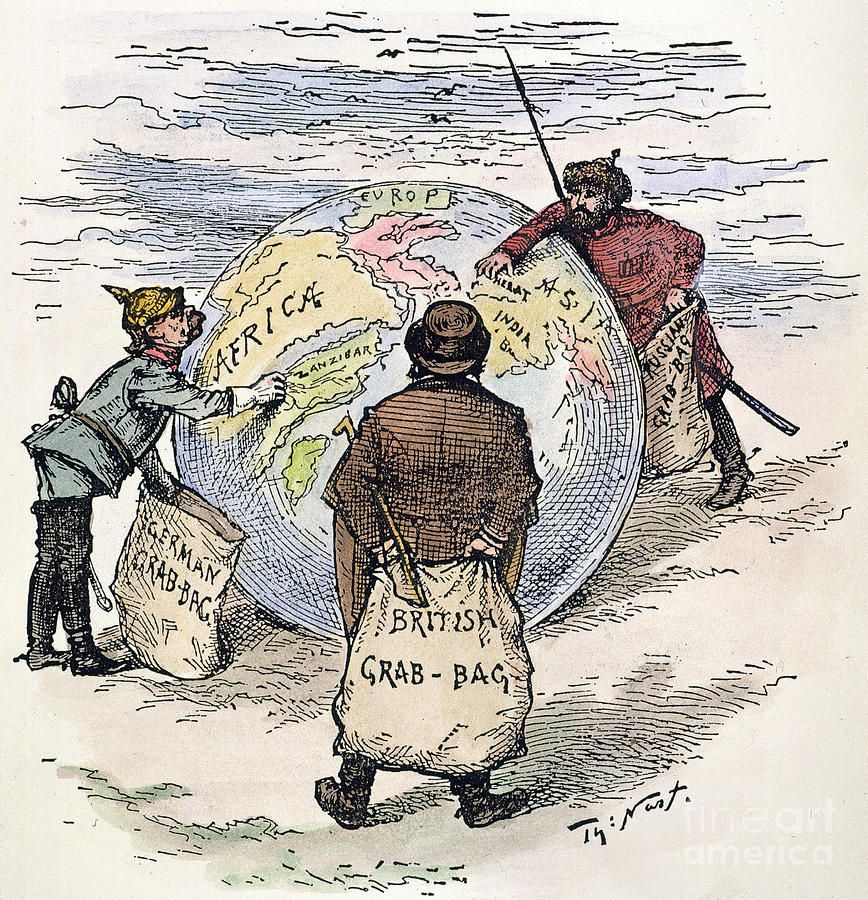
Colonialism is perhaps one of the concepts that has most profoundly shaped world history and today’s global power balances. So, what exactly does this concept which dates back centuries mean, and through which perspectives is it discussed today?
What is Colonialism?
In its most basic sense, the term colonialism refers to a state or society bringing the peoples, lands, and resources of another geography under its control. In the classical sense, colonialism is particularly associated with European powers occupying lands in Asia, the Americas, and Africa following the Age of Discovery that began in the 15th and 16th centuries. According to this understanding, colonialism is the process by which powerful states establish political, military, and economic dominance over weaker societies.
Is It Merely a Military and Economic Process?
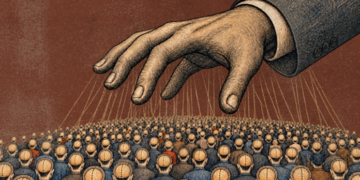
Today, colonialism does not only encompass the seizure of underground resources or the military control of territories; it also involves transforming societies’ modes of thought, languages, cultures, and educational systems. The colonial mindset has sustained itself by ignoring the history of indigenous peoples, presenting its own values as “superior” or “civilized,” and shaping knowledge production mechanisms around its own center.
This mindset of occupation cloaked its actions in an ideological armor of morality by viewing conquered peoples as “barbarians needing to be reformed.” Indeed, British poet Rudyard Kipling’s famous 1899 poem “The White Man’s Burden,” which legitimizes colonialism, clearly reveals this condescending attitude:
Take up the White Man’s burden
Send forth the best ye breed
Go bind your sons to exile
To serve your captives’ need;
To wait in heavy harness,
On fluttered folk and wild
Your new-caught, sullen peoples,
Half-devil and half-child.
Why Is It Back on the Agenda Today?
Colonialism is not an accidental expansionism. At its core, it aims to seize global raw material resources (minerals, agricultural products, cheap labor), create new markets for manufactured goods, and monopolize global trade. In addition to these material objectives, colonial powers aim to establish a long-term dependency mechanism by spreading their own political and legal systems. Perpetuating hegemony by artificially drawing borders and producing homogenized mental frameworks forms the core operation of the colonial structure.
Although the classic colonial period seems to have ended in a physical sense, today this concept is intensely debated under forms of “neocolonialism.” Discussions surrounding global financial institutions, multinational corporations, and Western-centric knowledge production stand out as the practical reflections of colonialism today.
The reason colonialism is debated today is that even though direct military occupations have ended, colonial relationships persist in different forms at economic, cultural, and technological levels. From the climate crisis to global migration waves, and from digital data hegemony to economic difficulties in developing countries, many issues are evaluated as extensions of historical colonial relationships. Power struggles and humanitarian crises occurring in various regions of the world recently have given new momentum to discussions on colonialism by making global hierarchies visible once again.
In Brief
While the debate on colonialism questions invisible power relations, it allows us to understand the traces of the past in the present and the roots of global inequalities. Analyzing colonial logic is vital both for breaking free from relations of dependency and for building a fairer, more pluralistic global order.
Today, the newest and perhaps most insidious frontier of these debates is the dominance established through technology and data. To understand how classical land and resource exploitation has transformed into “data colonialism” today, along with the role of artificial intelligence in this process, you can check out our interview with Prof. Ulises Ali Mejias: Data Colonialism, Artificial Intelligence, and Our Digital Future – An Interview with Prof. Ulises Ali Mejias.