



























(The original Turkish version of this article was published by the Platform: Current Muslim Affairs on August 10, 2026)
The attacks launched by the United States and Israel against Iran on 28 February turned the Gulf Cooperation Council (GCC) states, which were not direct parties to the war, into one of the conflict’s targets as well. So much so that, during the initial weeks when Iran carried out the largest number of strikes, the United Arab Emirates (UAE) came under more attacks than even Israel [1]. Iran justifies its strikes against the Gulf by claiming that the United States has conducted its operations against Iran from bases located in the Gulf. Gulf states, for their part, characterize this narrative as propaganda, arguing that American bases in the Gulf are used solely for defensive purposes and that the strikes on Iran were instead launched from the USS George W. Bush and USS Abraham Lincoln aircraft carriers, positioned roughly 150 kilometers off the Iranian coast [2].
Iran’s strategy is aimed not at directly targeting the United States or Israel, but rather at shifting the costs of the war onto Washington through third parties. While Tehran avoids the devastating consequences that a direct confrontation with U.S. forces would entail, it calculates that by targeting Gulf states, whose defense capacities are comparatively more limited, it can induce these countries to exert pressure on Washington on its behalf. Iran thus seeks to regionalize the political and economic costs of the war, turning Washington’s allies into an instrument of pressure that works in its own favor [2].
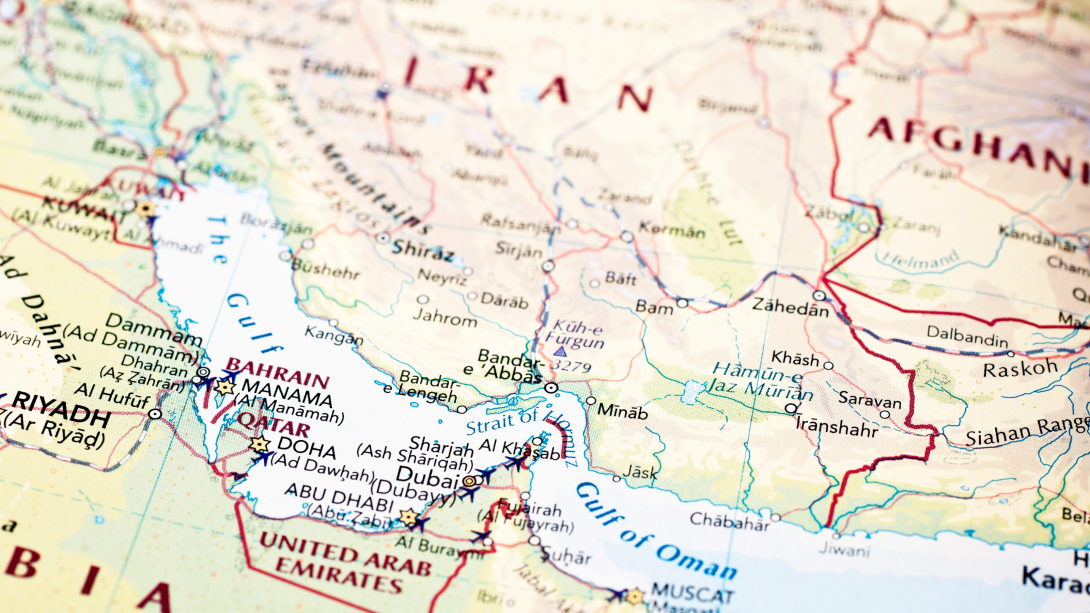
Iran’s strategy of indirect pressure is not confined to the Gulf states alone. Its transformation of the Strait of Hormuz, a critical energy transit chokepoint, into a tool of leverage since the outbreak of the war is a product of the same logic [3]. Tehran calculates that a closure of the strait, or any disruption to transit through it, would generate pressure on Washington not only from Gulf economies but also from the global economies that depend on Hormuz for the supply of energy and critical minerals [4], [5], [6].
Iran’s pursuit of a strategy of selective deterrence toward the United States, combined with its direct targeting of Gulf states, raises a more consequential question for the region: how will this war reshape the Gulf’s conception of security? For Iran, the principal aim of its current strategy is to avert a total destruction that would threaten the regime’s survival, thereby weathering the war at a manageable cost. For the Gulf states, the central issue is that the war is compelling them to reconsider how they position themselves, not merely vis-à-vis Iran, but within the broader regional and global security architecture.
Historically, it was precisely security anxieties of this kind that led Gulf states to build a protective shield for themselves, first through security partnerships with Britain and subsequently with the United States [7]. The Iran–U.S./Israel war has tested this security architecture. On the one hand, it demonstrated that the Gulf is no longer untouchable; on the other, it effectively tested an attack scenario that had, for years, been discussed only at a theoretical level. This process also brought to light a significant paradox surrounding the U.S. security umbrella. While Iran presented the American presence in the Gulf as justification for its strikes, the very same security architecture, thanks to the THAAD and Patriot systems, played a decisive role in neutralizing hundreds of ballistic missiles and thousands of drones [8].
What understanding of security, then, will the Gulf draw from this experience? The central argument of this article is that the Gulf does not regard the options before it as mutually exclusive alternatives. On the contrary, the Gulf is likely to move toward a multilayered security doctrine, one that sustains its security partnership with the United States while simultaneously redefining its relations with Iran on new terms, diversifying its regional partnerships, and strengthening both its national capacity and intra-Gulf coordination.
The first pillar of this multilayered security doctrine is the continuation and, insofar as possible, the institutionalization of the security partnership with the United States. Riyadh, through the Crown Prince’s contacts in Washington, is seeking a more comprehensive security arrangement that would include treaty-based security guarantees along with civil nuclear cooperation [9]. The presidential assurances extended to Qatar following Israel’s strike on Doha, and the UAE’s inclination to further deepen its security cooperation with Washington, form part of the same trend. At the same time, however, the war has prompted a deeper reassessment within Gulf capitals. The issue at stake is not merely the credibility of U.S. security commitments, but the extent to which Washington’s regional priorities align with the Gulf’s own security concerns. Gulf states have long held the view that U.S. Middle East policy is increasingly shaped around Israel’s security priorities, and the Iran–U.S./Israel war has only reinforced this perception [10]. For this reason, Gulf states will continue to multiply their options rather than entrust their security to a single actor. Strengthening the partnership with the United States and diversifying beyond it are not mutually exclusive choices, but complementary elements of a single security strategy. How this balance ultimately takes shape will be determined not only by the Gulf’s own preferences, but also by the degree to which Washington’s security commitments are perceived as credible. Indeed, the post-war debates surrounding the Islamabad Accord, and discussions that Iran’s reconstruction might be financed with Gulf capital, have revived the same anxieties that surfaced in Gulf capitals following the 2015 nuclear agreement, namely the fear that Washington might be sidelining the region by reaching an accommodation with Tehran [11].
The second pillar of this security doctrine is the redefinition of relations with Iran according to the different phases of the war. The Gulf states neither desired this war nor sought to initiate it. Once the conflict began, however, and Iranian strikes came to directly target Gulf territory, critical infrastructure, and economic activity, weakening Iran’s military capacity became a legitimate, and for some Gulf capitals a necessary, objective. Reports that Bahrain and Kuwait struck military targets inside Iran with UAE support reflect this shifting wartime calculus [12]. That said, wartime objectives must not be conflated with post-war strategic requirements. A desire to weaken Iran’s military capacity does not equate to a preference for permanent confrontation with Iran once the war has ended. Recent Gulf political history suggests that such a transformation is indeed possible. During the 2017–2021 Gulf crisis, Qatar and Saudi Arabia regarded one another as existential security threats. Yet following the 2021 Al-Ula Agreement, the two parties managed to place their relationship on more manageable footing, without resolving their underlying disagreements, and rebuilt cooperation in the diplomatic, economic, and security domains. Admittedly, the case of Iran cannot be equated directly with the Al-Ula precedent: Iran is a markedly different actor, one that directly targets Gulf territory and shapes regional balances of power. Nonetheless, this experience shows that, in emerging from security crises, the Gulf does not necessarily seek comprehensive reconciliation but is capable of devising pragmatic arrangements that render rivalry more predictable and manageable. Whether or not its regime changes, Iran, by virtue of its geographic scale, population, energy resources, and position astride the Strait of Hormuz, remains a permanent feature of Gulf security that cannot be eliminated.
The third pillar of the post-war security doctrine is the diversification of security partners beyond the United States. Here, however, two distinct groups of actors must be distinguished. The first comprises major powers such as China and Russia. China offers the Gulf significant strategic opportunities through the Belt and Road Initiative, technology investment, and its diplomatic role in facilitating the Saudi-Iranian rapprochement. Russia, while retaining a certain weight in the energy and security domains, has seen its regional capacity constrained by the war in Ukraine. Both actors can provide the Gulf with a measure of strategic diversification, yet neither possesses the capacity to substitute for the security guarantee offered by the United States.
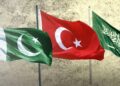
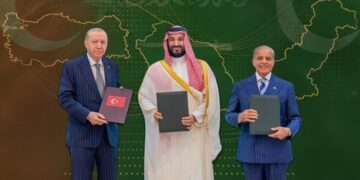
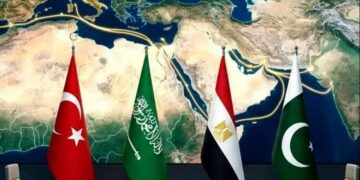
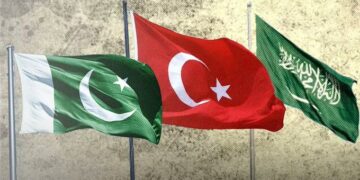
For this reason, the second group of actors, regional security partners such as Turkey and Pakistan, is of greater interest to the Gulf. Although the two countries may appear similar, they perform distinct functions. Pakistan’s nuclear capability, its defense cooperation with Saudi Arabia, its provision of military personnel, and its potential mediating role when required all enhance its deterrent value. Turkey, by contrast, generates a different form of strategic value through its expanding defense industry, particularly its drone technologies, its military presence in Qatar, and its capacity to sustain simultaneous dialogue with both the West and Iran. What distinguishes these actors from Western partners is not merely their shared Muslim identity, but the fact that they are more deeply embedded in the region’s political and social dynamics and enjoy greater regional legitimacy.
The fourth pillar of this multilayered security doctrine is the strengthening of the Gulf’s own capacity. This entails not only stronger coordination at the level of the Gulf Cooperation Council, but also the enhancement of each Gulf state’s national defense capacity. Although the Iran–U.S./Israel war has revived a shared perception of threat, this does not imply that a NATO-style collective defense system will emerge in the short term. Gulf states continue to display considerable divergence in their approaches to Iran, their regional priorities, and their foreign policy preferences. The differing strategies pursued by Abu Dhabi and Riyadh in recent years offer among the clearest illustrations of this divergence. Consequently, the emerging security architecture will not rest on shared institutions alone; each state will also seek to reinforce its own national capacity. Recent investments in the defense industry, efforts to secure technology transfer, and domestic production targets are the most concrete indicators of this trend. In this respect, the significance of partners such as Turkey and Pakistan lies not only in the security guarantees they provide, but also in their capacity to contribute to the development of Gulf states’ own military and technological capabilities.
Taken together, these developments suggest that the Iran–U.S./Israel war does not impose upon the Gulf a single path forward, but rather a multilayered security doctrine. The United States will remain an indispensable pillar of the Gulf security architecture, yet it will no longer be regarded as sufficient on its own. Whereas military deterrence, and where necessary retaliation, took precedence during the war, in its aftermath the cultivation of controlled and asymmetric economic interdependence with Iran, the diversification of regional partnerships, the deepening of intra-Gulf coordination, and the strengthening of national defense capacity emerge as complementary elements of a single, overarching strategy.
References
[1] “Iran appears to have hit Gulf states more than it targeted Israel,” TRT World. Accessed: Jul. 26, 2026. [Online]. Available: https://www.trtworld.com/article/982458172109
[2] “Why is Iran bombing Gulf states while avoiding US naval assets and Israel?” Al Jazeera. Accessed: Jul. 26, 2026. [Online]. Available: https://www.aljazeera.com/news/2026/7/20/why-is-iran-bombing-gulf-states-while-avoiding-us-naval-assets-and-israel
[3] B. H. McGurk, “Iran weaponized the Strait of Hormuz. Now its neighbors are building around it,” CNN. Accessed: Jul. 26, 2026. [Online]. Available: https://www.cnn.com/2026/07/24/politics/middle-east-energy-map-redrawn-pipeline-projects-mcgurk-vis
[4] L. Kelly, “World leaders bypass Donald Trump to tackle Strait of Hormuz crisis,” The Hill. Accessed: Jul. 26, 2026. [Online]. Available: https://thehill.com/policy/international/5815706-iran-strait-hormuz-tensions-global-plans/
[5] B. H. McGurk, “Analysis: The Middle East energy map is being redrawn | CNN Politics,” CNN. Accessed: Jul. 26, 2026. [Online]. Available: https://www.cnn.com/2026/07/24/politics/middle-east-energy-map-redrawn-pipeline-projects-mcgurk-vis
[6] “The State of the Strait: The Role of Hormuz in the Middle East War So Far,” International Crisis Group. Accessed: Jul. 26, 2026. [Online]. Available: https://www.crisisgroup.org/visual-explainers/hormuz/
[7] L. J. M. Mazzucco, “Gulf Maritime Security: Balancing Partnership and Flexibility,” AGSI. Accessed: Jul. 26, 2026. [Online]. Available: https://agsi.org/analysis/gulf-maritime-security-balancing-partnership-and-flexibility/
[8] C. Magee, “Can Gulf countries defend themselves against renewed Iranian attacks?” Al Jazeera. Accessed: Jul. 26, 2026. [Online]. Available: https://www.aljazeera.com/news/2026/7/14/can-gulf-countries-defend-themselves-against-renewed-iranian-attacks
[9] “Experts react: Reading between the lines of the new US-Saudi nuclear agreement,” Atlantic Council. Accessed: Jul. 26, 2026. [Online]. Available: https://www.atlanticcouncil.org/dispatches/experts-react-reading-between-the-lines-of-the-new-us-saudi-nuclear-agreement/
[10] N. Ghanem, “Gulf allies, under Iran strikes, feel the heat as US prioritises Israel’s defence in arms hierarchy,” TRT World. Accessed: Jul. 26, 2026. [Online]. Available: https://www.trtworld.com/article/3232b623b508
[11] H. Alhasan, “A bad peace: the Arab Gulf states and the US–Iran memorandum of understanding,” IISS. Accessed: Jul. 26, 2026. [Online]. Available: https://www.iiss.org/online-analysis/online-analysis/2026/06/a-bad-peace-the-arab-gulf-states-and-the-usiran-memorandum-of-understanding/
[12] “Kuwait and Bahrain launch air strikes on Iran: Report,” Middle East Eye. Accessed: Jul. 26, 2026. [Online]. Available: https://www.middleeasteye.net/news/kuwait-and-bahrain-launch-air-strikes-iran-report
*Opinions expressed in this article are the author’s own and do not necessarily reflect Platform: Current Muslim Affairs’ editorial policy.