
İLKE Vakfı
Platform
tr Türkçe en English
No Result
View All Result
  • PLATFORM
  • NEWS
    İLKE Agenda: Muzzammil Ayyub Thakur ile Keşmir’in “Filistinleştirilmesi”

    Khaled Beydoun: “Islamophobia is a modern manifestation of the crusades”

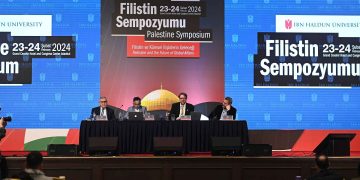
    Filistin Sempozyumu: Filistin ve Küresel İlişkilerin Geleceği

    Exploring Islam’s View on Slavery and Blackness: Seminar by Jonathan A.C. Brown

    The Conference on Contemporary Muslim Thought

    The Conference on Contemporary Muslim Thought

    Filistin Sempozyumu: Filistin ve Küresel İlişkilerin Geleceği

    Palestine Symposium: Palestine and the Future of Global Affairs

    İLKE Agenda: Muzzammil Ayyub Thakur ile Keşmir’in “Filistinleştirilmesi”

    The Platform Talks: Palestine after October 7 with Azzam Tamimi

    İLKE Agenda: Muzzammil Ayyub Thakur ile Keşmir’in “Filistinleştirilmesi”

    The Palestine Talks: Syria after December 8 with Kinda Hawasli

    İLKE Agenda: Muzzammil Ayyub Thakur ile Keşmir’in “Filistinleştirilmesi”

    İLKE Agenda: The “Palestinization” of Kashmir with Muzzammil Ayyub Thakur

  • ANALYSIS
    • All
    • Culture, Arts and Media
    • Economy
    • Education
    • Energy and Environment
    • Fundamental Rights and Freedoms
    • Migration
    • Opinion
    • Social Issues
    The Carnivalization of the World

    The Carnivalization of the World

    Türkiye’s Evolving Role in Preserving the Memory of the Srebrenica Genocide

    Türkiye’s Evolving Role in Preserving the Memory of the Srebrenica Genocide

    Hafızadan Gelecek Vizyonuna: Türkiye-Suudi Arabistan İlişkilerinde Yeni Dönem

    From Memory to Future Vision: A New Era in Turkiye-Saudi Arabia Relations

    Türkmen Halkının Manevi Önderleri Olan Büyük Sufi Alimler: Necmeddin Kübra, Yusuf Hemedânî ve Ebu Said Ebu’l-Hayr

    Great Sufi Scholars as the Spiritual Leaders of the Turkmen People: Najm al-Dīn Kubrā, Yusuf Hamadānī, and Abū Saʿīd Abū’l-Khayr

    Irak’ın Güzel Çocuklarının Hikayesi: Başkanın Pastası

    The Story of Iraq’s Beautiful Children: The President’s Cake

    Estetik Kırılma: İslam Dünyasında Modernleşme ve Kimlik Arayışı

    Aesthetic Rupture: Modernization and the Search for Identity in the Islamic World

  • INTERVIEWS
    A Conversation with Dr. Fadi Zatari on Zionist Terrorism and the Palestinian Resistance

    A Conversation with Dr. Fadi Zatari on Zionist Terrorism and the Palestinian Resistance

    Veri Sömürgeciliği, Yapay Zeka ve Dijital Geleceğimiz: Prof. Ulises Ali Mejias ile Söyleşi

    Data Colonialism, Artificial Intelligence, and Our Digital Future: An Interview with Prof. Ulises Ali Mejias

    Casir el-Bergusi ile Filistin Mücadelesi ve Esaret Yılları Üzerine Bir Röportaj

    An Interview with Jaser Albarghouthi on the Palestinian Struggle and the Years of Captivity

    The Decolonization of Knowledge: Interview with Professor Souleymane Bachir Diagne

    The Decolonization of Knowledge: Interview with Professor Souleymane Bachir Diagne

    A Possible New Breath in Regional Balances: The Alliance of Türkiye, Pakistan, Egypt, and Saudi Arabia

    A Possible New Breath in Regional Balances: The Alliance of Türkiye, Pakistan, Egypt, and Saudi Arabia

    From the Ballot Box to the Street: The Rising Social Wave in Tanzania After the Election

    From the Ballot Box to the Street: The Rising Social Wave in Tanzania After the Election

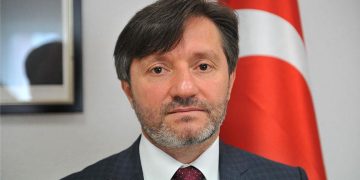
    Kafkasya’da Müslümanlar ve İslami Eğitim: TCDİB Kuzey Kafkasya Koordinatörü Selim Akburak ile Söyleşi

    Muslims and Islamic Education in the Caucasus: An Interview with Selim Burak North Caucasus Coordinator in Directorate of Religious Affairs

    Göçü Yönetmek: Dr. Mehmet Köse’yle Söyleşi

    Interview with Mehmet Köse

    Gurbet Hikayeleri

    Interview on Gurbet Hikayeleri

  • VOICES
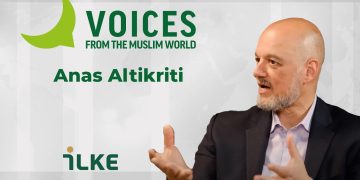
    Anas Altikriti | Voices from the Muslim World | Türkçe Altyazılı

    Anas Altikriti | Voices from the Muslim World | Türkçe Altyazılı

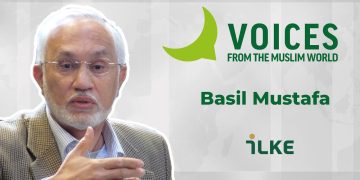
    Basil Mustafa (Oxford) | Voices from the Muslim World | with Turkish subtitles

    Basil Mustafa (Oxford) | Voices from the Muslim World | with Turkish subtitles

    OMAR SULEIMAN | VOICES FROM THE MUSLIM WORLD

    OMAR SULEIMAN | VOICES FROM THE MUSLIM WORLD

    Paul Williams | Voices from the Muslim World

    Paul Williams | Voices from the Muslim World

  • DATABASE
    • All
    • Institutions
    • Movements
    • People
    • Q-A
    Sömürgecilik Nedir?

    What is Colonialism?

    Uluslararası Ceza Mahkemesi (UCM) Nedir?

    What is International Criminal Court (ICC)?

    Soykırım Nedir?

    What is Genocide?

    Halil el-Hayye

    Khalil al-Hayya

    Şeyh Hamad bin Halife Al Sani

    Sheikh Hamad bin Khalifa Al Thani

    NATO 3.0 Nedir?

    What is NATO 3.0?

    İbrahim Anlaşmaları Nedir?

    What are the Abraham Accords?

    Agnotoloji Nedir?

    What is Agnotology?

    Egemenlik Nedir?

    What is Sovereignty?

  • DISCOVER
  • PLATFORM
  • NEWS
    İLKE Agenda: Muzzammil Ayyub Thakur ile Keşmir’in “Filistinleştirilmesi”

    Khaled Beydoun: “Islamophobia is a modern manifestation of the crusades”

    Filistin Sempozyumu: Filistin ve Küresel İlişkilerin Geleceği

    Exploring Islam’s View on Slavery and Blackness: Seminar by Jonathan A.C. Brown

    The Conference on Contemporary Muslim Thought

    The Conference on Contemporary Muslim Thought

    Filistin Sempozyumu: Filistin ve Küresel İlişkilerin Geleceği

    Palestine Symposium: Palestine and the Future of Global Affairs

    İLKE Agenda: Muzzammil Ayyub Thakur ile Keşmir’in “Filistinleştirilmesi”

    The Platform Talks: Palestine after October 7 with Azzam Tamimi

    İLKE Agenda: Muzzammil Ayyub Thakur ile Keşmir’in “Filistinleştirilmesi”

    The Palestine Talks: Syria after December 8 with Kinda Hawasli

    İLKE Agenda: Muzzammil Ayyub Thakur ile Keşmir’in “Filistinleştirilmesi”

    İLKE Agenda: The “Palestinization” of Kashmir with Muzzammil Ayyub Thakur

  • ANALYSIS
    • All
    • Culture, Arts and Media
    • Economy
    • Education
    • Energy and Environment
    • Fundamental Rights and Freedoms
    • Migration
    • Opinion
    • Social Issues
    The Carnivalization of the World

    The Carnivalization of the World

    Türkiye’s Evolving Role in Preserving the Memory of the Srebrenica Genocide

    Türkiye’s Evolving Role in Preserving the Memory of the Srebrenica Genocide

    Hafızadan Gelecek Vizyonuna: Türkiye-Suudi Arabistan İlişkilerinde Yeni Dönem

    From Memory to Future Vision: A New Era in Turkiye-Saudi Arabia Relations

    Türkmen Halkının Manevi Önderleri Olan Büyük Sufi Alimler: Necmeddin Kübra, Yusuf Hemedânî ve Ebu Said Ebu’l-Hayr

    Great Sufi Scholars as the Spiritual Leaders of the Turkmen People: Najm al-Dīn Kubrā, Yusuf Hamadānī, and Abū Saʿīd Abū’l-Khayr

    Irak’ın Güzel Çocuklarının Hikayesi: Başkanın Pastası

    The Story of Iraq’s Beautiful Children: The President’s Cake

    Estetik Kırılma: İslam Dünyasında Modernleşme ve Kimlik Arayışı

    Aesthetic Rupture: Modernization and the Search for Identity in the Islamic World

  • INTERVIEWS
    A Conversation with Dr. Fadi Zatari on Zionist Terrorism and the Palestinian Resistance

    A Conversation with Dr. Fadi Zatari on Zionist Terrorism and the Palestinian Resistance

    Veri Sömürgeciliği, Yapay Zeka ve Dijital Geleceğimiz: Prof. Ulises Ali Mejias ile Söyleşi

    Data Colonialism, Artificial Intelligence, and Our Digital Future: An Interview with Prof. Ulises Ali Mejias

    Casir el-Bergusi ile Filistin Mücadelesi ve Esaret Yılları Üzerine Bir Röportaj

    An Interview with Jaser Albarghouthi on the Palestinian Struggle and the Years of Captivity

    The Decolonization of Knowledge: Interview with Professor Souleymane Bachir Diagne

    The Decolonization of Knowledge: Interview with Professor Souleymane Bachir Diagne

    A Possible New Breath in Regional Balances: The Alliance of Türkiye, Pakistan, Egypt, and Saudi Arabia

    A Possible New Breath in Regional Balances: The Alliance of Türkiye, Pakistan, Egypt, and Saudi Arabia

    From the Ballot Box to the Street: The Rising Social Wave in Tanzania After the Election

    From the Ballot Box to the Street: The Rising Social Wave in Tanzania After the Election

    Kafkasya’da Müslümanlar ve İslami Eğitim: TCDİB Kuzey Kafkasya Koordinatörü Selim Akburak ile Söyleşi

    Muslims and Islamic Education in the Caucasus: An Interview with Selim Burak North Caucasus Coordinator in Directorate of Religious Affairs

    Göçü Yönetmek: Dr. Mehmet Köse’yle Söyleşi

    Interview with Mehmet Köse

    Gurbet Hikayeleri

    Interview on Gurbet Hikayeleri

  • VOICES
    Anas Altikriti | Voices from the Muslim World | Türkçe Altyazılı

    Anas Altikriti | Voices from the Muslim World | Türkçe Altyazılı

    Basil Mustafa (Oxford) | Voices from the Muslim World | with Turkish subtitles

    Basil Mustafa (Oxford) | Voices from the Muslim World | with Turkish subtitles

    OMAR SULEIMAN | VOICES FROM THE MUSLIM WORLD

    OMAR SULEIMAN | VOICES FROM THE MUSLIM WORLD

    Paul Williams | Voices from the Muslim World

    Paul Williams | Voices from the Muslim World

  • DATABASE
    • All
    • Institutions
    • Movements
    • People
    • Q-A
    Sömürgecilik Nedir?

    What is Colonialism?

    Uluslararası Ceza Mahkemesi (UCM) Nedir?

    What is International Criminal Court (ICC)?

    Soykırım Nedir?

    What is Genocide?

    Halil el-Hayye

    Khalil al-Hayya

    Şeyh Hamad bin Halife Al Sani

    Sheikh Hamad bin Khalifa Al Thani

    NATO 3.0 Nedir?

    What is NATO 3.0?

    İbrahim Anlaşmaları Nedir?

    What are the Abraham Accords?

    Agnotoloji Nedir?

    What is Agnotology?

    Egemenlik Nedir?

    What is Sovereignty?

  • DISCOVER
No Result
View All Result
Platform
No Result
View All Result
tr Türkçe en English
Home Interviews

A Conversation with Dr. Fadi Zatari on Zionist Terrorism and the Palestinian Resistance

Fadi Zatari by Fadi Zatari
5 August 2026
in Interviews
A Conversation with Dr. Fadi Zatari on Zionist Terrorism and the Palestinian Resistance
Share on FacebookShare on Twitter

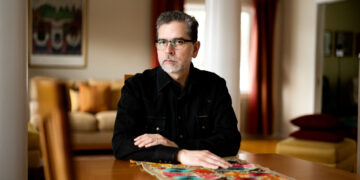
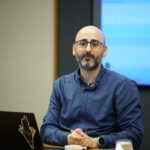
For this interview, we spoke with Dr. Fadi Zatari, a Palestinian scholar who has spent years studying the political uses of the concept of terrorism and the ontological foundations of Zionist violence. Zatari is an assistant professor in the Department of Political Science and International Relations at Istanbul Sabahattin Zaim University and deputy director of the Center for Islam and Global Affairs (CIGA).

He recently co-edited the volume The Zionist Movement, Israel and Violence and contributed a chapter to it, “Terrorism as an Instrument for Israeli Illegitimate Violence and Terror,” in which he argues that terrorism is not a neutral analytical category but a political instrument that Israel uses to legitimize its own violence while delegitimizing Palestinian resistance. We talked with him about the political uses of the word “terrorism,” the violence that accompanied the founding of the Israeli state, the limits of the “self-defense” argument, and where the West Bank is heading after Gaza.

1. Editing a book requires a deep, long-term commitment. What motivated you to make this topic feel so urgent both for you and for the readers you wanted to reach?

For the past eight years, I have taught a course on global terrorism. In it, I focus not only on case studies of terrorist organizations in the Middle East, such as the PKK and ISIS, but also on the theoretical dimensions of counterterrorism. Although the oldest terrorist organizations in the region were Jewish, the Haganah, for example, was established in 1920, finding good literature on them for my students has always been difficult. I therefore decided to work on this volume in order to highlight the close relationship between Jewish paramilitary organizations and the establishment of Israel, and to draw attention to Israeli violence and apartheid policies after 1948. With that aim, the book brings together eight chapters by scholars and researchers who all examine Israel as a settler-colonial state and Zionist terrorism as structured, organized state terror.

2. In your chapter, you argue that terrorism is defined politically and that terrorism studies often overlooks state violence. How does that shape the way Israel’s actions in Gaza are understood?

The concept of terrorism is inherently political. How it is used depends on the political agenda, interests, worldview, and orientation of whoever is applying it. The more serious problem is that terrorism studies, as a field, focuses almost exclusively on non-state actors. Yet many states possess formidable armies and weapons of mass destruction, which makes them far more capable of inflicting violence, causing destruction, and carrying out acts of terror. The Israeli army, for instance, has committed sustained violence over the past three years, including the genocidal war it has waged in the Gaza Strip since 2023. Even so, within the field, it would seem odd to describe Netanyahu as a terrorist or Israel as a terrorist state. All of this should make us reconsider how Western and state-centric terrorism studies remains.

3. Israel often presents itself as defending Western civilization, as seen in Netanyahu’s writings and the “Hamas is ISIS” framing. Why has this narrative been so effective in the West, and does it still hold after the war in Gaza?

Both before and after October 7, 2023, the Israeli prime minister and many other Israeli politicians repeatedly equated the Palestinian resistance with ISIS. Netanyahu also insists that Israel is fighting on behalf of Western civilization and that it is integral to the West and its values. That explanation, in effect, concedes that Zionism is a Western colonial practice. He consistently links Israel, “a democratic state,” to Western democracies and argues that the enemy is the same, only under different names. The purpose of this discourse is to justify Israeli state terrorism, genocidal warfare, destructive policies, and crimes against humanity. But Israeli violence and terror are not merely discursive; they are embedded in everyday Israeli policy and conduct toward Palestinians. Confiscating land, expanding colonial settlements, kidnapping children and doctors, brutally torturing civilians, imposing military checkpoints, and resorting to other forms of violence are all integral to the Israeli system.

After October 7, 2023, however, it became clear that Israel is a threat not only to Palestinians or to the region but to the world as a whole. Solidarity with Palestine grew accordingly: more than 60,000 demonstrations were held in Europe alone, while public support for Israel was almost nowhere to be found. This suggests that Israel’s image, and Netanyahu’s narrative along with it, no longer works as it did before October 7.

4. You argue that an occupying state cannot claim self-defense against the territory it occupies. If the legal position is so clear, why do legal arguments carry so little political weight?

As I show in my chapter, a great many legal instruments and international conventions establish that people living under occupation have the right to self-defense and self-determination. Israel, meanwhile, is committing genocide and war crimes, and it tries to conceal them by claiming that its war is against Hamas and not against Palestinian society as a whole. The scale of Israeli violence and destruction tells a different story. It points to a coordinated plan for the extermination of the Palestinians in Gaza. The evidence on the ground, together with the blunt statements of Israeli leaders, shows that the aim is to eliminate the entire Palestinian population of the Gaza Strip. Hence, Israel intends to colonize the Gaza Strip, build new settlements, and annex them to the state of Israel. This political discourse serves to justify its illegitimate use of violence, its ethnic cleansing, collective punishment, and genocidal wars. The force Israel uses is also grossly disproportionate: the scale of the military strikes, the killing of civilians, and the destruction of most homes and infrastructure in the Gaza Strip, hospitals, schools, mosques, churches, and essential services, cannot be considered legitimate or appropriate self-defense by any measure.

Indeed, the legal position is clear; nevertheless, international will is so fragile. For example, Israel has received full support from the US at the international organizational level, where the US prevents any intervention in favor of the Palestinians.

5. You describe settler terrorism in the West Bank as a state policy coordinated with the army, and you speak of a “quiet genocide.” As Israel turns increasingly toward the West Bank after Gaza, what responsibility falls to the Muslim world?

Settler terrorism in the West Bank is fully backed by the Israeli government. Settlers are armed and protected by the state, and when they murder Palestinians, there are no legal consequences. The West Bank is indeed undergoing a quiet genocide, since the settlers’ daily terror and violence attract so little attention. Israel had already turned its focus to the West Bank before October 7, 2023, but its policies against the Palestinians there are now far more aggressive.

Palestine is not a matter for Palestinians alone. Palestinians are, of course, on the front line of the confrontation with Israel and its settlers, but the threat is a pressing one for many countries around the world, including Türkiye. We therefore need to treat Israel as a global problem one that requires global cooperation and consensus to contain, much as with climate change or AIDS.

Tags: GazzePalestine
Previous Post

Data Colonialism, Artificial Intelligence, and Our Digital Future: An Interview with Prof. Ulises Ali Mejias

Next Post

What is Colonialism?

  • Sömürgecilik Nedir?

    What is Colonialism?

    0 shares
    Share 0 Tweet 0
  • A Conversation with Dr. Fadi Zatari on Zionist Terrorism and the Palestinian Resistance

    0 shares
    Share 0 Tweet 0
  • A Conversation with Dr. Fadi Zatari on Zionist Terrorism and the Palestinian Resistance

    0 shares
    Share 0 Tweet 0

Platform: Agenda of the Muslim World was established within the İLKE Science Culture Education Foundation as a publication organ that aims to follow and analyze the intellectual, political, social, economic and cultural agendas of Muslim societies and to present current and original perspectives on the Muslim world.

  • ANALYSIS
  • NEWS
  • INTERVIEWS
  • VOICES
  • platform@ilke.org.tr
  • (0216) 310 43 18
  • Aziz Mahmut Hüdayi Mah. Türbe Kapısı Sk. No: 13 Üsküdar, İstanbul
Instagram X-twitter

2025 @ PLATFORM is an İLKE Foundation organization. All rights reserved.

No Result
View All Result
  • Issues
  • Platform English