



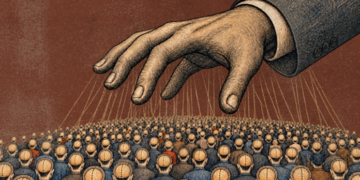





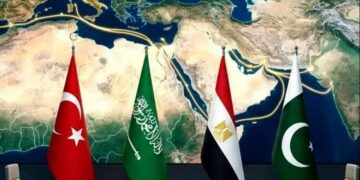






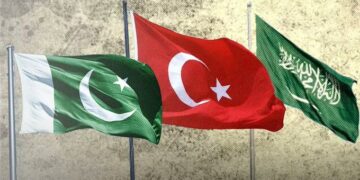
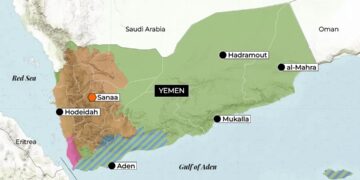
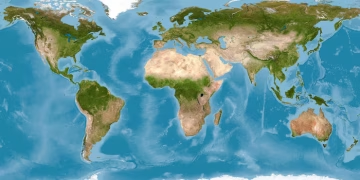





The global economic and political center of gravity is already moving towards the Global South, Asia and the Middle East (Figure -1). Middle East, though, has almost always been associated with conflicts. Türkiye, however, has recently focused more on strengthening broader regional integration and regional economic reconstruction (Bağış, 2025).
Indeed, the Muslim World, too, should place greater emphasis on longer-term economic interests, enhanced connectivity and cooperation, including improving trade facilitation, energy security, and diversified global supply chains. Accordingly, regional cross-border connectivity, trade, infrastructure projects and logistics infrastructure warrants continued strengthening.
Geostrategic, geoeconomic and geopolitical location of the region would also facilitate the region’s transformation into global logistics, investment, trade, energy and financial hubs. That said, the regional markets also need to be reconnected and better integrated into global value chains and the production capacity needs to be restored.
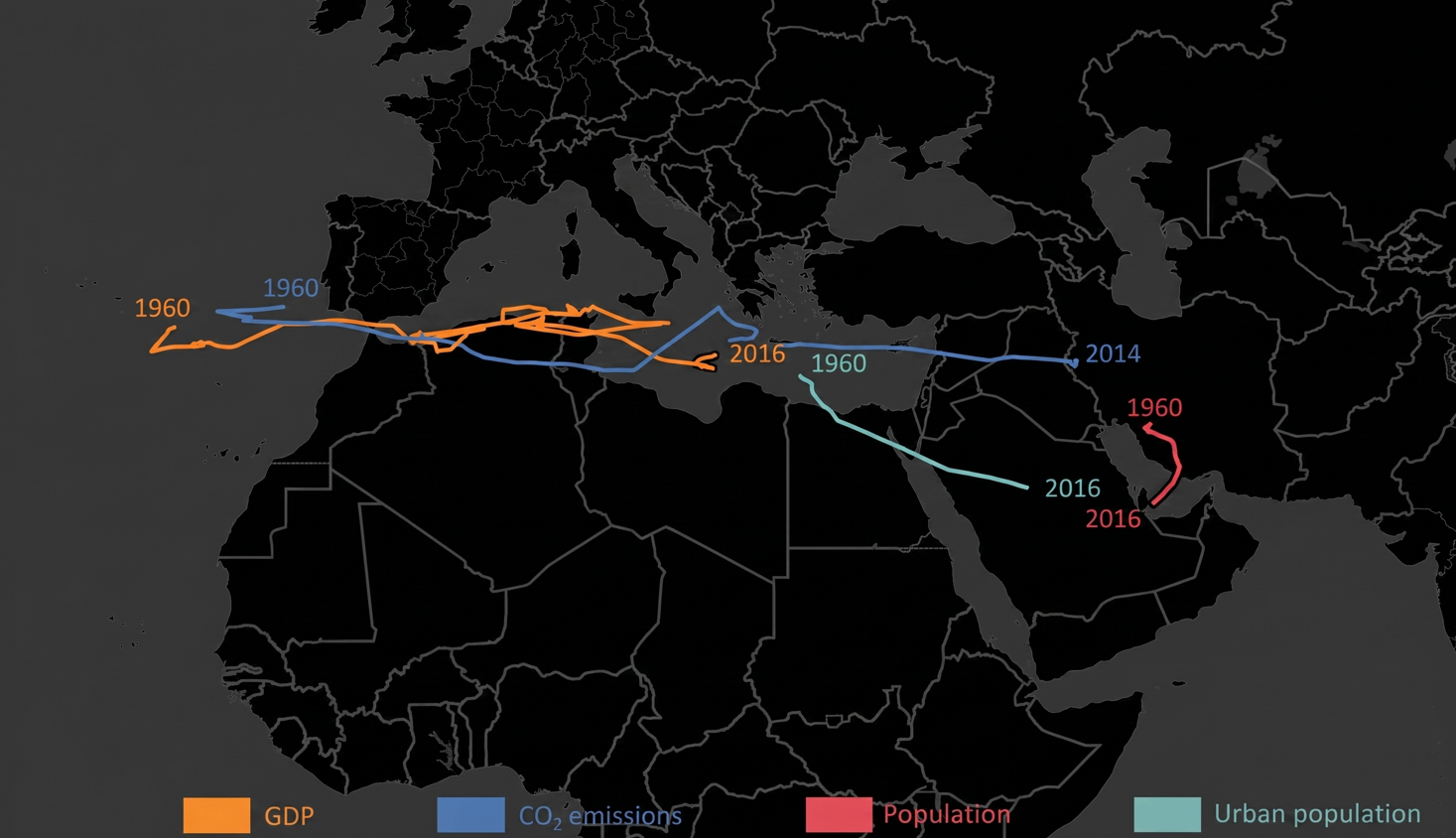
Meanwhile, enhanced regional cooperation and integration in the Middle East is not a zero-sum geopolitical contest too. On the contrary, it should be expected to ultimately reinforce further cooperation. As such, ensuring social, economic, and political stability shall all be key priorities for the regional governments.
One thing is for sure, though, that the commodity rich Middle East’s considerable financial firepower will not be sufficient to ensure further integration, reconstruction and a fast recovery. Political stability, further institutional, cross-country coordination, strategic investments, enhanced transport corridors, customs compatibility and digital trade practices are needed to facilitate enhanced regional economic and trade connectivity.
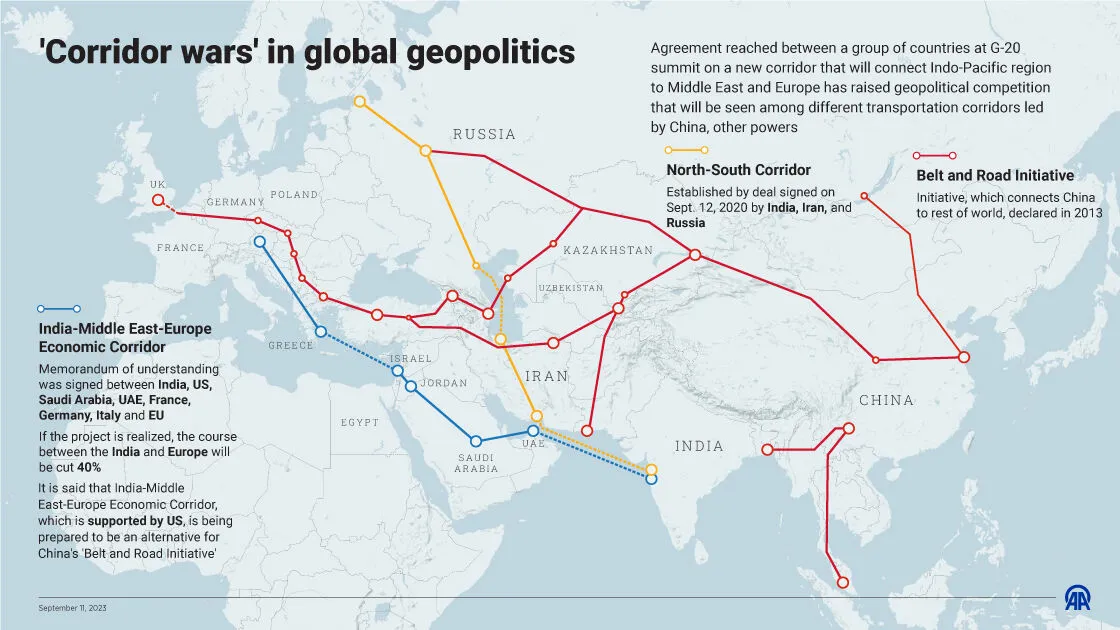
More fundamentally, particularly the newly emerging trade and connectivity corridors in the region have the potential to reshape regional economic and trade dynamics and contribute to economic recovery as well as the broader and deeper regional interconnectedness (Figure -2).
The Evolving Global Landscape
Strategic connectivity and resilient supply chains are two new key concerns across the globe nowadays. However, multipolarity and multilateralism are also on the rise. A new multipolar order is emerging, and Türkiye is also aspiring for a multipolar transition. Meanwhile, war-torn Middle East, Caucasia and Ukraine pose key challenges for regional and even global interconnectedness.
Rising multipolarity, multilateralism and the need to act accordingly are hence novel realities. Countries such as China, however, are increasingly interested in playing a global role in international conflicts, rivaling traditional powerhouses the US and Europe. China’s growing economic and political involvement in the Middle East (too) is a reality. It already is playing big in its economic or trade-wise relations in Asia.
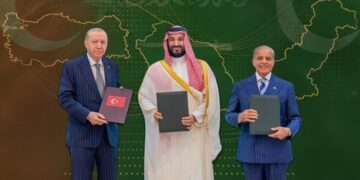
Middle Eastern regional powers Türkiye, Egypt and Saudi Arabia are also increasingly acting independently, and outside the axis of global powers. They are increasing multi-dimensional cooperation, in addition to internal political normalization. The Mecca joint defense pact, that was announce very recently, is the last example of these efforts.
Meanwhile, disruptions in maritime and land shipping routes raise need for alternative corridors. More specifically, if both Hormuz and Bab el-Mandeb Straits are simultaneously closed to maritime traffic, Asia–Europe trade would face severe disruption. With Russia already constrained by sanctions, global shipping alternatives would become even more limited, forcing shipments to reroute towards the Cape of Good Hope.
This would naturally extend transit times, significantly increase freight and war-risk insurance costs, intensify global inflationary pressures, and even weaken global growth. After all, most container shipments from the East to West still use the sea lines. Disruptions to global supply chains would also likely lead to delays in energy and intermediate goods imports from Asia, driving up production costs. The resulting risks to energy security, inflation, and economic growth require closer monitoring.
The Muslim World in Transition
The Muslim World (in this big global picture) is either commodity rich or relatively underdeveloped (Bağış, 2020). Most have either considerable commodity export or import dependence. They even have huge defense dependence, in many cases. Commodity price volatility and huge debt holdings are other major issues. Yet, they also pose a huge economic cooperation potential, Bağış and Yurtseven (2017).
On one hand, high tech, military and nuclear powers such as Pakistan that consistently run out of reserve currencies or relatively more developed economies such as Türkiye, with a strong manufacturing base yet (in the meantime) stubborn current account deficit and external finance needs. On the other hand, commodity and financial capital rich Gulf economies that need backing from a military power to protect their borders.
Rebuilding the physical infrastructure in Palestine, Syria, Iraq and even Iran is another key issue to contemplate. However, these reconstruction efforts could also offer strategic opportunities to expand the economic influence. In particular, reconstruction of Syria is likely to emerge as one of the most consequential economic and geopolitical challenges of the coming decades (Bağış, 2025).
Yet, Syria’s reconstruction should also be considered as part of a broader regional connectivity strategy linking Africa, Asia, Europe, the Gulf and the rest of the world via the Mediterranean Sea. More fundamentally, the Middle East is a strategic bridge connecting Asia, Europe, and Africa. And it is predominantly the Muslim World that occupies this strategic location.
This very fact underscores that the Muslim World lands on the most strategic geographies of the world. A few examples, Istanbul and Dardanelle straits connect Black Sea and Aegean Sea, Hormuz strait connects Persian Gulf and Indian Ocean, and Suez strait connects the Mediterranean Sea to the Red Sea. The Middle East is, therefore, the crossroads of the world’s major trade and energy corridors and a strategic meeting point where civilizations and global interests diverge, intersect, and ultimately converge once again (Figure -1).
The Road Ahead
In light of the foregoing, regional economies and their international partners had better focus more on mutually beneficial partnerships that could foster or promote long-term regional prosperity. Strengthening trade and economic cooperation (among the OIC members for instance) could even help transform current global challenges (including the inflationary pressures and recession risks) into opportunities for sustainable growth.
Meanwhile, the Middle East (concurrently) is undergoing an inevitable economic transformation beyond its traditional dependence on oil and natural gas exports. Regional economies are increasingly shifting toward technology-driven growth, diversified industries, international trade, and striving to become global logistics, trade, energy, financial and transit hubs.
However, the Middle East is indeed endeavoring for more. On one hand, economic reconstruction of Syria and the broader the Middle East, and on another hand, new connectivity projects, new trade corridors are emerging. However, even beyond the OIC or the newly announced Mecca Joint Deterrence Agreement, a key question is where (for instance) key powerhouses China, Türkiye and the Gulf States stand in all these changing political and economic dynamics?
As a matter of fact, China, Türkiye, and the Gulf states are increasingly repositioning themselves as the principal actors to shape the region’s economic future. China is, for example, aiming to replace the US and Russia, while Türkiye is increasingly dominating former Russian and Iranian spheres of influence in the region. Commodity rich Gulf states (on the other hand) leverage huge financial power to dominate regional geopolitics.
Re-instating the market economy, limiting the state control and creating an open economy model in the Muslim World are as crucial. Likewise, improving ease of doing business, rule of law; reviving infrastructure investments, rebuilding damaged energy, trade and logistic infrastructure; reconstructing the manufacturing sector and production disruptions are all requiring further action.
The Middle Corridor calls for renewed attention. This corridor is, no doubt, much more efficient nowadays compared to the Northern or Sea routes (Figure -2). Yet, it is also essential that the bottlenecks along the Middle Corridor (specifically the Caspian crossing, the Caucasus route, port capacity, customs procedures, and gaps in rail connectivity) are addressed expeditiously.
The Trans-Caspian International Transport Route (Middle Corridor) activates the China–Central Asia–Caspian–Caucasus–Türkiye–Europe link, enabling key bottlenecks in maritime transport to be partially mitigated through a combination of road, rail, and ferry connections. Thus, Türkiye occupies a position of considerable strategic importance and represents the most secure route for the East-West trade and energy security.
Türkiye’s strategic location, particularly its position along energy and trade corridors, further enhances its importance. The TANAP and Baku-Tbilisi-Ceyhan (BTC) pipelines can play a vital role in energy security by transporting Caspian oil and natural gas, independent of the Strait of Hormuz, directly to the Mediterranean and Europe. The Kirkuk-Ceyhan pipeline can also serve a similar function for the Iraqi oil.
The Regional Order in Transition
New connectivity projects and trade corridors, especially those across the Muslim World, are emerging as key mechanisms of sustainable global development. New corridors, oil pipelines across Türkiye, Syria and the broader Middle East are altering the economic dynamics and contributing to energy security. As this transformation accelerates, however, regional powers and external stakeholders are competing to play proactive, and in some cases highly assertive, roles in shaping the region’s new economic architecture. However, certain differences are also a reality.
For instance, unlike other individual infrastructure investments (even those supported by international institutions), the Chinese reconstruction projects in the region are all part of the broader connectivity strategy. China is effectively utilizing the Belt and Road Initiative (BRI) and the ability to mobilize large-scale infrastructure financing to influence the region. It develops huge transport networks, invests in industrial zones, and expands digital connectivity across the region.
Likewise, China has even signed long-term cooperation agreements with regional middle powers such as Iran and Saudi Arabia. These new trade and investment deals are strengthening their relationship. However, China also needs each of these economies’ oil and gas for its long-term development. Iran and Saudi Arabia, on the other hand, aim to counterbalance the US influence in the Middle East.
The Gulf states, on the other hand, leverage their huge accumulated financial capital and the SWFs (sovereign wealth funds) to dominate the region. Ambitious economic diversification programs, across the region, have also boosted economic activity and attracted significant interest. The GCC members’ port investments, new logistics platforms, renewable energy investments, new industrial and education parks infrastructure projects are all part of the broader economic diplomacy.
The Gulf Cooperation Council (GCC) countries are pursuing ambitious diversification strategies through large-scale investments and mega-projects aimed at reducing reliance on energy exports and strengthening their roles as global trade and financial centers.
Türkiye, with its unique location, geographical proximity to the region, the strong manufacturing capacity built in the past two decades, its advanced logistics and high-tech infrastructure, and direct access to European markets is also competitively well positioned. The country has recently emerged as a new powerful production and logistics hub, connecting the Middle East with Europe, East and Central Asia to the West.
Türkiye has been heavily investing in cross-country connectivity projects including the Middle Corridor, the Development Road Project and Hejaz Railway project, among others. Over the past few years, the country has also focused more on Iraq and Syria’s economic reconstruction and strengthening the broader regional integration.
Yet, of course, despite all these differences, particularly the Chinese, Turkish and the Gulf interaction in the region should not be considered as competition. On the contrary, Chinese and Gulf financing, together with Turkish and Chinese engineering and construction expertise as well as manufacturing base, logistical networks built around the Muslim World could further accelerate recovery and reconstruction. Trade, production and connectivity networks could be enhanced, and energy security, supply chains and sustainable development could soon be less of a concern.
Türkiye in Focus
A modern, more institutional economic and political cooperation or even a strategic union (between Türkiye and the other OIC members) that is bolstered by cultural, historic and even social roots is inevitable, Bağış and Yurtseven (2017). Türkiye is expansively positioning itself in the global power concentration, rising trade corridors and connectivity rivalry.
The country lies at the crossroads of continents and several strategic regions. Hence, it naturally and eagerly supports inter-regional or East-West trade and transportation projects. That is partly the reason Türkiye strongly supports multilateral commercial, trade, cross-country investments and economic relations too. The country already has a strong pipeline connection and a sound energy transition infrastructure from East to West. A new trans-regional energy pipeline from the Middle East, for instance, would surely further increase Türkiye’s strategic importance.
The country is already connecting Asia and Europe via the Middle Corridor. It is already at the forefront in Europe’s search for alternative energy supplies too. Concurrently reshaping its military, economic and political alliances, and trying to avoid unilateral alignments. The parting US-and- EU relations and rising US-China-Russia tensions are also increasing Türkiye’s strategic importance (Bağış, 2023b). Its manufacturing capacity, logistics and trade connectivity as well as its geostrategic position in energy supply are all increasing its prominence.
Moreover, given deep social, economic, cultural and long historical connectivity between Türkiye and the remaining Muslim World, there are indeed countless reasons Türkiye and the other MENA economies shall cooperate and build a stronger economic integration. And aim to contribute more to the regional security and stability.
Türkiye plays the most strategic role in transportation of rich Caucasian and Gulf energy to Europe too. Hence, a direct energy pipeline to Europe (via Türkiye) is always a much more profitable and efficient alternative to (for instance) the LNG alternative. Türkiye’s improving relations with regional economies shall play a pivotal role in this matter.
The country has managed to successful reorganize supply chains and reshore production activities (Bağış, 2023b). It is nowadays positioned as one of the leading European economies in terms of capital inflows too. No doubt, these figures are all showcasing its resilience, strong infrastructure, strategic location, and diverse economy. Its leadership position in manufacturing industry and investments should also be noted. This is also a testament to its strategic positioning, its healthy investment environment and confirming its position as a safe destination for investors as well as being an attractive investment hub.
Türkiye’s political stability, strong democracy and unrivaled cultural, military and economic power leads to strategic advantages, accompanied by its geo-strategic position. As a prominent political statesman and global leader, President Erdoğan exemplifies the strategic significance of Türkiye’s presence at regional decision-making tables.
Concluding Observations
Collectively, all these factors underscore the fact that regional economies of the Muslim World had better focus more on longer-term economic interests, enhanced connectivity and cooperation, including improving trade facilitation, energy security, and diversified global supply chains. Cross-border connectivity, trade and infrastructure projects, and logistics infrastructure merits further consolidation.
Geostrategic, geoeconomic and geopolitical location of the region would also enable the region’s transformation into global logistics, investment, trade, energy and financial hubs. With that said, the regional markets also need to be reconnected and integrating into global value chains; production capacity needs to be restored, and most importantly the region needs sizable external investment. This way, the substantial potential for economic cooperation would be translated into tangible outcomes.
In light of these considerations, enhanced connectivity and further regional integration (particularly in the Muslim World) is not a zero-sum geopolitical contest. Reconstruction of the Muslim World is and could even turn into a positive-sum ballad (Bağış, 2023a). Regional economies and their international partners should probably place greater emphasis on mutually beneficial partnerships that can foster sustainable, long-term regional prosperity.
References
Balsa-Barreiro, J., Li, Y., & Morales, A. (2019). Globalization and the shifting centers of gravity of world’s human dynamics: Implications for sustainability. Journal of Cleaner Production, 239, 117923.
Bağış, B. (2025). “Suriye’nin yeniden inşası ve Türkiye”, EcoPolitics Cafe, 20 Şubat 2025.
Bağış, B. and Yurtseven, Ç. (2017). “Turkey and the OIC: Greater Economic Cooperation, Opportunities and Challenges”, Turkish Ministry of Foreign Affairs, SAM Paper No 13.
Bağış, B. (2020). “İslam’da Sosyal Devlet Anlayışı”, TKBB-Katılım Finans Dergisi, 4 (20), s. 60-63. DOI: 10.13140/RG.2.2.22055.62888
Bağış, B. (2023a). “Türkiye and the West: A posteriori positive-sum ballad”, Daily Sabah (June 15, 2023).
Bağış, B. (2023b). “Türkiyesiz Ticari Denklemler Çözümsüzdür”, Sabah, (7 Ekim 2023).
Chair, Department of Economics, FSM Vakıf University
*Opinions expressed in this article are the author’s own and do not necessarily reflect Platform: Current Muslim Affairs’ editorial policy.