










İLKE Vakfı
Platform
  • Türkçe
No Result
View All Result
  • PLATFORM
  • NEWS
    İLKE Agenda: Muzzammil Ayyub Thakur ile Keşmir’in “Filistinleştirilmesi”

    Khaled Beydoun: “Islamophobia is a modern manifestation of the crusades”

    Filistin Sempozyumu: Filistin ve Küresel İlişkilerin Geleceği

    Exploring Islam’s View on Slavery and Blackness: Seminar by Jonathan A.C. Brown

    The Conference on Contemporary Muslim Thought

    The Conference on Contemporary Muslim Thought

    Filistin Sempozyumu: Filistin ve Küresel İlişkilerin Geleceği

    Palestine Symposium: Palestine and the Future of Global Affairs

    İLKE Agenda: Muzzammil Ayyub Thakur ile Keşmir’in “Filistinleştirilmesi”

    The Platform Talks: Palestine after October 7 with Azzam Tamimi

    İLKE Agenda: Muzzammil Ayyub Thakur ile Keşmir’in “Filistinleştirilmesi”

    The Palestine Talks: Syria after December 8 with Kinda Hawasli

    İLKE Agenda: Muzzammil Ayyub Thakur ile Keşmir’in “Filistinleştirilmesi”

    İLKE Agenda: The “Palestinization” of Kashmir with Muzzammil Ayyub Thakur

  • ANALYSIS
    • All
    • Culture, Arts and Media
    • Economy
    • Education
    • Energy and Environment
    • Fundamental Rights and Freedoms
    • Migration
    • Opinion
    • Social Issues
    The Gravity of What Took Place at Al-Aqsa Mosque During Ramadan 2026

    The Gravity of What Took Place at Al-Aqsa Mosque During Ramadan 2026

    AFP/GETTY IMAGES

    FLA-JNIM Cooperation and Shifting Security Dynamics in Mali

    Sosyal Medyada İslamcı-Muhafazakâr Kamusallığın Dönüşümü Üzerine

    On the Transformation of Islamist-Conservative Publicness on Social Media

    Bangladeş’te 2026 Seçimleri Sonrası Siyasi Tartışmalar

    Political Debates Post-2026 Elections in Bangladesh

    Filistin’de Çocuk Olmak: 5 Nisan Filistinli Çocuklar Günü

    April 5: Palestinian Children’s Day

    Security, Fragility, and the Search for a New Equilibrium in the Gulf Following the Iranian Attacks

    Security, Fragility, and the Search for a New Equilibrium in the Gulf Following the Iranian Attacks

  • INTERVIEWS
    The Decolonization of Knowledge: Interview with Professor Souleymane Bachir Diagne

    The Decolonization of Knowledge: Interview with Professor Souleymane Bachir Diagne

    A Possible New Breath in Regional Balances: The Alliance of Türkiye, Pakistan, Egypt, and Saudi Arabia

    A Possible New Breath in Regional Balances: The Alliance of Türkiye, Pakistan, Egypt, and Saudi Arabia

    From the Ballot Box to the Street: The Rising Social Wave in Tanzania After the Election

    From the Ballot Box to the Street: The Rising Social Wave in Tanzania After the Election

    Kafkasya’da Müslümanlar ve İslami Eğitim: TCDİB Kuzey Kafkasya Koordinatörü Selim Akburak ile Söyleşi

    Muslims and Islamic Education in the Caucasus: An Interview with Selim Burak North Caucasus Coordinator in Directorate of Religious Affairs

    Göçü Yönetmek: Dr. Mehmet Köse’yle Söyleşi

    Interview with Mehmet Köse

    Gurbet Hikayeleri

    Interview on Gurbet Hikayeleri

    İstanbul’daki Uluslararası Öğrencilerle Söyleşi

    Interview with International Students in Istanbul

    Zaytuna College Lisansüstü Eğitim Dekanı Maşuk Yamaç’la Söyleşi

    Interview with Mahsuk Yamac, Dean of Graduate Studies at Zaytuna College

    Gazze’den Bir Ses

    A Voice from Gaza: Sarah al-Najjar

  • VOICES
    Anas Altikriti | Voices from the Muslim World | Türkçe Altyazılı

    Anas Altikriti | Voices from the Muslim World | Türkçe Altyazılı

    Basil Mustafa (Oxford) | Voices from the Muslim World | with Turkish subtitles

    Basil Mustafa (Oxford) | Voices from the Muslim World | with Turkish subtitles

    OMAR SULEIMAN | VOICES FROM THE MUSLIM WORLD

    OMAR SULEIMAN | VOICES FROM THE MUSLIM WORLD

    Paul Williams | Voices from the Muslim World

    Paul Williams | Voices from the Muslim World

  • DATABASE
    • All
    • Institutions
    • Movements
    • People
    Afganistan Araştırma ve Değerlendirme Birimi

    Afghanistan Research and Evaluation Unit

    Afgan Stratejik Çalışmalar Merkezi

    Afghan Institute for Strategic Studies

    Abaad Araştırma Merkezi

    Abaad Studies & Research Center

    Adil Bir Dünya İçin Uluslararası Hareket

    International Movement For A Just World

    Adalet ve Kalkınma Partisi

    Justice and Development Party – Hizb al-Adale wa’t-Tenmiye-Justice and Development Party

    Adalet ve İhsan Hareketi

    Justice and Ihsan Movement

    Açe Özgürlük Hareketi

    Aceh Freedom Movement

    Hamid Dabashi

    Hamid Dabashi

    Fuad Sezgin

    Fuad Sezgin

  • PLATFORM
  • NEWS
    İLKE Agenda: Muzzammil Ayyub Thakur ile Keşmir’in “Filistinleştirilmesi”

    Khaled Beydoun: “Islamophobia is a modern manifestation of the crusades”

    Filistin Sempozyumu: Filistin ve Küresel İlişkilerin Geleceği

    Exploring Islam’s View on Slavery and Blackness: Seminar by Jonathan A.C. Brown

    The Conference on Contemporary Muslim Thought

    The Conference on Contemporary Muslim Thought

    Filistin Sempozyumu: Filistin ve Küresel İlişkilerin Geleceği

    Palestine Symposium: Palestine and the Future of Global Affairs

    İLKE Agenda: Muzzammil Ayyub Thakur ile Keşmir’in “Filistinleştirilmesi”

    The Platform Talks: Palestine after October 7 with Azzam Tamimi

    İLKE Agenda: Muzzammil Ayyub Thakur ile Keşmir’in “Filistinleştirilmesi”

    The Palestine Talks: Syria after December 8 with Kinda Hawasli

    İLKE Agenda: Muzzammil Ayyub Thakur ile Keşmir’in “Filistinleştirilmesi”

    İLKE Agenda: The “Palestinization” of Kashmir with Muzzammil Ayyub Thakur

  • ANALYSIS
    • All
    • Culture, Arts and Media
    • Economy
    • Education
    • Energy and Environment
    • Fundamental Rights and Freedoms
    • Migration
    • Opinion
    • Social Issues
    The Gravity of What Took Place at Al-Aqsa Mosque During Ramadan 2026

    The Gravity of What Took Place at Al-Aqsa Mosque During Ramadan 2026

    AFP/GETTY IMAGES

    FLA-JNIM Cooperation and Shifting Security Dynamics in Mali

    Sosyal Medyada İslamcı-Muhafazakâr Kamusallığın Dönüşümü Üzerine

    On the Transformation of Islamist-Conservative Publicness on Social Media

    Bangladeş’te 2026 Seçimleri Sonrası Siyasi Tartışmalar

    Political Debates Post-2026 Elections in Bangladesh

    Filistin’de Çocuk Olmak: 5 Nisan Filistinli Çocuklar Günü

    April 5: Palestinian Children’s Day

    Security, Fragility, and the Search for a New Equilibrium in the Gulf Following the Iranian Attacks

    Security, Fragility, and the Search for a New Equilibrium in the Gulf Following the Iranian Attacks

  • INTERVIEWS
    The Decolonization of Knowledge: Interview with Professor Souleymane Bachir Diagne

    The Decolonization of Knowledge: Interview with Professor Souleymane Bachir Diagne

    A Possible New Breath in Regional Balances: The Alliance of Türkiye, Pakistan, Egypt, and Saudi Arabia

    A Possible New Breath in Regional Balances: The Alliance of Türkiye, Pakistan, Egypt, and Saudi Arabia

    From the Ballot Box to the Street: The Rising Social Wave in Tanzania After the Election

    From the Ballot Box to the Street: The Rising Social Wave in Tanzania After the Election

    Kafkasya’da Müslümanlar ve İslami Eğitim: TCDİB Kuzey Kafkasya Koordinatörü Selim Akburak ile Söyleşi

    Muslims and Islamic Education in the Caucasus: An Interview with Selim Burak North Caucasus Coordinator in Directorate of Religious Affairs

    Göçü Yönetmek: Dr. Mehmet Köse’yle Söyleşi

    Interview with Mehmet Köse

    Gurbet Hikayeleri

    Interview on Gurbet Hikayeleri

    İstanbul’daki Uluslararası Öğrencilerle Söyleşi

    Interview with International Students in Istanbul

    Zaytuna College Lisansüstü Eğitim Dekanı Maşuk Yamaç’la Söyleşi

    Interview with Mahsuk Yamac, Dean of Graduate Studies at Zaytuna College

    Gazze’den Bir Ses

    A Voice from Gaza: Sarah al-Najjar

  • VOICES
    Anas Altikriti | Voices from the Muslim World | Türkçe Altyazılı

    Anas Altikriti | Voices from the Muslim World | Türkçe Altyazılı

    Basil Mustafa (Oxford) | Voices from the Muslim World | with Turkish subtitles

    Basil Mustafa (Oxford) | Voices from the Muslim World | with Turkish subtitles

    OMAR SULEIMAN | VOICES FROM THE MUSLIM WORLD

    OMAR SULEIMAN | VOICES FROM THE MUSLIM WORLD

    Paul Williams | Voices from the Muslim World

    Paul Williams | Voices from the Muslim World

  • DATABASE
    • All
    • Institutions
    • Movements
    • People
    Afganistan Araştırma ve Değerlendirme Birimi

    Afghanistan Research and Evaluation Unit

    Afgan Stratejik Çalışmalar Merkezi

    Afghan Institute for Strategic Studies

    Abaad Araştırma Merkezi

    Abaad Studies & Research Center

    Adil Bir Dünya İçin Uluslararası Hareket

    International Movement For A Just World

    Adalet ve Kalkınma Partisi

    Justice and Development Party – Hizb al-Adale wa’t-Tenmiye-Justice and Development Party

    Adalet ve İhsan Hareketi

    Justice and Ihsan Movement

    Açe Özgürlük Hareketi

    Aceh Freedom Movement

    Hamid Dabashi

    Hamid Dabashi

    Fuad Sezgin

    Fuad Sezgin

No Result
View All Result
Platform
No Result
View All Result
Home Analyses

Brain Drain in Africa

Gökhan Kavak by Gökhan Kavak
7 November 2025
in Analyses, Migration
Brain Drain in Africa
Share on FacebookShare on Twitter

Africa is often referred to as “The Continent of the Future” or “Rising Africa.” The continent is known not only for its abundant natural resources but also for its young population. Therefore, it’s crucial to discuss the type of education and employment opportunities provided for the young population. With a population of 1.3 billion and an average age of 19, a significant portion of African youth prefer to pursue education outside the continent for various reasons.

The internal political, economic, and security issues of African countries are among the leading causes that negatively affect the education system and lead African youth to leave their countries for better education. Of course, each country has its own unique problems, and at the same time, the reasons why young people choose foreign countries for education are reported. According to a report titled Best Global Destinations for Higher Education for African Students published by the U.S.-based Carnegie Endowment for International Peace in 2000, 281,000 young Africans chose to pursue education abroad, while this number increased to 441,000 in 2010 and 624,000 in 2020. While Moroccans are the first among those who prefer education outside the continent, Nigerians take the lead in Sub-Saharan Africa. France is first among the countries preferred outside the continent, followed by China, the United States, Germany, the United Kingdom, the United Arab Emirates (UAE), Canada, and Türkiye.[1]

Why do African youth prefer to move outside the continent?

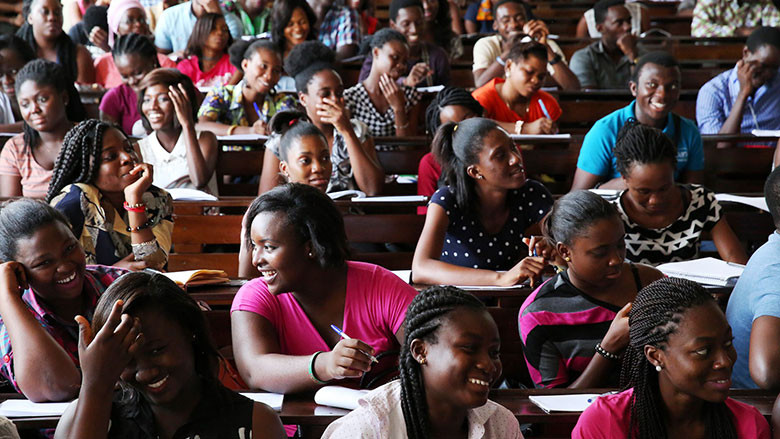
There are different reasons why African youth prefer to study abroad, especially in the US and Europe. Reasons include the scholarships, accommodations, job opportunities, laboratory and classroom facilities provided by foreign countries, compared to many African countries where education doesn’t receive sufficient budget allocation and where the curriculum and education conditions are not ideal. Additionally, it’s worth noting that obtaining education in Western countries is perceived as a “prestige” in Africa. Hence, African youth also choose education overseas to gain more acceptance and higher status in their own societies.

The number of universities in many African countries is increasing every year. In recent years, many foundation universities have also been established in addition to state universities. Uganda, South Africa, and Kenya are just a few examples of these countries. For instance, while only one university was operational in Uganda in the 1970s, now nearly sixty universities provide education. Indeed, Uganda Islamic University, established in 1988, currently provides education to around 10,000 students from twenty-two countries in Africa and beyond.[2]

Three examples for Africa: Nigeria, Sudan, and South Africa

Considering that there are 54 countries in Africa and a population of 1.3 billion, it is necessary to elaborate on the topic with notable examples without generalizing. In this regard, give the examples of South Africa, known for its quality education, Sudan, whose education system has been devastated due to internal conflict, and Nigeria, where unresolved problems pose a significant threat to the education system. South Africa, which stands out with its education quality and opportunities for students, also hosts many students from Türkiye for education. It is home to universities such as Cape Town, Witwatersrand, Pretoria, and Stellenbosch, ranked within the top 500 globally. This country constitutes a significant alternative to Western universities with its high quality of education and affordable tuition fees. In addition to the quality of education, young Africans and people from all over the world prefer the Republic of South Africa for its living conditions and natural beauty.

While South Africa shines with its education quality, many African countries have experienced a decline in education quality in recent years due to economic and political crises. Sudan serves as a very vivid example in this regard. Particularly favored for Arabic and Islamic education, Sudan’s education system has suffered greatly in recent years due to political crises and internal conflicts. Young people who came to Sudan for education from various countries, particularly from Africa, were forced to return to their countries after the civil war. Despite being seen as an education hub for the Islamic world, Sudan’s education system has suffered irreparable damage due to economic crises and internal conflict. Institutions like the International University of Africa, Al Neelain University, University of Bahri, University of Medical Sciences and Technology, Elrazi University, Sudan University of Science and Technology, University of Kordofan, Omdurman Islamic University, Jazeera University, and University of Khartoum highlight the international dimension of education in Sudan. The internal crises in Sudan, which creates an alternative in Africa, have negatively affected the education system and students, forcing many students to drop out of their education.

With a population of 220 million and a rich religious and cultural heritage, Nigeria’s educational institutions struggle with many problems from kindergarten to university. Insufficient budget allocated to education, inability to pay salaries on time, strikes, internal conflicts, terrorist attacks, corruption, and high tuition fees negatively affect education. In Nigeria, where the gap between the rich and the poor is growing, education in public schools is declining due to insufficient budget, while there is a notable increase in private schools. Today, nearly 170 universities are operating in Nigeria. Education in the country, with its state system, revolves around state administrations, churches, private schools, and madrasas, with no common curriculum. Despite efforts, Nigeria remains among the countries where the education system fails to achieve the desired level. Therefore, those with economic means in the country send their children to either costly private universities or schools in Western countries.

The country often hits the headlines with academics on strike due to unpaid salaries, and many aspire to work abroad. Nigerians working abroad in fields like medicine, pharmacy, or engineering cannot contribute to their homeland. Nigerian youth prefer countries like Ghana, Benin, Egypt, or pre-civil war Sudan for education, adversely affecting the Nigerian economy. Indeed, students studying abroad spend approximately $3 billion annually.

Nigeria is home to the highest number of children who cannot go to school in the world due to Boko Haram attacks and other reasons. In addition, more than 7 million Almajirai aged between 4 and 15 in the country grow up without protection, vocational, or formal education. The Almajiranci system, a form of education to memorize the Quran, has become dysfunctional due to colonial policies and neglect by Muslims in the country. The children in the Almajiranci system try to meet their needs by begging, and when they cannot find jobs in the future, they either fall into the hands of armed groups or engage in illegal activities, thus not only ruining their own futures but also negatively impacting the country’s development.[3]
Brain Drain in Africa and Its Consequences

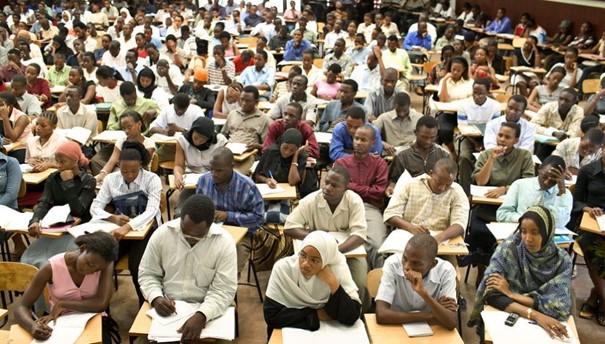
The fact that African students receive education abroad has both positive and negative consequences. Indeed, African youth studying abroad have the opportunity to transfer their experiences and knowledge to their people upon returning to their countries, while those who do not return contribute to brain drain. When young individuals choose not to return to their home country after completing their education, fulfilling the demand for skilled workers in African countries becomes increasingly challenging. This situation also results in the inability of educated young people to transfer their experience and knowledge to their own people. Although it is possible to say that young people who return to their countries have the opportunity to observe their countries from an external perspective and see their shortcomings, it is an undeniable fact that a significant portion of African youth do not want to return to their countries after their education.

African youth studying abroad have the opportunity to transfer their experiences and knowledge to their people upon returning to their countries, while those who do not return contribute to brain drain. 

On the other hand, we should also note that “African elites” and their children also demand education outside the continent. Indeed, African leaders in power, wealthy Africans, or prominent members of society prefer their children to go abroad for education, which results in the country of education deepening its political, economic, and military influence in African countries. Many political and military elites in countries such as Cameroon, Gabon, Nigeria, and African countries greatly affected by coups in recent years have received education in the United States or Europe. This situation highlights that the education process can create a “dependency” relationship, leading to economic, cultural, and political dependence on the countries that provide education.

As long as the problems in the education system, as seen in the examples of Nigeria and Sudan, are ignored, they grow and create even bigger societal problems. Conflicts, poverty, and parental neglect adversely affect children’s education. Young people who do not receive a good education and cannot find employment engage in crime, negatively affecting the country and society.

Unless the state mechanism, the business world, and the prominent members of society collaborate to find a holistic solution to the problem of education in African countries for economics, security, and employment after graduation, the problems become permanent. Otherwise, Africa and these countries, which have a rich history in education, cannot solve their own problems or contribute to regional or global solutions due to problems in the education system.

References

[1] See https://carnegieendowment.org/2023/07/13/what-are-top-global-destinations-for-higher-education-for-african-students-pub-90203

[2] See https://www.aa.com.tr/tr/dosya-haber/afrikali-gencler-universitelerin-yetersiz-olmasi-nedeniyle-kita-disina-gidiyor/3034272

[3] See https://afam.org.tr/bir-afrika-ulkesinin-tarihi-serencami-nijeryada-egitim-meselesi-ve-almajirilik-sistemi/
Tags: AfricaBrain DrainEducation
Previous Post

The National Motivations and Global Consequences of International Education and the Turkish Context

Next Post

Interview with Samer Abdelnour, Co-founder of Al-Shabaka: The Palestinian Policy Network

  • The Gravity of What Took Place at Al-Aqsa Mosque During Ramadan 2026

    The Gravity of What Took Place at Al-Aqsa Mosque During Ramadan 2026

    0 shares
    Share 0 Tweet 0
  • The Gravity of What Took Place at Al-Aqsa Mosque During Ramadan 2026

    0 shares
    Share 0 Tweet 0
  • FLA-JNIM Cooperation and Shifting Security Dynamics in Mali

    0 shares
    Share 0 Tweet 0
  • FLA-JNIM Cooperation and Shifting Security Dynamics in Mali

    0 shares
    Share 0 Tweet 0
  • The Current State of Indonesia’s Luxury Industry and the Landscape of Independent Handcrafted Watchmaking

    0 shares
    Share 0 Tweet 0

Platform: Agenda of the Muslim World was established within the İLKE Science Culture Education Foundation as a publication organ that aims to follow and analyze the intellectual, political, social, economic and cultural agendas of Muslim societies and to present current and original perspectives on the Muslim world.

  • ANALYSIS
  • NEWS
  • INTERVIEWS
  • VOICES
  • platform@ilke.org.tr
  • (0216) 310 43 18
  • Aziz Mahmut Hüdayi Mah. Türbe Kapısı Sk. No: 13 Üsküdar, İstanbul
Instagram X-twitter

2025 @ PLATFORM is an İLKE Foundation organization. All rights reserved.

No Result
View All Result
  • Issues
  • Platform English