





İLKE Vakfı
Platform
tr Türkçe en English
No Result
View All Result
  • PLATFORM
  • NEWS
    İLKE Agenda: Muzzammil Ayyub Thakur ile Keşmir’in “Filistinleştirilmesi”

    Khaled Beydoun: “Islamophobia is a modern manifestation of the crusades”

    Filistin Sempozyumu: Filistin ve Küresel İlişkilerin Geleceği

    Exploring Islam’s View on Slavery and Blackness: Seminar by Jonathan A.C. Brown

    The Conference on Contemporary Muslim Thought

    The Conference on Contemporary Muslim Thought

    Filistin Sempozyumu: Filistin ve Küresel İlişkilerin Geleceği

    Palestine Symposium: Palestine and the Future of Global Affairs

    İLKE Agenda: Muzzammil Ayyub Thakur ile Keşmir’in “Filistinleştirilmesi”

    The Platform Talks: Palestine after October 7 with Azzam Tamimi

    İLKE Agenda: Muzzammil Ayyub Thakur ile Keşmir’in “Filistinleştirilmesi”

    The Palestine Talks: Syria after December 8 with Kinda Hawasli

    İLKE Agenda: Muzzammil Ayyub Thakur ile Keşmir’in “Filistinleştirilmesi”

    İLKE Agenda: The “Palestinization” of Kashmir with Muzzammil Ayyub Thakur

  • ANALYSIS
    • All
    • Culture, Arts and Media
    • Economy
    • Education
    • Energy and Environment
    • Fundamental Rights and Freedoms
    • Migration
    • Opinion
    • Social Issues
    Hafızadan Gelecek Vizyonuna: Türkiye-Suudi Arabistan İlişkilerinde Yeni Dönem

    From Memory to Future Vision: A New Era in Turkiye-Saudi Arabia Relations

    Türkmen Halkının Manevi Önderleri Olan Büyük Sufi Alimler: Necmeddin Kübra, Yusuf Hemedânî ve Ebu Said Ebu’l-Hayr

    Great Sufi Scholars as the Spiritual Leaders of the Turkmen People: Najm al-Dīn Kubrā, Yusuf Hamadānī, and Abū Saʿīd Abū’l-Khayr

    Irak’ın Güzel Çocuklarının Hikayesi: Başkanın Pastası

    The Story of Iraq’s Beautiful Children: The President’s Cake

    Vekalet Savaşı Nedir?

    What is Proxy Warfare?

    Estetik Kırılma: İslam Dünyasında Modernleşme ve Kimlik Arayışı

    Aesthetic Rupture: Modernization and the Search for Identity in the Islamic World

    Batılı Filmlerde Müslümanların ve Afrika’nın Temsili

    The Representation of Muslims and Africa in Western Films

  • INTERVIEWS
    Casir el-Bergusi ile Filistin Mücadelesi ve Esaret Yılları Üzerine Bir Röportaj

    An Interview with Jaser Albarghouthi on the Palestinian Struggle and the Years of Captivity

    The Decolonization of Knowledge: Interview with Professor Souleymane Bachir Diagne

    The Decolonization of Knowledge: Interview with Professor Souleymane Bachir Diagne

    A Possible New Breath in Regional Balances: The Alliance of Türkiye, Pakistan, Egypt, and Saudi Arabia

    A Possible New Breath in Regional Balances: The Alliance of Türkiye, Pakistan, Egypt, and Saudi Arabia

    From the Ballot Box to the Street: The Rising Social Wave in Tanzania After the Election

    From the Ballot Box to the Street: The Rising Social Wave in Tanzania After the Election

    Kafkasya’da Müslümanlar ve İslami Eğitim: TCDİB Kuzey Kafkasya Koordinatörü Selim Akburak ile Söyleşi

    Muslims and Islamic Education in the Caucasus: An Interview with Selim Burak North Caucasus Coordinator in Directorate of Religious Affairs

    Göçü Yönetmek: Dr. Mehmet Köse’yle Söyleşi

    Interview with Mehmet Köse

    Gurbet Hikayeleri

    Interview on Gurbet Hikayeleri

    İstanbul’daki Uluslararası Öğrencilerle Söyleşi

    Interview with International Students in Istanbul

    Zaytuna College Lisansüstü Eğitim Dekanı Maşuk Yamaç’la Söyleşi

    Interview with Mahsuk Yamac, Dean of Graduate Studies at Zaytuna College

  • VOICES
    Anas Altikriti | Voices from the Muslim World | Türkçe Altyazılı

    Anas Altikriti | Voices from the Muslim World | Türkçe Altyazılı

    Basil Mustafa (Oxford) | Voices from the Muslim World | with Turkish subtitles

    Basil Mustafa (Oxford) | Voices from the Muslim World | with Turkish subtitles

    OMAR SULEIMAN | VOICES FROM THE MUSLIM WORLD

    OMAR SULEIMAN | VOICES FROM THE MUSLIM WORLD

    Paul Williams | Voices from the Muslim World

    Paul Williams | Voices from the Muslim World

  • DATABASE
    • All
    • Institutions
    • Movements
    • People
    • Q-A
    Halil el-Hayye

    Khalil al-Hayya

    Şeyh Hamad bin Halife Al Sani

    Sheikh Hamad bin Khalifa Al Thani

    NATO 3.0 Nedir?

    What is NATO 3.0?

    İbrahim Anlaşmaları nedir?

    What are the Abraham Accords?

    Agnotoloji Nedir?

    What is Agnotology?

    Egemenlik Nedir?

    What is Sovereignty?

    Tekno-Feodalizm Nedir?

    What is Techno-Feudalism?

    Hürmüz Boğazı neden önemli?

    Why is Strait of Hormuz important?

    İnsan Hakları Evrensel Midir?

    Are Human Rights Universal?

  • DISCOVER
  • PLATFORM
  • NEWS
    İLKE Agenda: Muzzammil Ayyub Thakur ile Keşmir’in “Filistinleştirilmesi”

    Khaled Beydoun: “Islamophobia is a modern manifestation of the crusades”

    Filistin Sempozyumu: Filistin ve Küresel İlişkilerin Geleceği

    Exploring Islam’s View on Slavery and Blackness: Seminar by Jonathan A.C. Brown

    The Conference on Contemporary Muslim Thought

    The Conference on Contemporary Muslim Thought

    Filistin Sempozyumu: Filistin ve Küresel İlişkilerin Geleceği

    Palestine Symposium: Palestine and the Future of Global Affairs

    İLKE Agenda: Muzzammil Ayyub Thakur ile Keşmir’in “Filistinleştirilmesi”

    The Platform Talks: Palestine after October 7 with Azzam Tamimi

    İLKE Agenda: Muzzammil Ayyub Thakur ile Keşmir’in “Filistinleştirilmesi”

    The Palestine Talks: Syria after December 8 with Kinda Hawasli

    İLKE Agenda: Muzzammil Ayyub Thakur ile Keşmir’in “Filistinleştirilmesi”

    İLKE Agenda: The “Palestinization” of Kashmir with Muzzammil Ayyub Thakur

  • ANALYSIS
    • All
    • Culture, Arts and Media
    • Economy
    • Education
    • Energy and Environment
    • Fundamental Rights and Freedoms
    • Migration
    • Opinion
    • Social Issues
    Hafızadan Gelecek Vizyonuna: Türkiye-Suudi Arabistan İlişkilerinde Yeni Dönem

    From Memory to Future Vision: A New Era in Turkiye-Saudi Arabia Relations

    Türkmen Halkının Manevi Önderleri Olan Büyük Sufi Alimler: Necmeddin Kübra, Yusuf Hemedânî ve Ebu Said Ebu’l-Hayr

    Great Sufi Scholars as the Spiritual Leaders of the Turkmen People: Najm al-Dīn Kubrā, Yusuf Hamadānī, and Abū Saʿīd Abū’l-Khayr

    Irak’ın Güzel Çocuklarının Hikayesi: Başkanın Pastası

    The Story of Iraq’s Beautiful Children: The President’s Cake

    Vekalet Savaşı Nedir?

    What is Proxy Warfare?

    Estetik Kırılma: İslam Dünyasında Modernleşme ve Kimlik Arayışı

    Aesthetic Rupture: Modernization and the Search for Identity in the Islamic World

    Batılı Filmlerde Müslümanların ve Afrika’nın Temsili

    The Representation of Muslims and Africa in Western Films

  • INTERVIEWS
    Casir el-Bergusi ile Filistin Mücadelesi ve Esaret Yılları Üzerine Bir Röportaj

    An Interview with Jaser Albarghouthi on the Palestinian Struggle and the Years of Captivity

    The Decolonization of Knowledge: Interview with Professor Souleymane Bachir Diagne

    The Decolonization of Knowledge: Interview with Professor Souleymane Bachir Diagne

    A Possible New Breath in Regional Balances: The Alliance of Türkiye, Pakistan, Egypt, and Saudi Arabia

    A Possible New Breath in Regional Balances: The Alliance of Türkiye, Pakistan, Egypt, and Saudi Arabia

    From the Ballot Box to the Street: The Rising Social Wave in Tanzania After the Election

    From the Ballot Box to the Street: The Rising Social Wave in Tanzania After the Election

    Kafkasya’da Müslümanlar ve İslami Eğitim: TCDİB Kuzey Kafkasya Koordinatörü Selim Akburak ile Söyleşi

    Muslims and Islamic Education in the Caucasus: An Interview with Selim Burak North Caucasus Coordinator in Directorate of Religious Affairs

    Göçü Yönetmek: Dr. Mehmet Köse’yle Söyleşi

    Interview with Mehmet Köse

    Gurbet Hikayeleri

    Interview on Gurbet Hikayeleri

    İstanbul’daki Uluslararası Öğrencilerle Söyleşi

    Interview with International Students in Istanbul

    Zaytuna College Lisansüstü Eğitim Dekanı Maşuk Yamaç’la Söyleşi

    Interview with Mahsuk Yamac, Dean of Graduate Studies at Zaytuna College

  • VOICES
    Anas Altikriti | Voices from the Muslim World | Türkçe Altyazılı

    Anas Altikriti | Voices from the Muslim World | Türkçe Altyazılı

    Basil Mustafa (Oxford) | Voices from the Muslim World | with Turkish subtitles

    Basil Mustafa (Oxford) | Voices from the Muslim World | with Turkish subtitles

    OMAR SULEIMAN | VOICES FROM THE MUSLIM WORLD

    OMAR SULEIMAN | VOICES FROM THE MUSLIM WORLD

    Paul Williams | Voices from the Muslim World

    Paul Williams | Voices from the Muslim World

  • DATABASE
    • All
    • Institutions
    • Movements
    • People
    • Q-A
    Halil el-Hayye

    Khalil al-Hayya

    Şeyh Hamad bin Halife Al Sani

    Sheikh Hamad bin Khalifa Al Thani

    NATO 3.0 Nedir?

    What is NATO 3.0?

    İbrahim Anlaşmaları nedir?

    What are the Abraham Accords?

    Agnotoloji Nedir?

    What is Agnotology?

    Egemenlik Nedir?

    What is Sovereignty?

    Tekno-Feodalizm Nedir?

    What is Techno-Feudalism?

    Hürmüz Boğazı neden önemli?

    Why is Strait of Hormuz important?

    İnsan Hakları Evrensel Midir?

    Are Human Rights Universal?

  • DISCOVER
No Result
View All Result
Platform
No Result
View All Result
tr Türkçe en English
Home Analyses

Digitalization of Higher Education in Conflict-affected Societies

Maan Habib by Maan Habib
22 March 2024
in Analyses, Education
Digitalization of Higher Education in Conflict-affected Societies
Share on FacebookShare on Twitter

Photograph: APAimages/REX

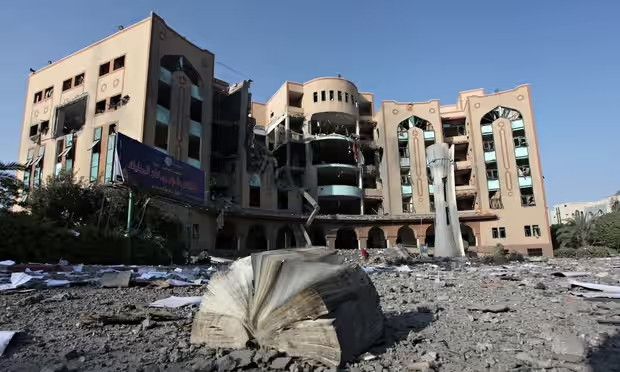
Armed conflicts severely disrupt lives, destroy educational infrastructure, and hinder access to learning, demanding innovative digital education solutions for continuity. This article explores the transformative role of digitalization in advancing higher education within conflict-affected societies and examines the challenges of digital adoption. The focus is on overcoming barriers to ensure accessible, quality education through digital platforms, aiming for resilience and inclusivity in education systems amidst adversity. The framework indicates the importance of developing digital infrastructure, capacity building for educators, e-learning platforms, digital content, and public-private partnerships. These measures are pivotal in expanding access to education, encouraging collaboration, facilitating remote learning, and improving the global competitiveness of individuals in war-torn regions.
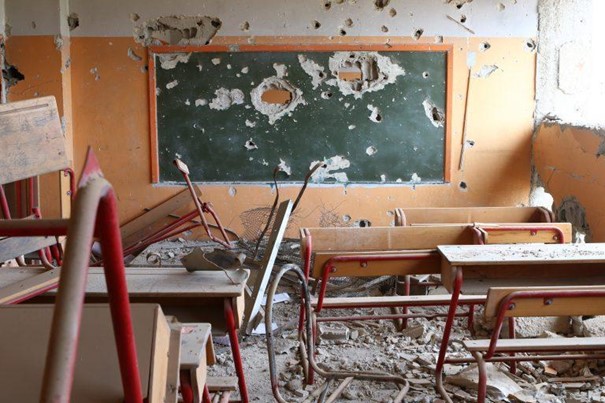
A school destroyed by the conflicts in the rural Damascus

Source: M. Abdulaziz, UNICEF

Digital Transformation in Education

Higher education in conflict-affected societies faces unprecedented challenges, from damaged infrastructure to disrupted academic schedules. In a world increasingly reliant on digital connectivity, the digital transformation of higher education emerges as a pivotal opportunity to rejuvenate the educational landscape in regions ravaged by conflict, such as Syria. This shift towards digitalization introduces resilience against the myriad physical and socio-economic obstacles imposed by ongoing conflicts, facilitating access to inclusive and flexible learning opportunities. Digital shift refers to integrating digital technologies into various aspects of society, fundamentally changing how organizations operate and deliver value to their stakeholders. In the context of higher education, digital transformation encompasses the adoption of technologies such as online learning platforms, e-libraries, and digital communication tools, as well as the growth of digital skills among educators and learners. Remote teaching can be conducted through synchronous (real-time) or asynchronous (self-paced) methods, depending on the needs of students and the availability of resources, as illustrated in Figure 1. However, the journey towards the digitalization of higher education in conflict-affected societies faces significant barriers, primarily rooted in the infrastructural and socio-economic landscape of these regions. Initially, the destruction or inadequacy of physical infrastructure, such as buildings, electricity, and internet hardware, poses a fundamental challenge. Educational institutions struggle to adopt digital technologies without the basic premises for a stable power supply and internet connectivity. Secondly, the digital divide becomes more pronounced in these settings, where internet accessibility is scarce and often non-existent. Many areas remain disconnected from the global network, making online education a distant reality for the local population. Lastly, socio-economic factors further complicate digital adoption. High poverty rates, limited digital literacy, and the cost of digital devices create an environment where even if digital resources are available, they are not accessible to everyone.
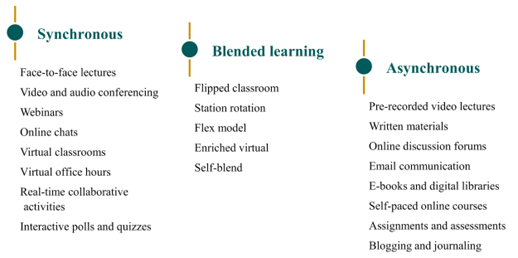
The journey towards the digitalization of higher education in conflict-affected societies faces significant barriers, primarily rooted in the infrastructural and socio-economic landscape of these regions. 

Figure 1. Synchronous, asynchronous, and blended learning approaches in higher education

Challenges and Opportunities

The digitalization of higher education in conflict-affected societies presents challenges and opportunities. Key concerns include the risk of exacerbating the digital divide, where the poorest and most marginalized have limited access to digital technologies, potentially widening educational inequalities. There is also the issue of ensuring quality education through digital platforms and the need for robust cybersecurity measures to protect students and institutions. Comprehensive policy and support frameworks are essential to effectively implement digital education in conflict-affected areas. Governments must enact policies that promote digital infrastructure development, ensuring reliable internet access and the provision of digital devices to students and educators. Equally crucial is the role of international and non-governmental organizations (NGOs), which can offer financial aid and technical expertise. These entities can assist in deploying digital learning platforms, training educators in digital pedagogy, and developing localized educational content that is accessible. Collaborative efforts between local governments, international bodies, and the private sector are vital in creating resilient, inclusive, and adaptable educational environments. Through such partnerships, digital education can transcend barriers, offering quality learning opportunities to those in the most challenging contexts. The proposed framework for digital transformation in Syrian higher education is designed to address the critical challenges identified through the literature review, expert interviews, and case analysis. This framework comprises four main components: digital infrastructure, e-learning platforms, digital content, and capacity building. Figure 2 indicates the interplay between the various elements contributing to successfully implementing digital transformation initiatives in Syria’s higher education sector.
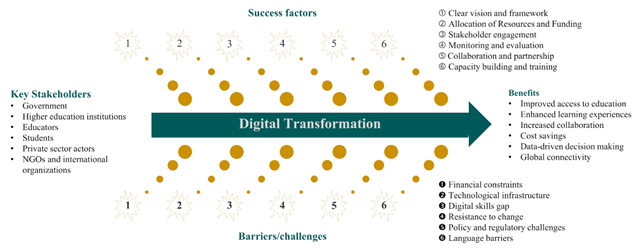
Figure 2. A comprehensive overview of the key stakeholders, benefits, barriers, challenges, and success factors for digital transformation in Syrian higher education

Conclusion

Digital technologies facilitate continuity in education during times of instability and introduce innovative teaching methodologies that can enhance student learning outcomes worldwide. Digital transformation offers a critical solution to the challenges faced by the higher education sector due to conflict, enabling access to education and fostering a resilient, inclusive system. This article highlights the need for remote teaching, capacity building, and improved infrastructure as key strategies. Higher education can ensure quality education for all, contributing to the country’s recovery and future workforce development by embracing digital technologies and collaborative approaches. Implementing digital transformation is essential for educational resilience and long-term growth. However, achieving this potential requires concerted efforts from various stakeholders. Governments, educational institutions, international organizations, and private sector partners must collaborate to invest in the necessary digital infrastructure and policy frameworks supporting the scalability and sustainability of digital education initiatives. This entails improving internet connectivity and access to digital devices, developing comprehensive digital literacy programs, and creating inclusive, context-sensitive educational content.

Higher education can ensure quality education for all, contributing to the country’s recovery and future workforce development by embracing digital technologies and collaborative approaches. 

Further Reading

Aljawarneh, S. A. (2020). Reviewing and exploring innovative ubiquitous learning tools in higher education. Journal of Computing in Higher Education, 32, 57-73.

De Wit, H., & Altbach, P. G. (2021). Internationalization in higher education: global trends and recommendations for its future. Policy Reviews in Higher Education, 5(1), 28-46.

Fernández, A., Gómez, B., Binjaku, K., & Meçe, E. K. (2023). Digital transformation initiatives in higher education institutions: A multivocal literature review. Education and Information Technologies, 1-32.

Habib, M. (2023). Digital transformation strategy for developing higher education in conflict-affected societies. Social Sciences & Humanities Open, 8(1), 100627.
Tags: DigitalizationHigher Education
Previous Post

E-learning in the Libyan Higher Education

Next Post

Shattering Boundaries: Enabling Female Empowerment in Higher Education across Muslim Communities

  • Halil el-Hayye

    Khalil al-Hayya

    0 shares
    Share 0 Tweet 0
  • Khalil al-Hayya

    0 shares
    Share 0 Tweet 0
  • Discover: East Africa’s Oldest Swahili Town, Lamu

    0 shares
    Share 0 Tweet 0
  • Discover: East Africa’s Oldest Swahili Town, Lamu

    0 shares
    Share 0 Tweet 0
  • What Is Decolonization?

    0 shares
    Share 0 Tweet 0

Platform: Agenda of the Muslim World was established within the İLKE Science Culture Education Foundation as a publication organ that aims to follow and analyze the intellectual, political, social, economic and cultural agendas of Muslim societies and to present current and original perspectives on the Muslim world.

  • ANALYSIS
  • NEWS
  • INTERVIEWS
  • VOICES
  • platform@ilke.org.tr
  • (0216) 310 43 18
  • Aziz Mahmut Hüdayi Mah. Türbe Kapısı Sk. No: 13 Üsküdar, İstanbul
Instagram X-twitter

2025 @ PLATFORM is an İLKE Foundation organization. All rights reserved.

No Result
View All Result
  • Issues
  • Platform English