















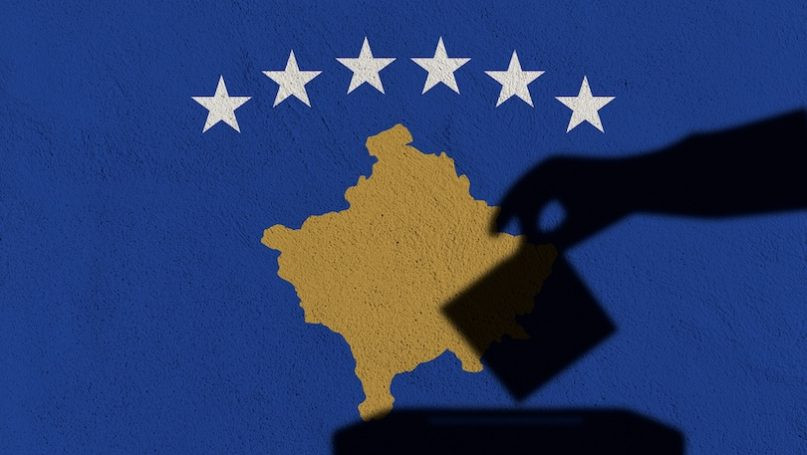
The February 9 elections are considered a historic turning point as Kosovo’s first regular elections, yielding significant implications for political stability and international relations. Despite Vetëvendosje’s victory, the government formation process will face a challenging period due to internal political dynamics and international pressures. The fragile structure of the new government and the upcoming presidential election in 2026 have the potential to drag Kosovo into a new political crisis.
By holding the February 9 general elections in 2025, Kosovo entered a critical turning point for the country’s political future. While the election results led to a reshaping of the parliamentary structure and possible coalition scenarios, they also produced significant consequences for political stability and international relations. This article addresses the election results, political reactions, the government formation process, and future expectations.
Kosovo held its first regular general election on February 9, 2025. In all previous elections, no party had managed to reach the majority required to govern alone, leaving the country to be ruled by coalition governments. However, these coalitions dissolved before completing their terms, forcing Kosovo into continuous snap elections. The general elections held on February 14, 2021, broke this cycle. In those elections, the Vetëvendosje (Self-Determination) party achieved a majority to govern alone by securing 50.28% of the vote. This historic success earned Albin Kurti, the party’s leader and prime ministerial candidate, immense popular support, providing him with a strong position in parliament. Kurti managed to form a government on March 22, 2021, with the support of minority parties, winning 67 votes in the 120-seat parliament. This development marked a major turning point in the search for stability in Kosovar politics.
Throughout his four-year term, Albin Kurti adopted an approach distinct from previous governments in both domestic and foreign policy. Tensions, particularly in relations with the US and the EU, led the opposition to accuse Kurti of leaving Kosovo without allies. However, Kurti’s resolute stance in the dialogue process with Serbia and his moves to shut down Serbian parallel institutions operating in northern Kosovo won significant public support. On the other hand, the US and the EU criticized Kurti for refusing to cooperate and for escalating tensions through a harsh stance against Serbia. This situation led to Kosovo facing several sanctions. While Kosovo’s membership in the Council of Europe was postponed for the time being, the EU froze certain funds allocated for Kosovo. Meanwhile, the US announced that Kosovar military forces were excluded from NATO-led exercises. In this political atmosphere, President Vjosa Osmani met with leaders of parties represented in parliament on July 31, 2024, to consult on setting the election date. Following these discussions, it was officially announced on August 16, 2024, that the general election would be held on February 9, 2025.
According to data from the Central Election Commission of Kosovo, voter turnout for the February 9 general election was recorded at 40.59%. This figure was approximately 7% lower compared to the election held four years prior. A total of 28 political parties and one independent candidate participated in the election. Additionally, 125,000 first-time young voters were registered. According to the election results, the ruling party Vetëvendosje (Self-Determination) came first with 40.80% of the vote. The vote shares of other major parties were as follows: Democratic Party of Kosovo (PDK), 22.05%; Democratic League of Kosovo (LDK), 17.64%; Alliance for the Future of Kosovo – AAK-Nisma Coalition, 7.46%; and the Serb List, 4.26%. Based on these results, the distribution of seats in parliament is as follows: Vetëvendosje, 48 seats; PDK, 24 seats; LDK, 20 seats; and the AAK-Nisma Coalition, 8 seats.
Seats Reserved for Minority Communities
According to the Constitution of Kosovo, 20 out of the 120 parliamentary seats are reserved for minority communities. The allocation of these seats is as follows: Serb community, 10 seats; Bosniak community, 3 seats; Turkish community, 2 seats; Romani, Ashkali, and Egyptian communities, 4 seats; and the Gorani community, 1 seat.[1] Reflecting Kosovo’s multi-ethnic structure, this arrangement aims to guarantee minority representation in parliament and their participation in political processes. The 10 seats designated for the Serb community specifically seek to ensure the political representation of Kosovo’s Serb population. Other minority communities are also represented in parliament according to their respective quotas, safeguarding the political participation rights of all ethnic groups in Kosovo. These results have reshaped the political landscape in Kosovo, establishing a pluralistic parliamentary structure representing both majority parties and minority communities.
According to the Constitution of Kosovo, 20 out of the 120 parliamentary seats are reserved for minority communities. The allocation of these seats is as follows: Serb community, 10 seats; Bosniak community, 3 seats; Turkish community, 2 seats; Romani, Ashkali, and Egyptian communities, 4 seats; and the Gorani community, 1 seat.
How Will the Election Process Unfold?
Once the election results are finalized, the president will convene the first session of the Assembly within 30 days. In this session, members of parliament will take their oaths, and the President and Vice Presidents of the Assembly will be elected. Following this, the president will mandate the winning party or coalition to form the government. To establish a government, a vote of confidence from at least 61 MPs in the 120-seat parliament is required. If a government cannot be formed in the first attempt, the president will designate a new candidate for prime minister within 10 days. If this candidate also fails to secure a vote of confidence, parliament will be dissolved, triggering snap general elections within 45 days.
Possible Government Scenarios
1. Vetëvendosje + Non-Serb Minorities + Individual MPs
Considered the most likely scenario, this coalition draws strength from the minority communities’ tendency to support the governing party. When joining the ruling coalition, these minorities can benefit from various privileges. On the other hand, a coalition between Vetëvendosje and the Serb List appears unlikely. Kurti’s accusations against the Serb List of being “tied to Belgrade” have burned bridges between the two sides. Furthermore, Fatmir Limaj, leader of the Nisma Party-which won 3 of the AAK-Nisma coalition’s 8 seats-stated that they are open to a coalition with Vetëvendosje to prevent the country from descending into a political crisis.
2. Vetëvendosje + PDK or LDK + Minorities
While such a coalition is technically possible, statements from opposition parties indicate they are reluctant to entertain this option. However, with the president’s term ending on April 7, 2026, Vetëvendosje might be pushed toward a broader coalition further down the road. At this stage, however, this possibility remains slim.
3. Opposition Coalition (PDK + LDK + AAK) + Minorities
Should Vetëvendosje fail to form a government, a scenario where the president grants the mandate to the PDK could become possible. Under current conditions, however, expectations lean heavily toward a government formed under the leadership of Vetëvendosje.
Presidential Election and Potential Risk of Crisis
In the current political environment, government formation is projected to extend into May. However, the primary risk of crisis may arise in April 2026 when the president’s term expires. To elect a new president, two-thirds of the 120 MPs (80 votes) are required. If sufficient votes are not secured in the first two rounds, a simple majority (61 votes) will suffice in the third round. However, at least 80 MPs must be present in the chamber for the third round to be valid.
If opposition parties withdraw their quorum support, a president cannot be elected. In such a scenario, parliament is dissolved, triggering snap elections within 45 days. If no consensus is reached in 2026, Kosovo could face a severe political crisis. The opposition might leverage the presidential election as a strategic bargaining chip to force early elections or negotiate a candidate.
Post-Election Situation and Future Outlook
The February 9 elections are considered a historical turning point in that they represent Kosovo’s first regular elections. Although international organizations generally evaluated the elections positively, certain shortcomings were raised. However, these deficiencies were not of a scale that would cast a shadow over the overall legitimacy of the vote. While the election took place in a positive atmosphere, the delay by the Central Election Commission of Kosovo (CEC) in announcing the final results sparked public criticism. The CEC stated that the delay was due to the newly introduced vote-counting system, whereas the opposition blamed the ruling party for the setback. The opposition argued that replacing experienced staff at the CEC with inexperienced personnel disrupted the process, while the government countered that the CEC is an independent institution free from political interference.
The announced results indicate that Kosovo will proceed under the leadership of the current Vetëvendosje administration. Under the primary scenario, Vetëvendosje will need the support of minority parties and a smaller opposition party to form a government. However, such a government will inevitably be fragile. A government established with a bare minimum of 61 MPs will struggle to pass major policy decisions. In particular, the presidential election scheduled for 2026 holds the potential to spark a fresh political crisis within Kosovar institutions. A government operating on a slim majority could stall during the presidential selection process, forcing the country into snap elections once again.
Following US pressure during the pandemic, the Albin Kurti government was brought down, and the subsequent government signed an agreement with Serbia in Washington brokered by Trump, while also recognizing Jerusalem as Israel’s capital. Therefore, the possibility of a similar scenario emerging again should not be disregarded.
The upcoming government will face a challenging period not only due to internal political dynamics, but also because of international pressures. In particular, demands from the US and the EU concerning the ongoing dialogue process with Serbia could restrict the government’s maneuvering space. There is a likelihood that the Trump administration will exert new pressures. The issue of land swaps between Kosovo and Serbia, which emerged during the first Trump administration, could be brought back to the table. Such a proposal could plunge the government into a major crisis and even lead to its collapse. Following US pressure, the Albin Kurti government was brought down during the pandemic, and the subsequent government signed an agreement with Serbia in Washington under Trump’s leadership and accepted Jerusalem as Israel’s capital. Therefore, the possibility of a similar scenario resurfacing should not be overlooked. It is already a known fact that Albin Kurti and the Trump administration are at odds.
Steep challenges await the government to be formed after the February 9 elections. Shifting political dynamics in Europe and the Trump administration stand out as factors working against Prime Minister Albin Kurti. Consequently, an easy environment for international cooperation does not exist for Kurti. Given that Kosovo remains highly vulnerable to EU and US influence, the chances of the new government acting independently and stably appear low. Over the last four years, even a government that came to power with 50% of the vote struggled to pass numerous laws through parliament and fully execute its policies due to internal party opposition. In this context, expecting a less powerful government to function more smoothly is unrealistic. Kosovo will welcome its new government in the coming days; however, it is clear this administration will lack full capacity to implement every policy. Hence, the probability that the new government will remain fragile, prone to crises, and unable to complete its full four-year term is exceedingly high.