













(The original Turkish version of this article was published by the Platform: Current Muslim Affairs on February 16, 2026)
As order deteriorates, the search for a new order intensifies. The world is passing through precisely such a threshold. The United Nations (UN), the largest umbrella organization of the international system, has, since its founding, generally been governed not by the principle of sovereign equality of states but rather within the framework of the interests of powerful states that played the role of founding actors of the system. Moreover, in today’s global politics, the founders of the system have turned against one another, rendering the UN increasingly unable to fulfill its function. In this sense, the United States — the dominant hegemon of the current international system — is, under Trump’s leadership, both disrupting the existing order and pursuing the construction of a new one.
From the perspective of international relations, the United States’ attempt to dismantle the existing order while simultaneously building a new one is quite understandable. However, the world is no longer the same as before. One of the defining codes of the new world is the ability of even the most remote corners of the globe to remain informed about global developments. In other words, the current stage of communication and technology is pushing the world and global politics into a new equation. Another defining code of the new world is the economy. The dominance of the West in the global economy that existed at the time the UN was founded has now come to an end.
Within this equation, humanity continues to pursue four enduring aspirations: justice, freedom, faith, and equality. Although power is decisive in shaping changes in global politics, the acquisition and maintenance of power ultimately depend on these four foundations. In this context, the Western world — represented by the United States — has lost the superiority it previously instrumentalized through the principles of justice, freedom, and equality. While the West has implemented these principles internally on a legal and institutional basis, it has pursued colonial, capitalist, and purely interest-driven policies toward the non-Western world. Today, however, the West has also begun to lose the moral and principled values it once upheld internally. This development signals the West’s decline. In this regard, the Munich Security Conferences serve as an important example — a forum where the West debates and evaluates itself. In recent years, discussions centered on “Westlessness,” and more recently, disagreements and rivalry between the United States and Europe have been reflected in the Munich Security Conference.[1] In terms of faith, many of the concepts and institutional structures the West developed — largely targeting Muslims — have now lost their function.
Moreover, Judaism has largely become confined within the brutality of Zionism. Christianity, meanwhile, has lost its prudence amid Evangelicalism and certain obsessive approaches. Both are experiencing deep internal divisions. Atheism and other belief systems sometimes classified as religions, occasionally gain traction but remain far from offering humanity a viable future. Islam, despite all attacks and perception operations, continues to expand globally. In this context, humanity’s search for faith carries the potential to become an important factor in the geopolitical equation of the near future.
The Donroe Doctrine: A Reckoning Within the West
The new U.S. foreign policy — reflected in the National Security Strategy under Trump’s leadership and referencing the Monroe Doctrine of earlier U.S. presidents, which Trump himself has described as the “Donroe” doctrine — focuses on a major systemic transformation. A reckoning within the West is clearly visible in this transformation. The Donroe doctrine regards the American continent as a sphere of uncompromising dominance for the United States. The intervention in Venezuela stands as a direct example of this understanding in practice. Accordingly, the United States seeks to rebuild global dominance through the Americas by reconstructing its eroding authority on that continent — benefiting from geographical proximity, easier governance, lower costs, and a security-oriented perspective. However, this policy is primarily based on compensating for declining hegemony, slowing down weakening power, and reacting through a major paradigm shift. It does not represent a well-prepared, action-oriented vision for building the future.[2]
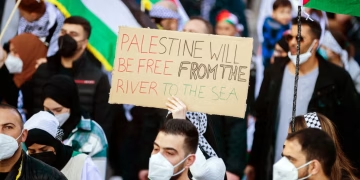
Within this transformation, the Epstein documents are gaining increasing significance. At a time when global reactions to the Netanyahu government’s alleged genocidal crimes in Palestine — particularly after October 7 — reached their peak, the Epstein documents were revealed to the world. These documents point to Jewish power centers focused on controlling global banking, interest systems, trade flows, and human vulnerabilities. This situation suggests that the division between Republicans and Democrats within the United States is not merely a split between two political parties. The greatest misconception here is the belief that Trump will win the battles he has opened both domestically and internationally. To overcome this challenge, Trump appears to be pursuing a balancing strategy against Europe and China through cooperation with Türkiye and Russia. However, Putin has not yet fully reached a position of trust toward Trump.
Türkiye, for its part, continues its policy of principled alignment and full independence in balance.[3] While cooperation with the United States is preferred within a reasonable framework based on national interests and principled approaches, Türkiye maintains differing positions from the U.S. on issues such as Israel, Somalia, and Iran. Recent developments regarding potential Türkiye–U.S. cooperation over Venezuelan oil may increase criticism of Türkiye’s policy of principled alignment. Meanwhile, Trump’s effort to gather certain European leaders — especially Hungarian Prime Minister Viktor Orbán — along with some European opposition figures under the framework of patriots’ meetings indicates that Europe faces a new threat of division.
Organizations with very large memberships have increasingly lost effectiveness, while regional organizations are becoming more prominent. Regionalism has gained importance and is likely to produce new outcomes. For Europe, the least costly way to navigate this process is through cooperation with Türkiye. Under current conditions, the European Union’s main strength is economic power, while its greatest need is security. Türkiye, meanwhile, requires economic strengthening. In this context, Türkiye and the EU appear as neighboring actors with strong complementary potential.
Türkiye’s Security Umbrella in the Middle East Against the Israeli Threat
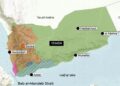
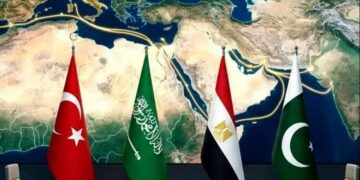
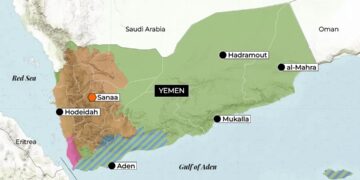
A new equation is emerging in the Middle East. The United States seeks to maintain a presence aimed at protecting Israel while simultaneously reducing its role as the world’s policeman and avoiding the costs of such a role. This approach pushes the U.S. presence in the region to remain within certain limits. As a result, regional states that previously depended on U.S. security guarantees — such as Saudi Arabia — now feel compelled to pursue new policies with new partners. In this context, Israel’s recognition of Somaliland has been a driving development on the ground. The “Greater Israel” vision announced by the Netanyahu government also threatens Saudi Arabia’s borders. At the same time, Israel’s obstruction of Saudi Arabia’s West Bank-focused Palestinian policy continues to intensify. More importantly, cooperation between Israel and the UAE seriously threatens Saudi Arabia’s ambition to lead the Gulf. Consequently, Saudi Arabia has shifted its foreign policy, adopting an approach aimed at containing the UAE and restraining Israel. Yemen, Sudan, Syria, and Somaliland are additional actors shaping the regional equation.
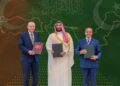
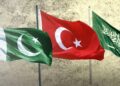
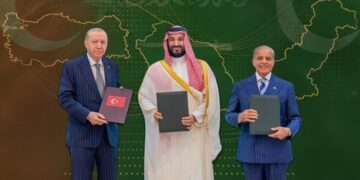
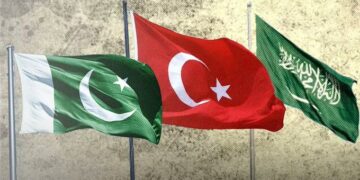
Within this framework, Türkiye has emerged as a critical partner for Saudi Arabia. Türkiye–Saudi Arabia relations have entered a new phase. Just as Saudi Arabia requires Türkiye’s cooperation in the security and defense industry, Türkiye also needs capital. These dynamics create a complementary partnership between the two actors in the Middle East. However, since Saudi foreign policy is primarily security-centered, it would be unrealistic to expect this rapprochement to evolve into comprehensive policy alignment across all issues. The current Saudi leadership’s approaches to regional and global politics do not fully align with Türkiye’s. Therefore, this rapprochement is largely directed against the Israeli threat and is temporary in nature. While functional in countering Israel, this cooperation will not generate a broader regional or global synergy or establish a shared long-term vision. Nevertheless, it can help restrain Israel and play an important role in ensuring regional security.
Within all these regional and global dynamics, Türkiye’s position will be a decisive factor for the future. Current Turkish foreign policy contains significant potential to respond to humanity’s search for justice, freedom, faith, and equality. In this sense, Türkiye’s policies will continue to be discussed more frequently in the future of Middle Eastern and global politics. Türkiye can now be described not merely as a regional power but as a “Great Power.” Another important emerging actor in world politics is likely to be Africa. While the founders of the current system struggle among themselves and China is perceived as the primary threat, Türkiye and Africa may be the actors that find the greatest opportunities in this process. Accordingly, relations with Africa — which the Organization of Turkic States identifies as strategically important — should accelerate rapidly and deepen through stronger cooperation.[4]
The views expressed in the articles belong to the author and may not reflect the editorial policy of Platform: Agenda of the Muslim World.
[1] Şarkul Avsat Türkçe, Münih Güvenlik Konferansı’nda AOC Rüzgarı: “ABD’nin Alternatif Vizyonu”, February 14, https://turkish.aawsat.com/d%C3%BCnya/5240834-m%C3%BCnih-g%C3%BCvenlik-konferans%C4%B1nda-aoc-r%C3%BCzgar%C4%B1-abdnin-alternatif-vizyonu; Anadolu Ajansı, Münih Güvenlik Konferansı “Yıkım Sürecindeki” Küresel Düzen Tartışmalarının Gölgesinde Başladı, February 14, https://www.aa.com.tr/tr/dunya/munih-guvenlik-konferansi-yikim-surecindeki-kuresel-duzen-tartismalarinin-golgesinde-basladi/3828956
[2] Öztop, Mustafa (2026). “Kral Donroe Dönemi: ABD Karşıtı İttifaklar Mı Geliyor?”, January 19, https://www.yenisafak.com/dusunce-gunlugu/kral-donroe-donemi-abd-karsiti-ittifaklar-mi-geliyor-4789565
[3] Öztop, Mustafa (2022). “Türkiye Yüzyılı’nın Dış Politika Esasları”, October 11, https://www.yenisafak.com/dusunce-gunlugu/turkiye-yuzyilinin-dis-politika-esaslari-3863472
[4] Öztop Mustafa (2024). Türk Dünyasının Stratejik Öncelikleri: Afganistan ve Afrika Birliği, November 8, https://www.yenisafak.com/dusunce-gunlugu/turk-dunyasinin-stratejik-oncelikleri-afganistan-ve-afrika-birligi-4655662
The views expressed in the articles belong to the authors and may not reflect the editorial policy of the Platform: Current Muslim Affairs.