






































Rising on the slopes of the Sabika Hill in the city of Granada, Spain, the Alhambra Palace is one of the most mesmerizing symbols of Andalusian Islamic architecture and elegance on earth. Believed to derive its name (“al-Hamra,” meaning “the Red One”) from the red clay used in its construction and the crimson reflection cast onto the ramparts by torches lit at night during its building, construction of the palace began in the mid-13th century under Muhammad I, founder of the Nasrid (Banu al-Ahmar) Dynasty. Expanding over centuries, this massive complex became not just a fortress residence for rulers, but a vibrant culture and art center where poets, scholars, and artisans carved their dreams into stone.
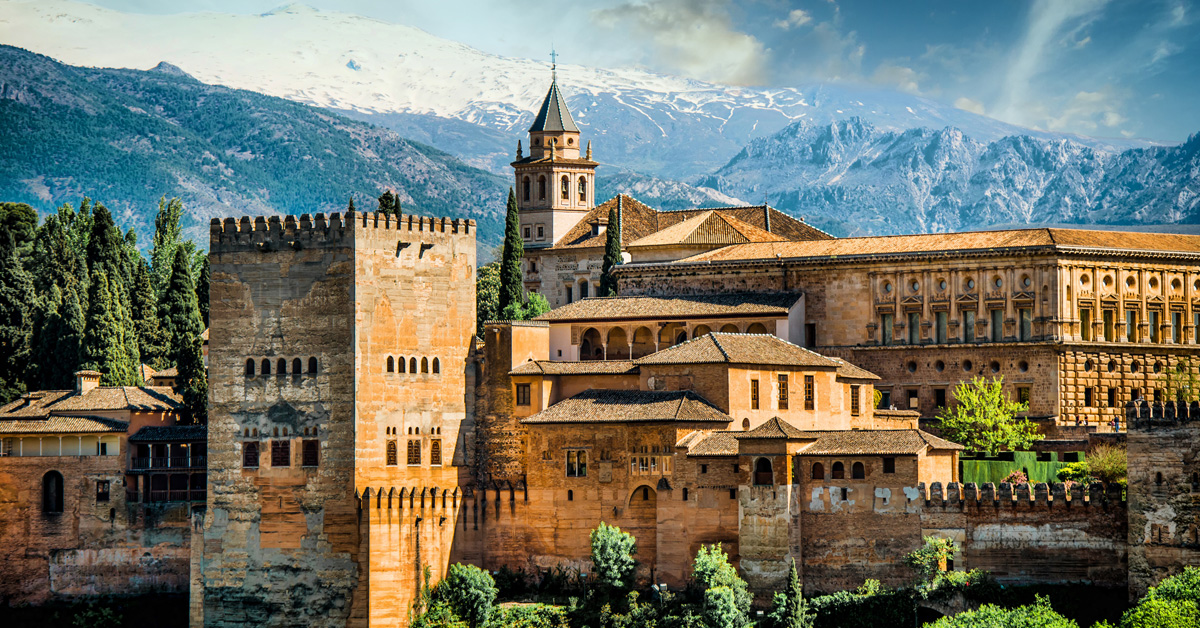
Giving the impression of a fortified and simple military stronghold from the outside, the structure greets visitors with breathtaking delicacy once they step behind the ramparts. Situated at the heart of the complex, the Nasrid Palaces are spaces where water, light, and stone meet in perfect aesthetic harmony. Renowned for its fountain pool supported by 12 marble lion statues, the Court of the Lions is considered the architectural crown jewel of the palace.
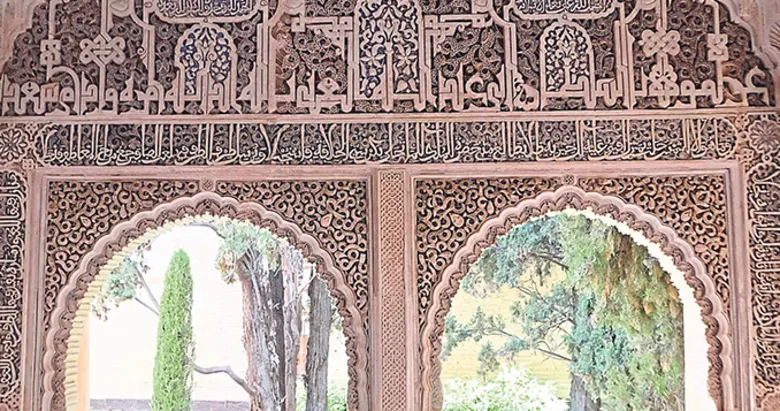
The delicate, lace-like plaster carvings (muqarnas) decorating the walls, colorful tilework, and captivating wooden ceiling craftsmanship represent the pinnacle of Islamic art. Repeated countless times across nearly every wall of the palace, the inscription “Lā ghāliba illāLlāh” (There is no victor but God) serves as a humble spiritual reminder in the midst of this worldly grandeur. Connected to the palace complex, the Generalife Gardens (Cennet-ül Ârif) captivate visitors with their flowing water channels, fountains, and fragrant flora.
Falling to the Catholic Monarchs with the fall of Granada in 1492, the Alhambra managed to preserve its authentic spirit despite modifications and the risk of destruction over time. Brought back to global attention in the 19th century through the interest of Romantic writers and Orientalist artists, the monument was inscribed on the UNESCO World Heritage List in 1984. Described by poets as “a ruby set in emeralds,” the Alhambra Palace today continues to welcome visitors as the most brilliant witness of centuries-old Andalusian heritage at the intersection of Eastern and Western cultures.


