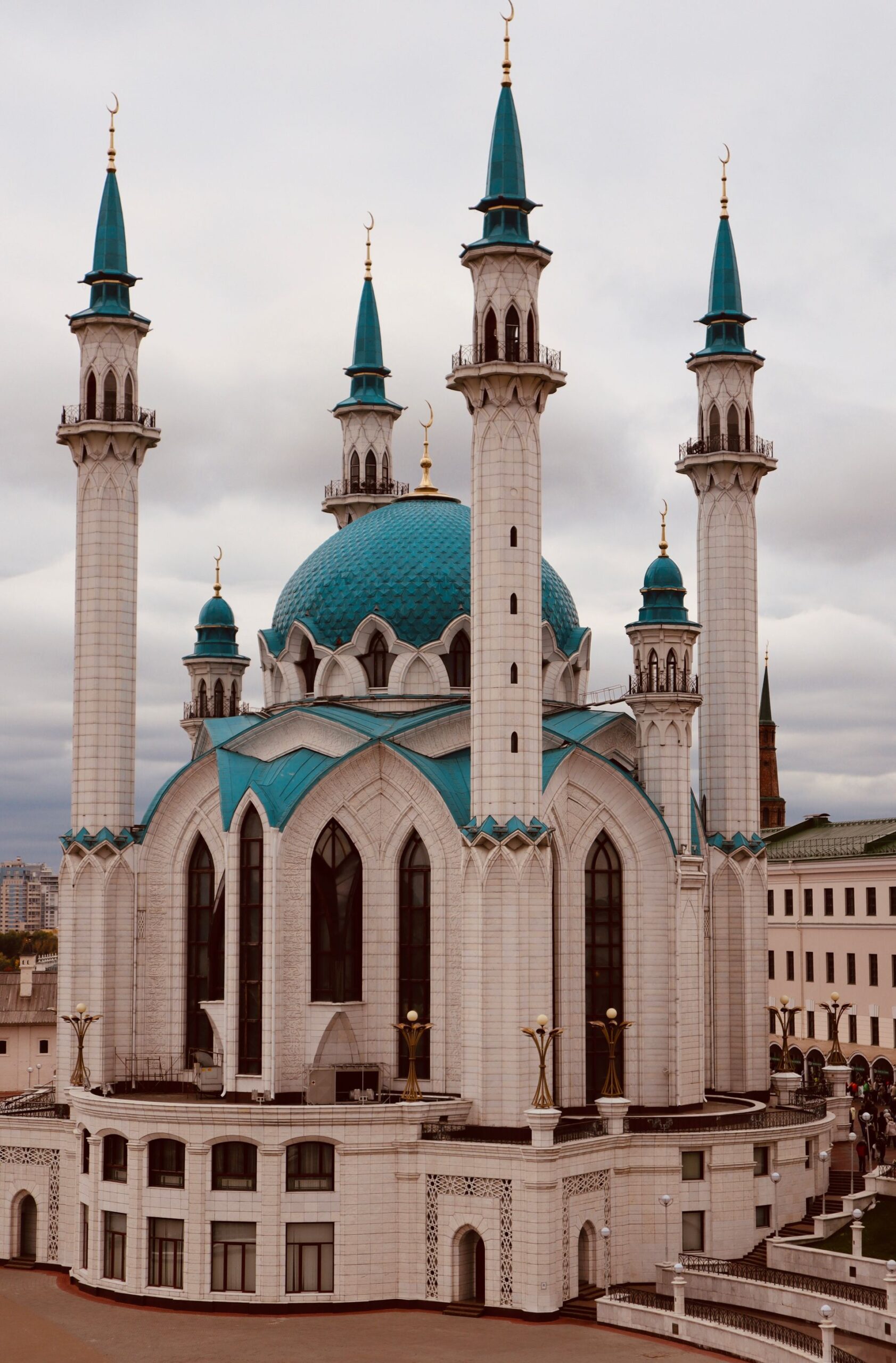


























Rising with turquoise domes and elegant minarets at the heart of the Kazan Kremlin on the banks of the Volga River, the Kul Sharif Mosque is one of the most magnificent architectural masterpieces not only in Tatarstan, but across Eastern Europe and Eurasia. Named after Kul Sharif-the renowned religious scholar, poet, and statesman martyred in 1552 while defending Kazan against the siege of Ivan the Terrible-the structure stands as a symbol of a deep-rooted identity reborn from its ashes centuries after its destruction.
The centuries-long silence following the destruction of the original mosque came to an end with a massive revival project that began in 1996 and was completed in 2005, marking the 1,000th anniversary of Kazan’s foundation. Offering a mesmerizing synthesis of traditional Tatar architecture and modern aesthetics, the building casts a unique silhouette with its 58-meter-tall minarets and a turquoise dome shaped like the “Kazan Crown” soaring toward the sky.
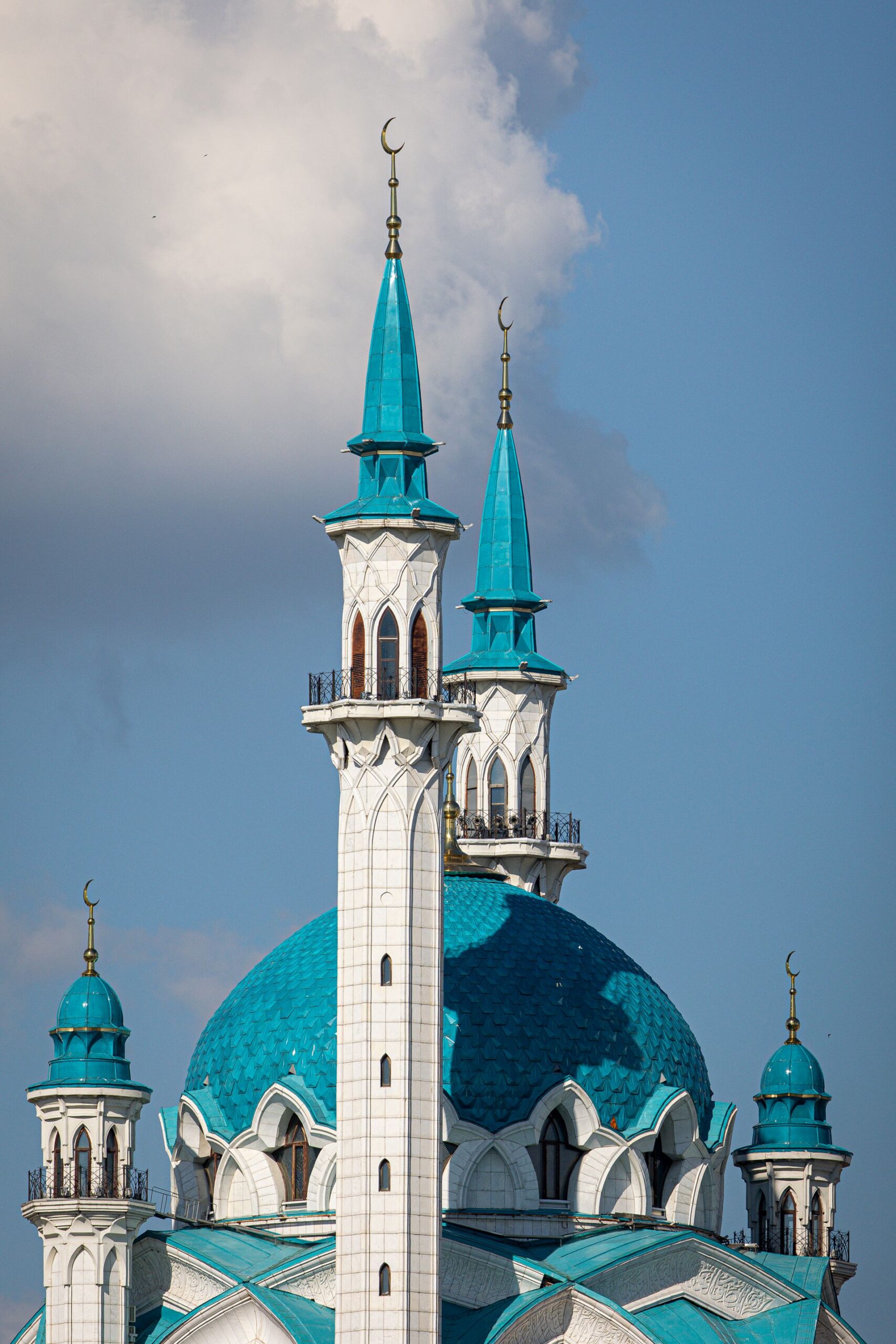
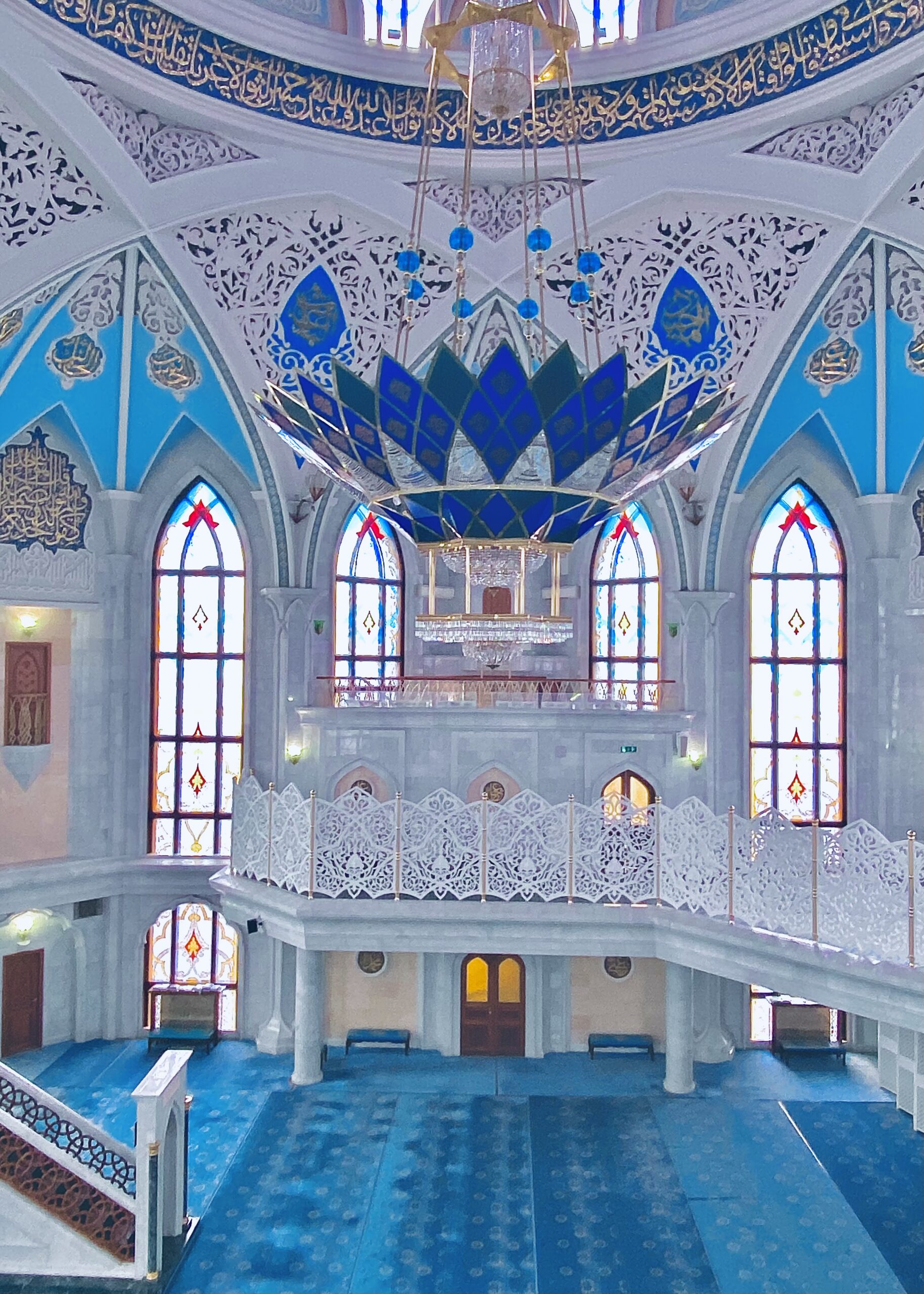
With its white marble facade, custom stones brought from the Urals, and traditional tile motifs, the mosque resembles a fairytale palace from the outside. Upon stepping inside, visitors are greeted by immense hand-woven carpets gifted by the Iranian government, a magnificent crystal chandelier weighing several tons crafted in Czechia, and vibrant stained-glass windows decorating the openings. The Museum of Islamic Culture located on the lower floor, alongside rare manuscripts, turns this landmark into more than just a house of worship-it is a living academy and a repository of memory.
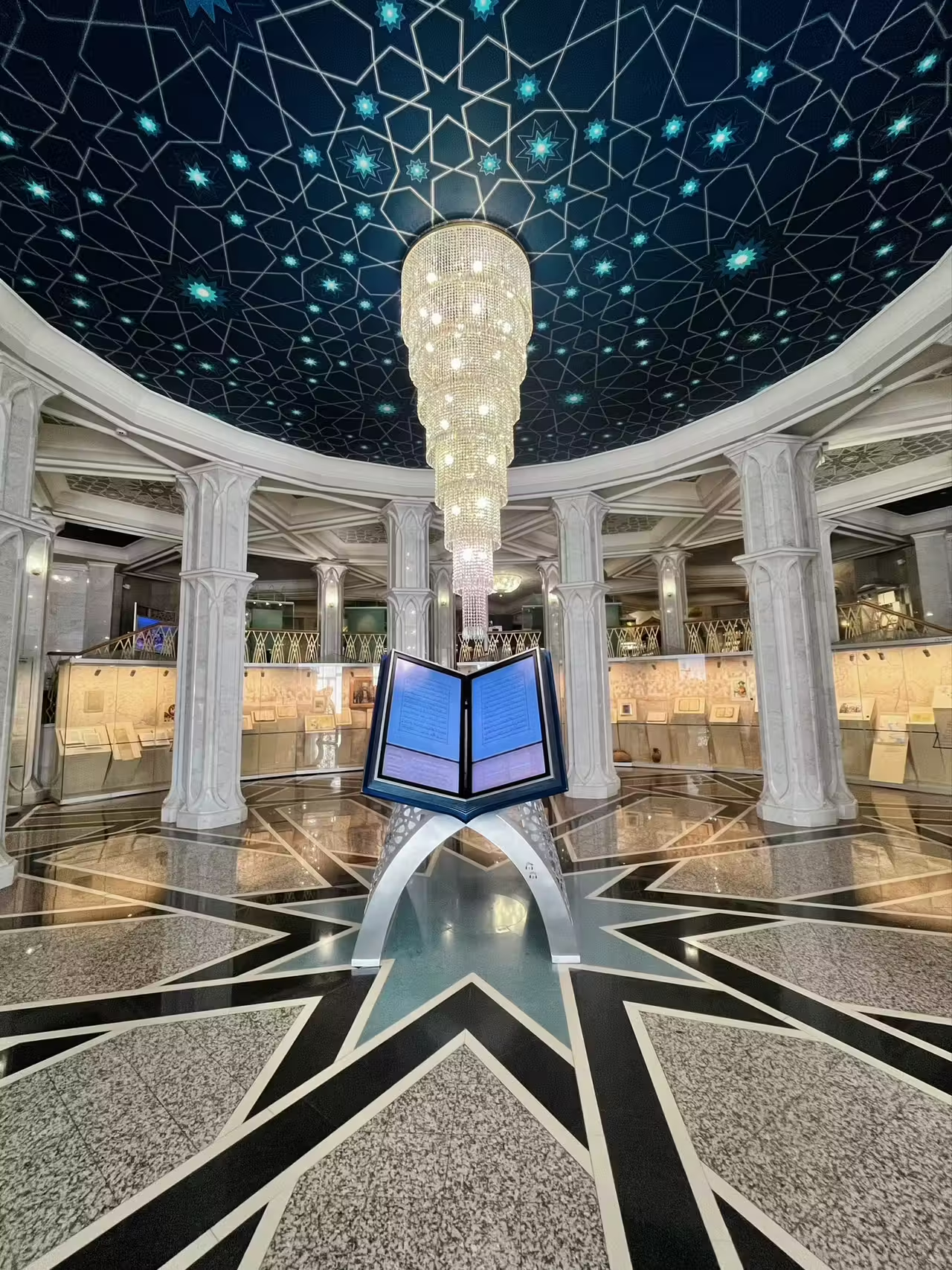
Museum of Islamic Culture
Rising side by side with the historic Annunciation (Blagoveschensky) Cathedral within the Kazan Kremlin complex—a UNESCO World Heritage Site—the Kul Sharif Mosque serves as the most tangible symbol of the peaceful harmony shared for centuries among different religions and cultures. Embodying pivotal turning points in history, this monumental work carries the poignant memories of the past into the present, weaving them with grace, resilience, and aesthetic elegance. Today, shining in all its glory in the heart of Tatarstan, the mosque continues to welcome visitors from around the world with a symbolic presence that brings the past and the future together in the very same courtyard.