




































Rising in the heart of the Po-i Kalan complex in Bukhara, Uzbekistan’s historic Silk Road city, the Mir-i Arab Madrasa is one of Central Asia’s most prestigious symbols of knowledge and civilization. Completed in the 1530s, this majestic structure has hosted students of knowledge from all corners of the Islamic world for centuries. With its rich curriculum and the scholars it has raised, it played a decisive role in Bukhara earning the title of the “Dome of Islam” (Qubbat al-Islam).
Built in the early 16th century during the reign of the Shaybanid ruler Ubaidullah Khan, the Mir-i Arab Madrasa takes its name from the khan’s spiritual guide, the Yemeni Sufi sheikh Abdullah al-Yemeni (Mir-i Arab), which means “Prince of the Arabs.” Dazzling with its architecture, the madrasa presents one of the most elegant examples of Timurid-era aesthetics that matured in the hands of Shaybanid masters. The colossal monumental portal (pishtaq) rising at the entrance is adorned with navy and sky-blue mosaic tiles, intricate geometric patterns, and exquisite calligraphy.
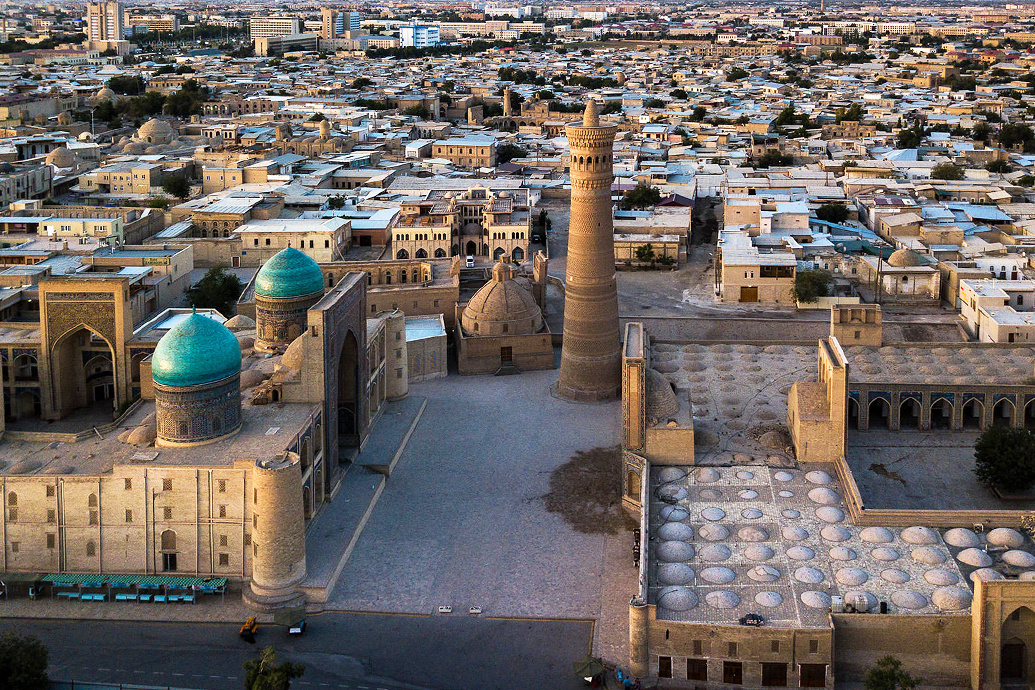
Po-i Kalan Complex

The most iconic elements of the structure are its two massive turquoise domes reaching toward the sky atop high drums. Beneath one of these domes lie the tombs of the madrasa’s founder, Mir-i Arab, and Ubaidullah Khan, while the other covers spacious classrooms and prayer halls. The two-story porticoes and student cells (hujras) surrounding the courtyard complete the structure’s symmetrical and balanced design.

One of the most important features that makes the Mir-i Arab Madrasa unique in history is that, despite the severe religious restrictions during the Soviet era, it was one of the rare Islamic institutions officially allowed to provide education after World War II. Consequently, many prominent clerics and academics from across Eurasia were educated here, ensuring that its historical continuity remained uninterrupted. Complementing the skyline of historic Bukhara—a UNESCO World Heritage site—this magnificent masterpiece stands directly opposite the historic Kalyan Minaret, proudly keeping its centuries-old academic tradition and aesthetic splendor alive to this day.

