


























Founded in 2017 at the initiative of Uzbek President Shavkat Mirziyoyev, the Center for Islamic Civilization in Uzbekistan is a major research and cultural institution in Tashkent dedicated to promoting the intellectual, cultural, and artistic heritage of Islamic civilization to the world.
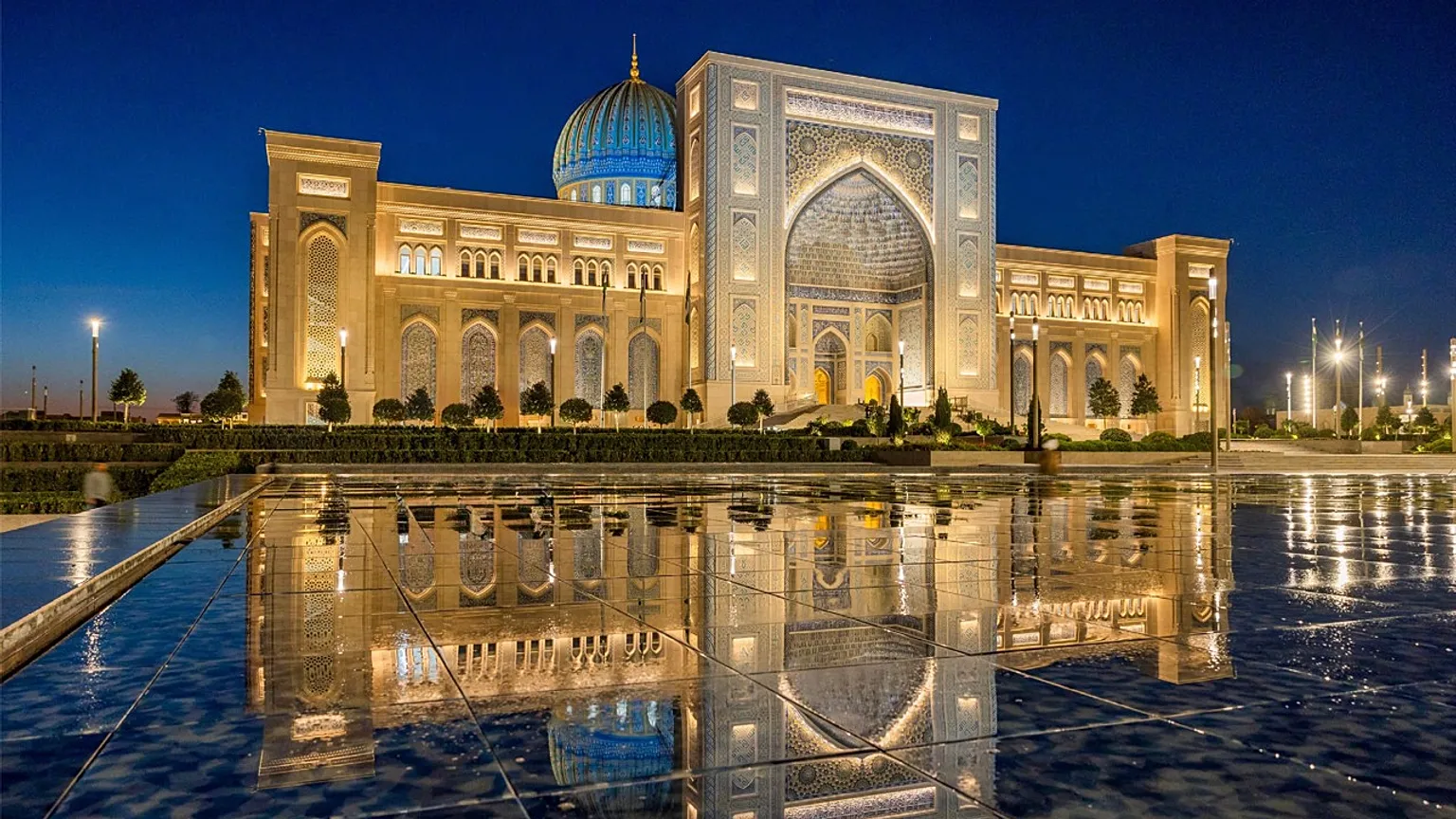
Located in the Olmazor district of the capital, adjacent to the Hazrati Imam Complex, the Center occupies approximately seven hectares. Its architecture draws inspiration from the historic Central Asian cities of Samarkand and Herat, blending traditional architectural elements with contemporary design. The three-storey building invites visitors on a journey through the region’s rich history with its spacious exhibition halls.
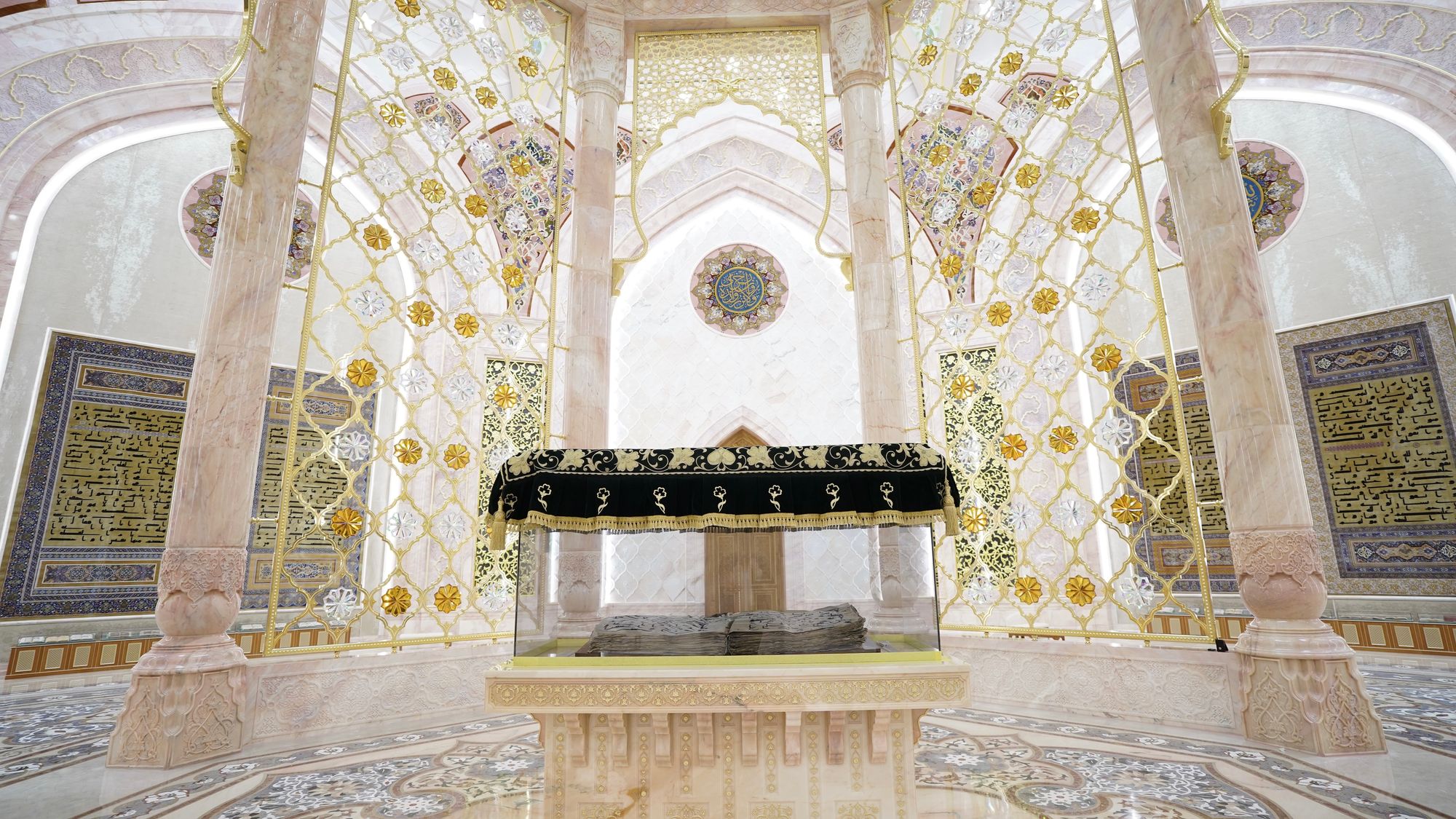
The Center aims to highlight Central Asia’s historic contributions to mathematics, astronomy, medicine, and other fields of knowledge. Its approximately 15,000-square-metre exhibition area presents the legacy of scientists, artists, craftspeople, and philosophers from different periods through thematic galleries. Among the exhibits are numerous historical treasures, including a rare 7th-century Qur’an manuscript written on deer skin.
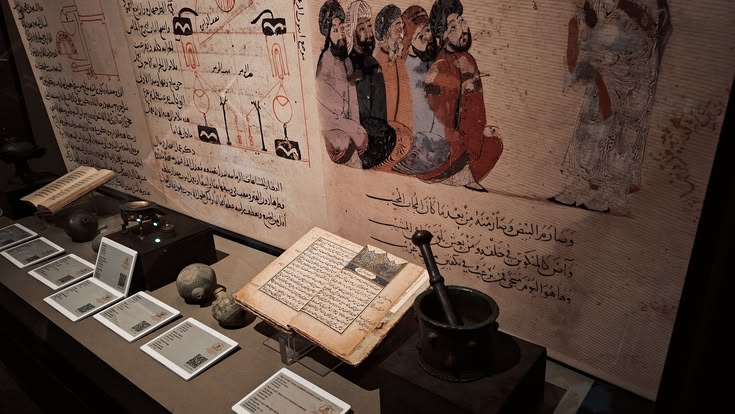
One of the Center’s most remarkable attractions is the “Wall of Civilizations and Discoveries.” Stretching approximately 270 metres, this multimedia installation combines dynamic projections with interactive technologies to showcase the contributions of Uzbekistan and Central Asia to science, art, culture, and intellectual history, tracing their influence from antiquity to the Renaissance.
In addition to its exhibition spaces, the Center houses the Qur’an Hall, a children’s museum, a library, film studios, and publishing houses. More than a museum, it is envisioned as an international platform for research and cultural exchange. Alongside academic collaborations with institutions such as UNESCO and the University of Oxford, its research departments and restoration laboratories are expected to provide opportunities for more than 1,500 scholars from over 40 countries.
The Center’s “First Renaissance” Hall does not refer to the European Renaissance. Instead, it represents the Islamic Golden Age in Central Asia between the 9th and 12th centuries, when cities such as Bukhara, Samarkand, Khwarazm, and Fergana flourished as centres of science, philosophy, medicine, mathematics, and astronomy. Prominent figures of this period include Muhammad al-Khwarizmi, Abu Nasr al-Farabi, Ibn Sina (Avicenna), Abu Rayhan al-Biruni, and Ahmad al-Farghani.
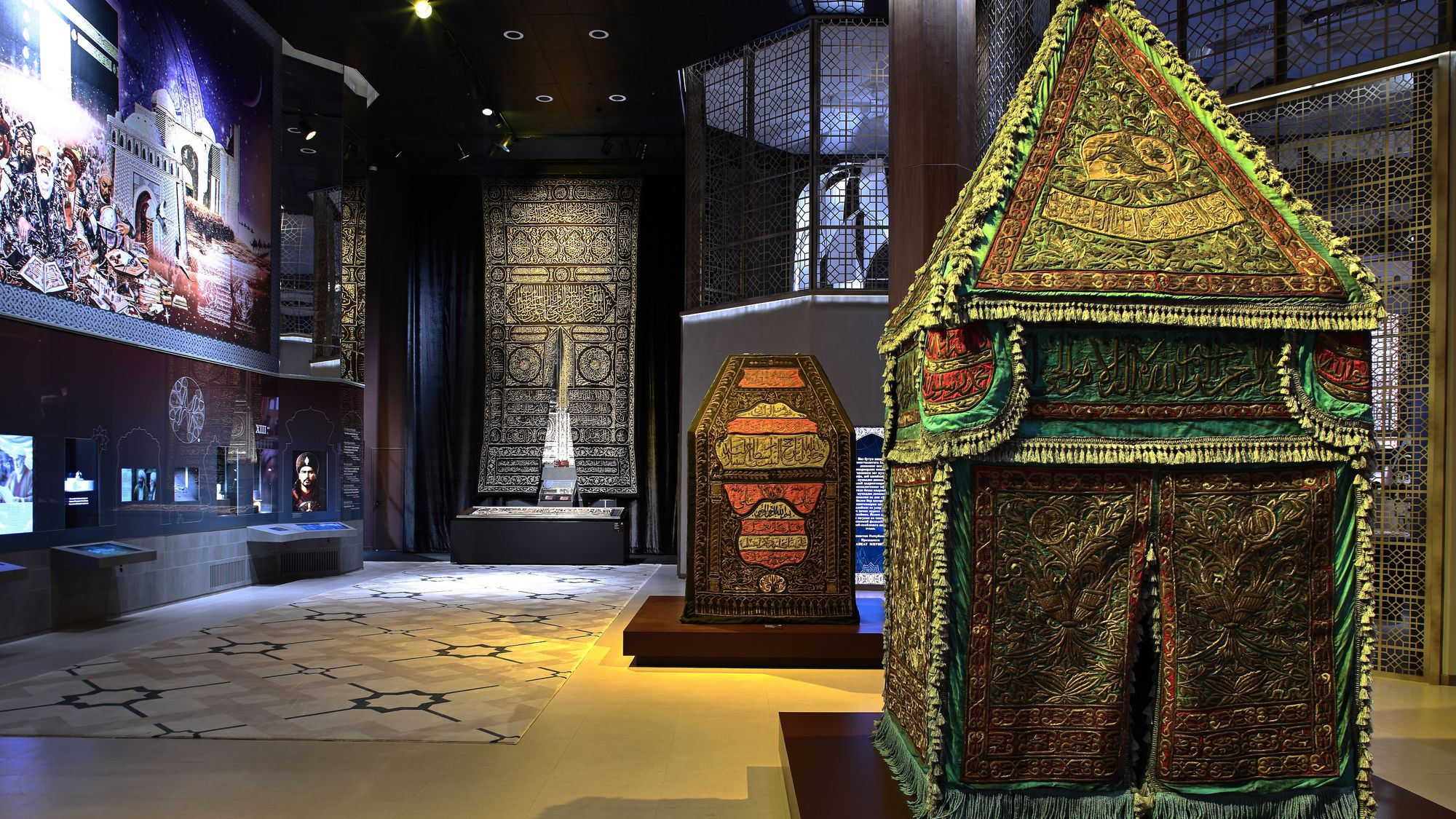
The Center also hosts international forums, playing an important role in cultural diplomacy. In recent years, such gatherings have contributed to the repatriation of several Kushan and Sogdian artefacts from London to Uzbekistan.
With nearly 60 percent of Uzbekistan’s population under the age of 35, the Center represents a significant investment in education and culture, aiming to reconnect younger generations with Central Asia’s scientific and civilizational legacy. Going beyond the preservation of historical artefacts, the project seeks to serve as an international intellectual platform that invites visitors to reconsider the place of Islamic civilization in world history.

“Islamic Civilization Center in Uzbekistan should become not only a custodian of history, but also an intellectual space that connects the past, present and future, determining the key directions of our development.”
President of the Republic of Uzbekistan Shavkat Mirziyoyev

