































(The original Turkish version of this article was published by the Platform: Current Muslim Affairs on September 15, 2026)
Introduction
The most widely accepted definition of terrorism in the scholarly literature is the one formulated by Bruce Hoffman. He defines terrorism as an organized form of action that involves the calculated use of violence in pursuit of a political objective, the systematic generation of fear among civilians, and the intention to influence an audience wider than the immediate targets. This definition does not vary according to the identity of the perpetrator. Terrorism remains terrorism regardless of who commits it, and no national or religious affiliation renders such acts legitimate.
Public debate on terrorism nevertheless tends, where the Palestinian-Israeli conflict is concerned, to identify the phenomenon almost exclusively with Palestinian actors. Yet in the same territory and during the same periods, Jewish and Zionist organizations were also active and adopted systematic violence against civilians as a strategic instrument. Among them are Hashomer (1909-1920), Lehi, also known as the Stern Gang (1940-1948), the Gush Emunim Underground (1979-1984), and Kach and Kahane Chai (1971-1994 and thereafter). Three of these four organizations, namely Lehi, the Gush Emunim Underground, and Kach and Kahane Chai, have been formally designated as terrorist organizations either by the State of Israel or by the United States Department of State. Such designation is not a judgment imposed from outside but a reality acknowledged by the legal systems of the states in question.
This study approaches the four organizations in question not as isolated cases but as evidence that a conviction embedded in the security culture of the Zionist movement, namely that violence against civilians is legitimate when circumstances require it, has been reproduced across different historical periods. In his study of the settler underground of the 1980s, Ehud Sprinzak demonstrated that although this organization was not a direct heir to the pre-state Jewish underground movements, the same understanding of legitimate violence resurfaced among successive generations.[3] Anita Shapira, in her classic work Land and Power, has documented how the discourse of the use of force came to occupy the centre of Zionist ideology from the founding years of the Yishuv onwards.[4]
Hashomer (1909-1920): The Institutional Origin of Zionist Armed Violence
Hashomer was a Jewish armed organization founded in 1909 through the expansion of a clandestine group known as Bar-Giora.[5] Its founders, Israel Shochat, Yitzhak Ben-Zvi, who in later years became the second President of Israel, and Alexander Zeid, were among the socialist-Zionist immigrants who arrived in Palestine during the Second Aliyah.[6] Although the organization described itself as a body of self-defence,[7] the slogan adopted at its founding meeting, that Judea fell in blood and fire and in blood and fire Judea would rise again, makes plain that it regarded itself less as a defensive force than as the vanguard of an armed project of national liberation.[8]
Hashomer carried out raids on Arab villages, seized livestock, and staged armed demonstrations. These activities were recorded in the Ottoman administrative documents of the period, which attest that members of the organization bore unlicensed weapons and took part in unauthorized raids on villages.[9] This practice of terror laid the immediate groundwork for the institutionalization of the cycle of Jewish-Arab conflict in Palestine.[10] The organization was disbanded in 1920, and its cadres joined the Haganah directly. Its patrol systems, intelligence methods, and culture of armed reprisal were thereby transmitted without interruption to subsequent generations and ultimately to the Israel Defense Forces.[11]
There is scholarly consensus that the systematic reprisal violence Hashomer directed against civilian Arab communities laid the immediate foundation for the spiral of conflict that followed in subsequent decades.[12] Of the four organizations examined here, Hashomer left the most enduring institutional legacy. The principle that armed reprisal is legitimate when circumstances require it persisted without interruption in the doctrines of the Haganah, the Irgun, and Lehi, all founded after Hashomer, and ultimately in those of the state security apparatus itself.
Lehi, the Stern Gang (1940-1948): Systematic Terror in the Process of State Formation
Lehi, in full Lohamei Herut Israel, meaning Fighters for the Freedom of Israel, emerged in 1940 when Avraham Stern rejected the Irgun’s temporary cooperation with the British and established a cell of his own.[13] The entry in the Oxford Dictionary of World History describes Lehi plainly as a Zionist terrorist organization.[14] Joseph Heller’s study documents how the organization placed the principle that any method is legitimate at the very centre of its ideology.[15]
The event that brought the organization to the attention of world opinion was the assassination of Lord Moyne, the British Minister Resident in the Middle East, carried out in Cairo in November 1944. Two Lehi militants shot Moyne dead outside his residence; the assailants were captured and executed.[16] Yitzhak Shamir, known to have played a part in the assassination, rose in the 1980s to the office of Prime Minister of Israel. This is clear proof that the terrorist past of the organization was never subjected to any genuine reckoning in the political memory of the state.[17] The second major assassination carried out by the organization took place in September 1948, only a few months after Israel declared its independence, and was directed against Count Folke Bernadotte, the United Nations mediator charged with securing a ceasefire and the protection of civilians in Palestine. As documented in a research report prepared under the auspices of the United States Department of Justice, both assassinations were planned according to a logic of tactical revenge: Moyne was selected as a target because he was a symbol of British power, and Bernadotte because he was the bearer of a proposed settlement incompatible with Zionist aims.[18]
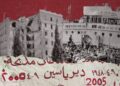
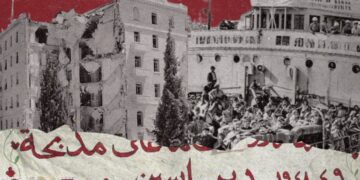
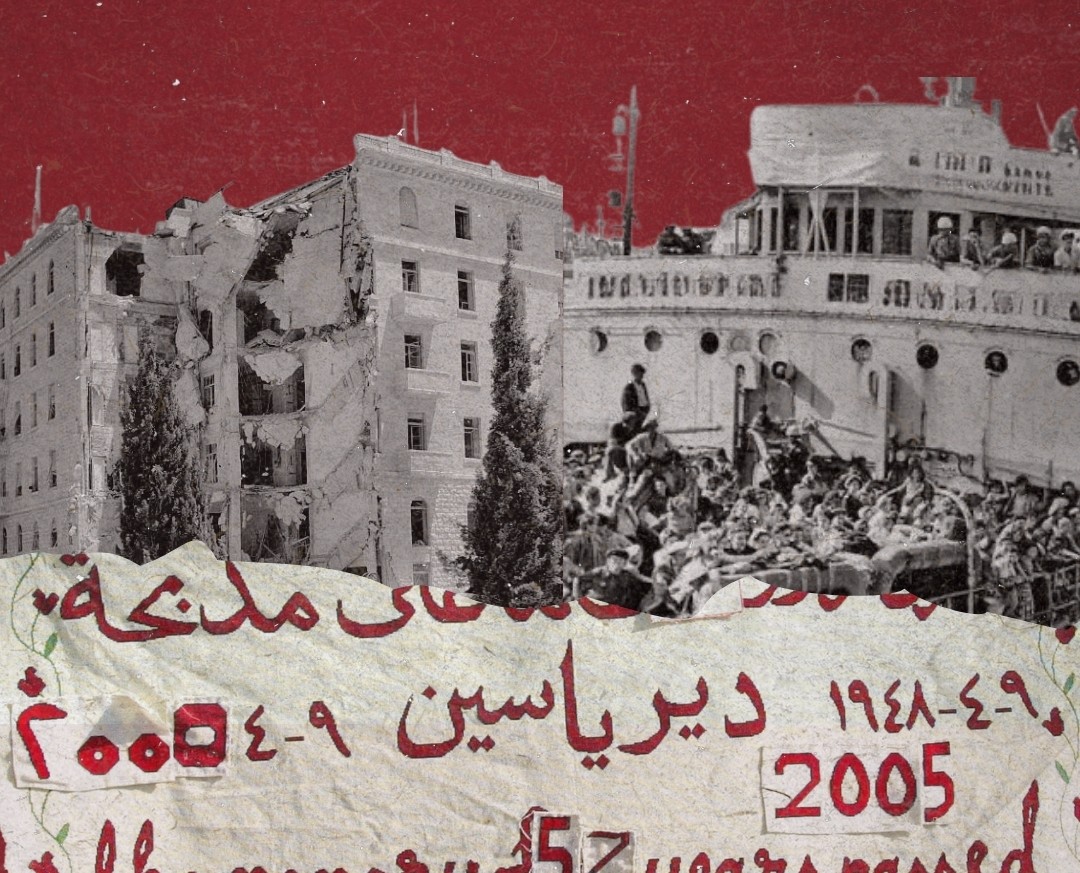
Lehi’s violence was not confined to these two assassinations. Over the course of the Mandate period the organization carried out forty-two assassinations in total, more than half of which targeted fellow Jews who had been declared traitors.[19] In bombings of the Cairo-Haifa railway line in early 1948, dozens of British soldiers and Palestinian civilians lost their lives.[20] The gravest of the organization’s crimes, however, was the Deir Yassin massacre, committed jointly with the Irgun in April 1948.[21] In that massacre, a large number of the village’s Palestinian inhabitants, women and children among them, were killed, and the village was effectively destroyed. As J. Bowyer Bell’s classic study shows, the purpose of the massacre was not merely military: sowing panic in neighbouring villages so as to trigger a mass Palestinian exodus was among the outcomes directly intended.[22] In this respect, Deir Yassin was an act of terror bearing direct responsibility for the acceleration of the Nakba.
Lehi’s effect on the process of state formation was multifaceted. On the one hand, it wore down British rule; on the other, through its violence against civilians, it effectively broke the resilience of Palestinian society. The organization was dissolved after the Bernadotte assassination, and a number of its members were pardoned and absorbed into the Israel Defense Forces.[23] Among the four organizations under discussion, Lehi is the one whose transfer of personnel and doctrine from an underground terrorist group to a state institution was the most uninterrupted.
The Gush Emunim Underground (1979-1984): Religious-Nationalist Settler Terror
Founded in 1974, Gush Emunim, the Bloc of the Faithful, was a movement that advocated the establishment of settlements in the occupied territories on religious and nationalist grounds.[24] Between 1979 and 1984, a terrorist cell known in the literature as the Jewish Underground, HaMakhteret HaYehudit, emerged from within the movement.[25] Its core cadre consisted of some twenty-five to twenty-seven individuals, most of whom held senior positions in Gush Emunim and in the settler councils. Among its founders were the engineer Menachem Livni, Yehoshua Ben-Shoshan, and Yehuda Etzion.[26]
The best known of the organization’s operations was the coordinated car bombing of three Palestinian mayors in the West Bank on 2 June 1980. Bassam Shakaa, the mayor of Nablus, lost both his legs, and Karim Khalaf, the mayor of Ramallah, lost a foot; the device placed in the vehicle of Ibrahim Tawil, the mayor of al-Bireh, was discovered before it detonated.[27] The research report prepared by Ehud Sprinzak for the Wilson Center documents the religious justification behind the attack. Members of the organization accordingly saw themselves not as agents of a political movement but as bearers of a mission of religious redemption.[28]
The organization’s most dangerous undertaking was the plot it devised in 1983 and 1984 to destroy the Dome of the Rock and al-Aqsa Mosque with explosives. The plan rested on the religious and political conviction that the sacred precinct had to be purified before the Third Temple could be built. The aim was to provoke a large-scale confrontation throughout the Muslim world and thereby to produce a regional crisis.[29] According to a contemporaneous analysis by the Institute for Palestine Studies, the calculation underlying this strategy was that such a crisis would facilitate the forcible removal of the Palestinian population from the occupied territories.[30] The plot was thwarted by the Israeli security services before it could be carried out, which itself indicates how serious and real a threat it represented.
The members of the organization were arrested in 1984. Menachem Livni, Shaul Nir, and Uzi Sharbav were sentenced to life imprisonment for the attack on the Islamic College in Hebron, which caused the deaths of three Palestinian students, and for the attempted assassinations of the mayors.[31] The convicted men nevertheless enjoyed considerable political support throughout the proceedings. Politicians from the Likud, Morasha, and Tehiya parties visited the defendants in prison, and a group of rabbis lobbied on their behalf.[32] Most of the sentences were subsequently reduced, and a number of the members were released early and returned to the political structures of the settler movement. This demonstrates how inconsistent the Israeli state has been in confronting religious-nationalist terror, and the extent to which such organizations have been tolerated.
As Sprinzak has emphasized, until 1980 most Israelis did not believe Jews capable of producing terror; terrorism had until then been coded as an Arab practice.[33] The case of the Jewish Underground shook this perception, yet the social tolerance extended to the members of the organization, and the reduction of their sentences helped to spread this understanding of legitimate violence across a definite social base rather than to marginalize it.[34]
Kach and Kahane Chai (1971-1994 and After): Institutionalized Far-Right Terror
Kach was a movement founded by the American-born rabbi Meir Kahane following his emigration to Israel in 1971, resting on a racist and theocratic doctrine known as Kahanism.[35] This ideology held that the Jewish people possessed an absolute right of sovereignty over Eretz Yisrael, that Arabs should be denied equal political rights, and that the ultimate objective was the forcible removal of the Palestinian population from the region.[36] Kahane’s record of violence had begun in the United States. The Jewish Defense League, which he founded in 1968, was described explicitly as a proscribed terrorist organization in the testimony given to Congress by the Department of Justice in 2004.
Kach gained visibility when Kahane entered the Knesset in 1984, but the party was barred from contesting the 1988 elections on account of the racist programme it advocated.[37] After Kahane was assassinated in New York in 1990, the movement split, with a wing named Kahane Chai forming under the leadership of his son Binyamin Kahane.[38]
The bloodiest act carried out by the movement was the massacre committed on 25 February 1994 by the Kach sympathizer Baruch Goldstein at the Ibrahimi Mosque in Hebron. Entering the mosque in military uniform, Goldstein opened fire on Palestinians at dawn prayers, killing twenty-nine people and wounding a hundred and twenty-five.[39] As the Israeli sociologist Baruch Kimmerling observed, the attack created a perception of religious war in the region and is regarded as one of the roots of the Second Intifada.[40] In the wake of the massacre, the Israeli government formally designated both Kach and Kahane Chai as terrorist organizations.[41] The United States Department of State likewise listed the two organizations as terrorist entities in 1994 and in 1997 moved them into the category of foreign terrorist organizations. That designation remained in force until 2022, when it was finally revoked.[42]
The most striking legacy of the Kahanist movement is its political durability. Former members of the movement, figures such as Baruch Marzel, Michael Ben-Ari, and Itamar Ben-Gvir, rose by the 2020s to ministerial rank in the Israeli government, notwithstanding their past association with a proscribed terrorist organization. This is a clear vindication of Sprinzak’s thesis of the institutionalized far right, namely the proposition that a marginal ideology of terror may in time be transformed into legitimate political representation.[45]
Comparative Assessment: A Common Pattern
When these four organizations are set side by side, a clear pattern emerges. First, the language of legitimation in each case is woven around the same two concepts: self-defence and a sacred or national mission. In Hashomer this function was served by the discourse of securing immigrant settlements; in Lehi by the discourse of unconditional struggle against colonial rule; in the Gush Emunim Underground by a theology of religious redemption; and in Kach by the doctrine of absolute sovereignty over Eretz Yisrael. Second, all four targeted civilians directly and deliberately: Palestinian mayors, villagers, worshippers at a mosque, United Nations officials, and, in doing so, employed the generation of fear at the level of society as a strategic instrument. This is the very core of terrorism as Hoffman defines it.[46] Third, in every case a relationship of tolerance and subsequent amnesty is observable, whether with the state or with the pre-state leadership of the Yishuv. The cadres of Hashomer were integrated into the Haganah and those of Lehi into the IDF; the sentences of the members of the Gush Emunim Underground were reduced; and former members of Kach rose to ministerial office. This third pattern indicates that the Israeli state’s confrontation with Jewish terror has been structurally weak and selective.
Conclusion
These four cases show that the history of the Zionist movement is not merely a narrative of state building and self-defence, and that planned, ideologically justified violence against civilians forms part of that history as well. Such violence was neither incidental nor a marginal aberration. Along the line running from Hashomer to Kach, the principle that violence against civilians may be deemed legitimate in the service of a national or religious purpose has been reproduced in varying forms.
It should be noted, too, that this legacy retains its contemporary relevance. The presence of former Kahanist cadres in senior positions in the Israeli government today, the renewed visibility of settler violence since the 2000s in the form of price tag attacks, and the recent resurgence of the ideological legacy of Gush Emunim all demonstrate that this past is not a closed chapter.
Bibliography
[1] Bruce Hoffman, Inside Terrorism, rev. ed. (New York: Columbia University Press, 2006), introductory chapter on the definition of terrorism; see also Mark Juergensmeyer, Terror in the Mind of God: The Global Rise of Religious Violence (Berkeley: University of California Press, 2000).
[2] “Kach (political party),” Wikipedia; “Jewish Underground,” Wikipedia.
[3] Ehud Sprinzak, “Fundamentalism, Terrorism, and Democracy: The Case of the Gush Emunim Underground,” Wilson Center Occasional Paper No. 4 (Washington, DC: Woodrow Wilson International Center for Scholars, 1986).
[4] Anita Shapira, Land and Power: The Zionist Resort to Force, 1881-1948 (New York: Oxford University Press, 1992).
[5] “Hashomer,” Wikipedia, accessed 2026; “Bar-Giora (organization),” Wikipedia, accessed 2026.
[6] “Yitzhak Ben-Zvi,” Wikipedia, accessed 2026.
[7] “Jewish Defense Organizations: Hashomer,” Jewish Virtual Library, accessed 2026.
[8] “Bar-Giora (organization),” Wikipedia; the slogan, as recorded by Shabtai Teveth, points to the aim of the organization to establish an armed Jewish state.
[9] “Hashomer,” Wikipedia; see also Shapira, Land and Power, relevant chapters.
[10] Shapira, Land and Power; see also Institute for Palestine Studies, “The Roots of Zionist Terrorism.”
[11] “Hashomer,” Wikipedia.
[12] Shapira, Land and Power.
[13] “Stern Gang,” Britannica; Joseph Heller, The Stern Gang: Ideology, Politics and Terror, 1940-1949 (London: Frank Cass, 1995).
[14] “Stern Gang,” A Dictionary of World History, Oxford Reference.
[15] Heller, The Stern Gang.
[16] “Stern Gang,” Britannica.
[17] Joanna Saidel, “Yitzhak Shamir: Why We Killed Lord Moyne,” The Times of Israel, 5 July 2012.
[18] U.S. Department of Justice, National Institute of Justice, “Assassination in International Politics: Lord Moyne, Count Bernadotte, and the Lehi.”
[19] Canadians for Justice and Peace in the Middle East (CJPME), “Jewish Terrorism under the British Mandate,” backgrounder; the figures have been assessed comparatively against the studies of Heller and Bell.
[20] Ibid.
[21] J. Bowyer Bell, Terror Out of Zion: Irgun Zvai Leumi, LEHI, and the Palestine Underground, 1929-1949 (New York: St. Martin’s Press, 1977).
[22] Ibid.
[23] “Lehi (group),” Academic Kids encyclopedia; Heller, The Stern Gang.
[24] Ian S. Lustick, For the Land and the Lord: Jewish Fundamentalism in Israel (New York: Council on Foreign Relations Press, 1988).
[25] “Jewish Underground,” Wikipedia; “Jewish extremist terrorism,” Wikipedia.
[26] “Jewish Underground,” Wikipedia.
[27] Ibid.; see also the archival reports of the Washington Report on Middle East Affairs (WRMEA), 1998 and 1999.
[28] Sprinzak, “Fundamentalism, Terrorism, and Democracy: The Case of the Gush Emunim Underground.”
[29] Ibid.
[30] Institute for Palestine Studies, “Zionist Settlement Ideology and Its Ramifications for the Palestinian People.”
[31] “Jewish Underground,” Wikipedia.
[32] Nur Masalha, Expulsion of the Palestinians: The Concept of “Transfer” in Zionist Political Thought, 1882-1948 (Washington, DC: Institute for Palestine Studies, 1992), cited in “Jewish Underground,” Wikipedia.
[33] Ehud Sprinzak, The Ascendance of Israel’s Radical Right (New York: Oxford University Press, 1991).
[34] Ibid.
[35] “Kach (political party),” Wikipedia; Sprinzak, The Ascendance of Israel’s Radical Right.
[36] Council on Foreign Relations, “Kach, Kahane Chai (Israel, extremists).”
[37] “Kach (political party),” Wikipedia.
[38] Ibid.
[39] “Cave of the Patriarchs Massacre,” Wikipedia; “Baruch Goldstein,” Wikipedia.
[40] “Cave of the Patriarchs Massacre,” Wikipedia, citing the assessment of Baruch Kimmerling.
[41] “Kach (political party),” Wikipedia; Institute for Middle East Understanding (IMEU), “Fact Sheet: Meir Kahane & The Extremist Kahanist Movement.”
[42] Council on Foreign Relations, “Kach, Kahane Chai (Israel, extremists)”; see also “Every Jew a .22 and MZ-4: The Path from Kahane to Ben-Gvir,” In These Times, 11 January 2024.
[43] Ami Pedahzur and Arie Perliger, Jewish Terrorism in Israel (New York: Columbia University Press, 2009).
[44] Council on Foreign Relations, “Kach, Kahane Chai (Israel, extremists)”; IMEU, “Fact Sheet.”
[45] Sprinzak, The Ascendance of Israel’s Radical Right; “Every Jew a .22 and MZ-4,” In These Times.
[46] Hoffman, Inside Terrorism.
*Opinions expressed in this article are the author’s own and do not necessarily reflect Platform: Current Muslim Affairs’ editorial policy.