


























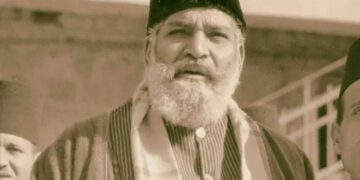







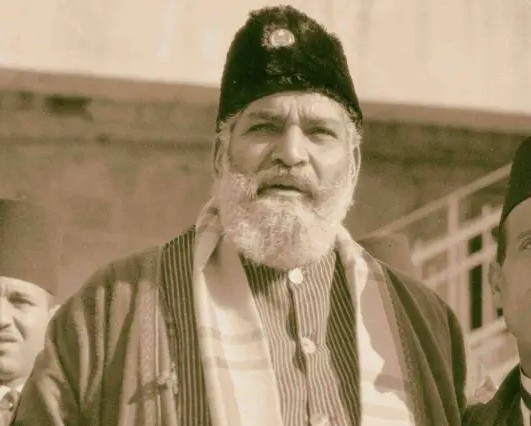
One of the most resilient leaders of the Indian subcontinent’s struggle for independence against British colonialism, Shaukat Ali Khan (1873-1938) was also a pioneering figure who vocalized the Palestinian cause on the international stage. Known to history alongside his brother Mohammad Ali Jauhar as the “Ali Brothers,” Shaukat Ali dedicated his life not only to the freedom of his own people, but also to defending the rights of the Islamic world and all Eastern geographies oppressed under imperialism.
Playing a critical role in organizing Indian Muslims against colonial rule, Shaukat Ali was actively involved in politics under the All-India Muslim League and the Indian National Congress. Through his strong collaboration with Mahatma Gandhi, he became one of the most influential figures in the mass civil disobedience campaigns launched against British occupation. Following World War I, he was among the key architects of the Khilafat Movement, established to protect the integrity of the Ottoman Empire and the institution of the Caliphate, thereby sparking a massive wave of social solidarity across the Indian subcontinent.
His uncompromising stance against British colonial rule caused him to spend a significant portion of his life behind bars for the cause he believed in. However, these years of captivity behind bars served only to reinforce his unwavering commitment to independence.
During World War I, he was imprisoned alongside his brother between 1915 and 1919 for openly opposing British policies toward the Ottoman Empire and sharpening his anti-imperialist stance. Shortly after regaining his freedom, he was targeted once again in the famous 1921 “Karachi Trials.” He was tried on charges of “inciting mutiny in the army” for calling on Indian soldiers not to serve in the British military or aid colonialism, resulting in a sentence of two years of hard labor.
Never limiting his struggle to the borders of India, the cause of Palestine and Jerusalem always held a special place in Shaukat Ali Khan’s life. He took a firm stance against the Zionist settlement policies carried out in British Mandate Palestine and the threats facing the Al-Aqsa Mosque. By taking an active role in organizing the World Islamic Congress held in Jerusalem in 1931, which brought together representatives from all across the Muslim world, he became one of the prominent voices championing the Palestinian people’s struggle.
Passing away in Delhi in 1938, Shaukat Ali Khan remains a remarkable figure remembered both for his unifying and courageous leadership in the Indian independence movement and for his sincere dedication to the preservation of Jerusalem and Palestine.