






İLKE Vakfı
Platform
tr Türkçe en English
No Result
View All Result
  • PLATFORM
  • NEWS
    İLKE Agenda: Muzzammil Ayyub Thakur ile Keşmir’in “Filistinleştirilmesi”

    Khaled Beydoun: “Islamophobia is a modern manifestation of the crusades”

    Filistin Sempozyumu: Filistin ve Küresel İlişkilerin Geleceği

    Exploring Islam’s View on Slavery and Blackness: Seminar by Jonathan A.C. Brown

    The Conference on Contemporary Muslim Thought

    The Conference on Contemporary Muslim Thought

    Filistin Sempozyumu: Filistin ve Küresel İlişkilerin Geleceği

    Palestine Symposium: Palestine and the Future of Global Affairs

    İLKE Agenda: Muzzammil Ayyub Thakur ile Keşmir’in “Filistinleştirilmesi”

    The Platform Talks: Palestine after October 7 with Azzam Tamimi

    İLKE Agenda: Muzzammil Ayyub Thakur ile Keşmir’in “Filistinleştirilmesi”

    The Palestine Talks: Syria after December 8 with Kinda Hawasli

    İLKE Agenda: Muzzammil Ayyub Thakur ile Keşmir’in “Filistinleştirilmesi”

    İLKE Agenda: The “Palestinization” of Kashmir with Muzzammil Ayyub Thakur

  • ANALYSIS
    • All
    • Culture, Arts and Media
    • Economy
    • Education
    • Energy and Environment
    • Fundamental Rights and Freedoms
    • Migration
    • Opinion
    • Social Issues
    Hafızadan Gelecek Vizyonuna: Türkiye-Suudi Arabistan İlişkilerinde Yeni Dönem

    From Memory to Future Vision: A New Era in Turkiye-Saudi Arabia Relations

    Türkmen Halkının Manevi Önderleri Olan Büyük Sufi Alimler: Necmeddin Kübra, Yusuf Hemedânî ve Ebu Said Ebu’l-Hayr

    Great Sufi Scholars as the Spiritual Leaders of the Turkmen People: Najm al-Dīn Kubrā, Yusuf Hamadānī, and Abū Saʿīd Abū’l-Khayr

    Irak’ın Güzel Çocuklarının Hikayesi: Başkanın Pastası

    The Story of Iraq’s Beautiful Children: The President’s Cake

    Vekalet Savaşı Nedir?

    What is Proxy Warfare?

    Estetik Kırılma: İslam Dünyasında Modernleşme ve Kimlik Arayışı

    Aesthetic Rupture: Modernization and the Search for Identity in the Islamic World

    Batılı Filmlerde Müslümanların ve Afrika’nın Temsili

    The Representation of Muslims and Africa in Western Films

  • INTERVIEWS
    Casir el-Bergusi ile Filistin Mücadelesi ve Esaret Yılları Üzerine Bir Röportaj

    An Interview with Jaser Albarghouthi on the Palestinian Struggle and the Years of Captivity

    The Decolonization of Knowledge: Interview with Professor Souleymane Bachir Diagne

    The Decolonization of Knowledge: Interview with Professor Souleymane Bachir Diagne

    A Possible New Breath in Regional Balances: The Alliance of Türkiye, Pakistan, Egypt, and Saudi Arabia

    A Possible New Breath in Regional Balances: The Alliance of Türkiye, Pakistan, Egypt, and Saudi Arabia

    From the Ballot Box to the Street: The Rising Social Wave in Tanzania After the Election

    From the Ballot Box to the Street: The Rising Social Wave in Tanzania After the Election

    Kafkasya’da Müslümanlar ve İslami Eğitim: TCDİB Kuzey Kafkasya Koordinatörü Selim Akburak ile Söyleşi

    Muslims and Islamic Education in the Caucasus: An Interview with Selim Burak North Caucasus Coordinator in Directorate of Religious Affairs

    Göçü Yönetmek: Dr. Mehmet Köse’yle Söyleşi

    Interview with Mehmet Köse

    Gurbet Hikayeleri

    Interview on Gurbet Hikayeleri

    İstanbul’daki Uluslararası Öğrencilerle Söyleşi

    Interview with International Students in Istanbul

    Zaytuna College Lisansüstü Eğitim Dekanı Maşuk Yamaç’la Söyleşi

    Interview with Mahsuk Yamac, Dean of Graduate Studies at Zaytuna College

  • VOICES
    Anas Altikriti | Voices from the Muslim World | Türkçe Altyazılı

    Anas Altikriti | Voices from the Muslim World | Türkçe Altyazılı

    Basil Mustafa (Oxford) | Voices from the Muslim World | with Turkish subtitles

    Basil Mustafa (Oxford) | Voices from the Muslim World | with Turkish subtitles

    OMAR SULEIMAN | VOICES FROM THE MUSLIM WORLD

    OMAR SULEIMAN | VOICES FROM THE MUSLIM WORLD

    Paul Williams | Voices from the Muslim World

    Paul Williams | Voices from the Muslim World

  • DATABASE
    • All
    • Institutions
    • Movements
    • People
    • Q-A
    Şeyh Hamad bin Halife Al Sani

    Sheikh Hamad bin Khalifa Al Thani

    NATO 3.0 Nedir?

    What is NATO 3.0?

    İbrahim Anlaşmaları nedir?

    What are the Abraham Accords?

    Agnotoloji Nedir?

    What is Agnotology?

    Egemenlik Nedir?

    What is Sovereignty?

    Tekno-Feodalizm Nedir?

    What is Techno-Feudalism?

    Hürmüz Boğazı neden önemli?

    Why is Strait of Hormuz important?

    İnsan Hakları Evrensel Midir?

    Are Human Rights Universal?

    Göçmen ve Mülteci arasındaki fark nedir?

    What is the difference between migrant and refugee?

  • DISCOVER
  • PLATFORM
  • NEWS
    İLKE Agenda: Muzzammil Ayyub Thakur ile Keşmir’in “Filistinleştirilmesi”

    Khaled Beydoun: “Islamophobia is a modern manifestation of the crusades”

    Filistin Sempozyumu: Filistin ve Küresel İlişkilerin Geleceği

    Exploring Islam’s View on Slavery and Blackness: Seminar by Jonathan A.C. Brown

    The Conference on Contemporary Muslim Thought

    The Conference on Contemporary Muslim Thought

    Filistin Sempozyumu: Filistin ve Küresel İlişkilerin Geleceği

    Palestine Symposium: Palestine and the Future of Global Affairs

    İLKE Agenda: Muzzammil Ayyub Thakur ile Keşmir’in “Filistinleştirilmesi”

    The Platform Talks: Palestine after October 7 with Azzam Tamimi

    İLKE Agenda: Muzzammil Ayyub Thakur ile Keşmir’in “Filistinleştirilmesi”

    The Palestine Talks: Syria after December 8 with Kinda Hawasli

    İLKE Agenda: Muzzammil Ayyub Thakur ile Keşmir’in “Filistinleştirilmesi”

    İLKE Agenda: The “Palestinization” of Kashmir with Muzzammil Ayyub Thakur

  • ANALYSIS
    • All
    • Culture, Arts and Media
    • Economy
    • Education
    • Energy and Environment
    • Fundamental Rights and Freedoms
    • Migration
    • Opinion
    • Social Issues
    Hafızadan Gelecek Vizyonuna: Türkiye-Suudi Arabistan İlişkilerinde Yeni Dönem

    From Memory to Future Vision: A New Era in Turkiye-Saudi Arabia Relations

    Türkmen Halkının Manevi Önderleri Olan Büyük Sufi Alimler: Necmeddin Kübra, Yusuf Hemedânî ve Ebu Said Ebu’l-Hayr

    Great Sufi Scholars as the Spiritual Leaders of the Turkmen People: Najm al-Dīn Kubrā, Yusuf Hamadānī, and Abū Saʿīd Abū’l-Khayr

    Irak’ın Güzel Çocuklarının Hikayesi: Başkanın Pastası

    The Story of Iraq’s Beautiful Children: The President’s Cake

    Vekalet Savaşı Nedir?

    What is Proxy Warfare?

    Estetik Kırılma: İslam Dünyasında Modernleşme ve Kimlik Arayışı

    Aesthetic Rupture: Modernization and the Search for Identity in the Islamic World

    Batılı Filmlerde Müslümanların ve Afrika’nın Temsili

    The Representation of Muslims and Africa in Western Films

  • INTERVIEWS
    Casir el-Bergusi ile Filistin Mücadelesi ve Esaret Yılları Üzerine Bir Röportaj

    An Interview with Jaser Albarghouthi on the Palestinian Struggle and the Years of Captivity

    The Decolonization of Knowledge: Interview with Professor Souleymane Bachir Diagne

    The Decolonization of Knowledge: Interview with Professor Souleymane Bachir Diagne

    A Possible New Breath in Regional Balances: The Alliance of Türkiye, Pakistan, Egypt, and Saudi Arabia

    A Possible New Breath in Regional Balances: The Alliance of Türkiye, Pakistan, Egypt, and Saudi Arabia

    From the Ballot Box to the Street: The Rising Social Wave in Tanzania After the Election

    From the Ballot Box to the Street: The Rising Social Wave in Tanzania After the Election

    Kafkasya’da Müslümanlar ve İslami Eğitim: TCDİB Kuzey Kafkasya Koordinatörü Selim Akburak ile Söyleşi

    Muslims and Islamic Education in the Caucasus: An Interview with Selim Burak North Caucasus Coordinator in Directorate of Religious Affairs

    Göçü Yönetmek: Dr. Mehmet Köse’yle Söyleşi

    Interview with Mehmet Köse

    Gurbet Hikayeleri

    Interview on Gurbet Hikayeleri

    İstanbul’daki Uluslararası Öğrencilerle Söyleşi

    Interview with International Students in Istanbul

    Zaytuna College Lisansüstü Eğitim Dekanı Maşuk Yamaç’la Söyleşi

    Interview with Mahsuk Yamac, Dean of Graduate Studies at Zaytuna College

  • VOICES
    Anas Altikriti | Voices from the Muslim World | Türkçe Altyazılı

    Anas Altikriti | Voices from the Muslim World | Türkçe Altyazılı

    Basil Mustafa (Oxford) | Voices from the Muslim World | with Turkish subtitles

    Basil Mustafa (Oxford) | Voices from the Muslim World | with Turkish subtitles

    OMAR SULEIMAN | VOICES FROM THE MUSLIM WORLD

    OMAR SULEIMAN | VOICES FROM THE MUSLIM WORLD

    Paul Williams | Voices from the Muslim World

    Paul Williams | Voices from the Muslim World

  • DATABASE
    • All
    • Institutions
    • Movements
    • People
    • Q-A
    Şeyh Hamad bin Halife Al Sani

    Sheikh Hamad bin Khalifa Al Thani

    NATO 3.0 Nedir?

    What is NATO 3.0?

    İbrahim Anlaşmaları nedir?

    What are the Abraham Accords?

    Agnotoloji Nedir?

    What is Agnotology?

    Egemenlik Nedir?

    What is Sovereignty?

    Tekno-Feodalizm Nedir?

    What is Techno-Feudalism?

    Hürmüz Boğazı neden önemli?

    Why is Strait of Hormuz important?

    İnsan Hakları Evrensel Midir?

    Are Human Rights Universal?

    Göçmen ve Mülteci arasındaki fark nedir?

    What is the difference between migrant and refugee?

  • DISCOVER
No Result
View All Result
Platform
No Result
View All Result
tr Türkçe en English
Home Database Q-A

Why is Strait of Hormuz important?

Editör İlke by Editör İlke
4 June 2026
in Q-A, Database
Hürmüz Boğazı neden önemli?

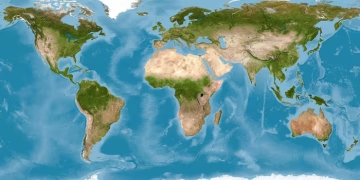
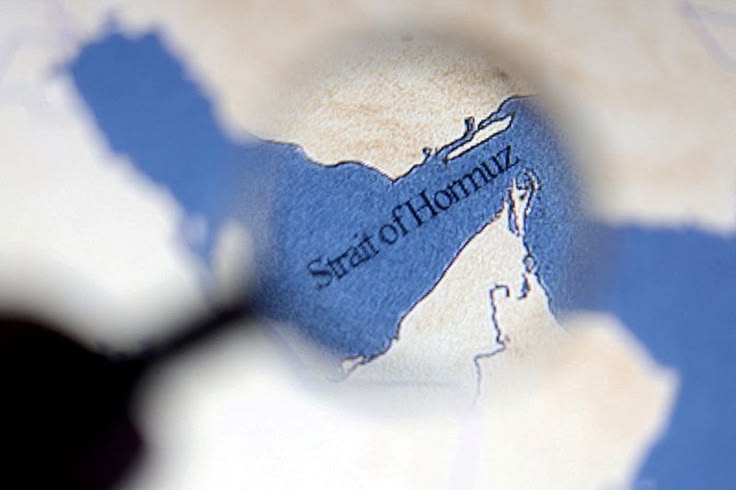
A map showing the Strait of Hormuz is seen in this illustration taken June 22, 2025. REUTERS/Dado Ruvic/Illustration

Share on FacebookShare on Twitter

Today, the Strait of Hormuz is frequently mentioned in discussions ranging from global energy markets and evening news broadcasts to international relations and geopolitical analyses. It has become an even more prominent topic in recent weeks due to Iran’s threats to close the strait and the escalating military tensions across the region.

What Is Happening in the Strait of Hormuz?

The Strait of Hormuz is the only maritime passage connecting the Persian Gulf to the Gulf of Oman and the open ocean. Iran borders its northern coastline, while Oman and the United Arab Emirates lie to the south. Although the strait is only about 33 kilometers (21 miles) wide at its narrowest point, this small corridor is one of the world’s most strategically important trade routes.

Following the outbreak of conflict sparked by the joint U.S.–Israeli strikes, Iran moved to disrupt shipping through the Strait of Hormuz—the heart of the global energy network. In the immediate aftermath, oil prices surged dramatically, rising by as much as 65 percent compared with pre-conflict levels.

Is It Merely a Commercial Waterway?

Not at all. The Strait of Hormuz is regarded in geopolitics as a chokepoint—a narrow passage through which global trade and energy supplies must pass and for which there are very few viable alternatives. Any disruption to traffic through the strait can quickly create severe consequences for the global economy.

Why Is the Strait of Hormuz So Important?

The strait’s strategic significance stems primarily from oil and natural gas. It serves as the principal export route for some of the world’s largest energy producers, including Saudi Arabia, Iraq, Kuwait, the United Arab Emirates, and Iran.

Approximately one-third of the world’s seaborne oil trade and around 20 percent of global oil consumption pass through the Strait of Hormuz every day—equivalent to roughly 20–21 million barrels of oil daily.

Qatar, one of the world’s leading exporters of liquefied natural gas (LNG), also relies almost entirely on this passage to reach international markets.

Although a limited number of pipelines bypass the strait, their capacity falls far short of replacing the enormous volume of energy transported through Hormuz.

Why Is It Receiving So Much Attention Today?

The Strait of Hormuz has once again become the focus of international attention because of rising geopolitical tensions and the growing threat of asymmetric warfare in the region.

As the country controlling the northern coastline of the strait, Iran has repeatedly used the possibility of closing Hormuz as both a diplomatic and military bargaining tool during periods of confrontation with Western powers and regional rivals. In recent years, regional conflicts, drone attacks on commercial vessels and oil tankers, ship seizures, and retaliatory actions have turned the security of the strait into a matter of global concern.

Even a limited military incident in the area has the potential to trigger sharp increases in global oil prices, fuel worldwide inflation, and create energy shortages capable of disrupting industrial production. For this reason, the Strait of Hormuz is not merely a regional issue—it is a geopolitical flashpoint closely monitored by major powers from Washington to Beijing.

In Brief

The Strait of Hormuz is one of the world’s most critical energy corridors, playing a decisive role in the stability of the global economy. Power struggles surrounding this narrow waterway affect not only the countries bordering it but also fuel prices, inflation, financial markets, and the daily lives of people around the world.

For a more in-depth perspective on this issue, see Feyza Gümüşoğlu’s comprehensive analysis: Security, Fragility, and the Search for a New Equilibrium in the Gulf Following the Iranian Attacks

Previous Post

The Representation of Muslims and Africa in Western Films

Next Post

Aesthetic Rupture: Modernization and the Search for Identity in the Islamic World

  • Dekolonizasyon nedir?

    What Is Decolonization?

    0 shares
    Share 0 Tweet 0
  • What is The Organisation of Islamic Cooperation?

    0 shares
    Share 0 Tweet 0
  • Are Human Rights Universal?

    0 shares
    Share 0 Tweet 0
  • What is the difference between migrant and refugee?

    0 shares
    Share 0 Tweet 0
  • Why is Strait of Hormuz important?

    0 shares
    Share 0 Tweet 0

Platform: Agenda of the Muslim World was established within the İLKE Science Culture Education Foundation as a publication organ that aims to follow and analyze the intellectual, political, social, economic and cultural agendas of Muslim societies and to present current and original perspectives on the Muslim world.

  • ANALYSIS
  • NEWS
  • INTERVIEWS
  • VOICES
  • platform@ilke.org.tr
  • (0216) 310 43 18
  • Aziz Mahmut Hüdayi Mah. Türbe Kapısı Sk. No: 13 Üsküdar, İstanbul
Instagram X-twitter

2025 @ PLATFORM is an İLKE Foundation organization. All rights reserved.

No Result
View All Result
  • Issues
  • Platform English