





































(The original Turkish version of this article was published by the Platform: Current Muslim Affairs on June 1, 2026)
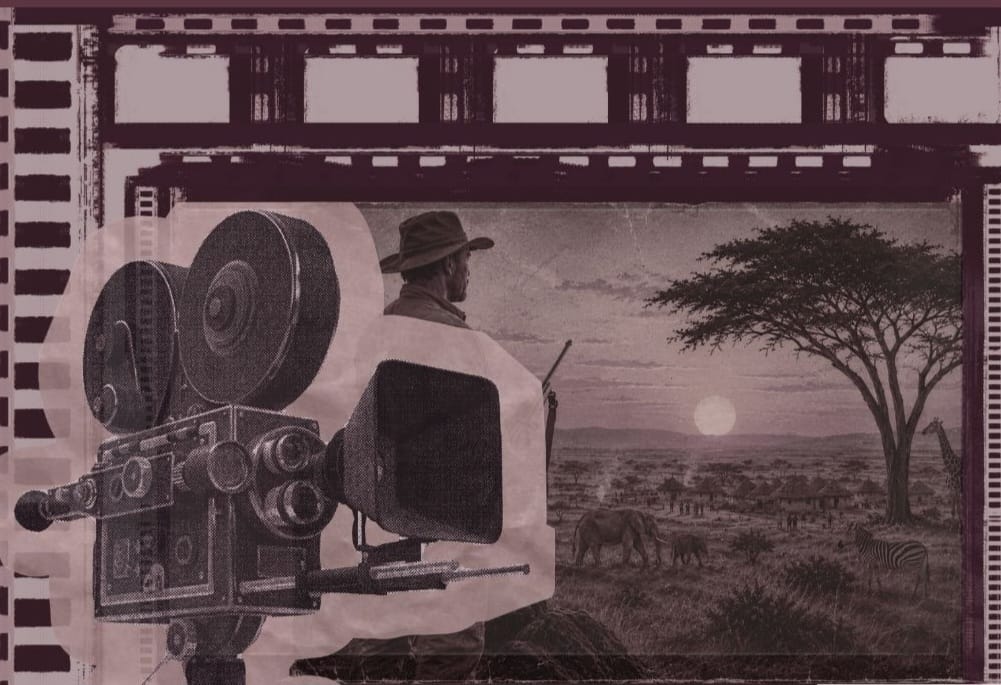
Since the early years of cinema, representations of the East, Muslims, and Africans in Western films have generally been constructed around the practices of “colonial discourse, orientalist fantasies, and othering” (Shohat and Stam, 1994, p. 145). This phenomenon has a historical foundation and coincides with the period in which European imperialism reached its peak alongside the emergence of Western cinema and film production, a period commonly known as the “Scramble for Africa.” In early films, Africa was depicted for Western audiences as “exotic” and “uncivilized” (Pfaff, 2004, p. 1; Hayward, 2012, pp. 555–556; Namaz, 2022, pp. 63–64). Therefore, from its inception, cinema was not merely a medium of entertainment; rather, it functioned as a visual stronghold of imperial discourse.
In early cinema, the image of the Muslim/East was shaped by orientalist and racist imagery, with the Lumière brothers’ 1902 productions Le Musulman Rigolo (The Funny Muslim) and Ali Bouffe à l’Huile standing out as notable examples. In these works, the religious lives and eating habits of Muslim Arabs were mocked, producing some of the earliest cinematographic examples of such representations. In films produced in Thomas Edison’s studio, such as Dance of the Seven Veils (1893) and Fatima’s Dances (1896), the East and the geography of Islam were brought to the screen as seductive and exotic objects of fantasy. The Muslim world was thus constructed as a visual field of spectacle for the Western male gaze. In early cinema, Georges Méliès’s The Palace of Arabian Nights (1905) presents the Arab world as a mythological Arabia filled with camels, swords, harems, and grotesque Arab figures (Shaheen, 2001, p. 28). Shaheen (2007) notes that in silent films, Muslim characters were generally caricatured as “lustful, savage, exotic, tent-dwelling nomads or slave traders.”
African communities were similarly subjected to processes of othering from the earliest period of cinema onward. In films, Africans were portrayed as figures without their own histories or cultures, existing merely to serve white heroes or to function as objects of their “civilizing” mission. While David Griffith’s A Zulu’s Heart (1908) is regarded as one of the early examples of racist imagery, Ernst Lubin’s comedy Rastus in Zululand (1910) depicted Africa as a place inhabited by cannibals. Representations of Africans and Arabs also intersected, particularly when considering the geographies inhabited by Arab populations. Shaheen (2001, p. 328) draws attention to Captured by Bedouins (1912), in which Bedouins are represented as “savage hordes” who abduct white women and must be destroyed by Western armies. In narratives that continued through films such as Ali Baba Goes to Town (1937) and Casablanca (1942), Africa, the Middle East/the East came to symbolize despotism and lethality.
As Shohat and Stam argue in Unthinking Eurocentrism, early Hollywood cinema completely suppressed the anti-colonial struggles of “other” cultures and evaluated them through a framework of structural deficiency, portraying them as barbaric, exotic, ignorant, and the like. Popular films such as the Tarzan series, King Solomon’s Mines, Mogambo, and The African Queen constructed the continent as a wild tale of nature to be conquered by Western explorers and hunters (Namaz, 2022). In these narratives, Africans are stereotyped either as bloodthirsty cannibals and primitive savages or as obedient and lazy servants who carry the burdens of their white masters (Dunn, 1996, p. 149). This dichotomy, produced by Western cinema, aimed to legitimize, in the eyes of the audience, the violence of colonialism, land dispossession, and economic exploitation (Shaka, 1994; Namaz, 2022).
The institutional dimension of this discourse cannot be overlooked. Through projects such as the Bantu Educational Kinema Experiment (BEKE) and the Colonial Film Unit (CFU), British authorities monopolized film production in Africa and sustained a paternalistic mentality. It is evident that, assuming that Africans—whom they characterized as primitive—would be unable to comprehend the complex narrative structures of Western films, they produced “educational films” specifically designed for them, consisting of slowed-down, one-dimensional narratives and simple stories (Diawara, 1992, pp. 4–5). France’s Laval Decree of 1934, which brought under control which films could be produced and screened in colonial territories, further rendered colonial narratives visible. The primary aim of this control was to prevent the spread, through cinema, of any anti-colonial consciousness or nationalism that might emerge in Africa. Indeed, France also began to subject films from Egypt and other Arab countries to strict censorship before they could be screened in its African colonies, fearing that Arabic dialogue and religious themes might fuel anti-French sentiment among West African Muslims (Diawara, 1992; Genova, 2013).
The perception of Africa in Western films was shaped by the fact that the invention of cinema coincided with the peak of European imperialism, and throughout the continent’s history, Africa was largely constructed as the “Other” of the West (Genova, 2023, p. 38). During the colonial period, cinema, which spread beyond the West, was used to culturally legitimize political oppression and economic exploitation. This medium distorted reality by presenting the colonizer as the representative of a superior civilization and Indigenous peoples as primitive and uncontrolled (Armes, 2023).
Although the perception of Africa took different forms during the colonial and postcolonial periods, it is well known that, at its core, it preserved ideological superiority and hierarchy. Within this hierarchy, the colonial-era “civilizing mission” and the notion of exotic savagery came to the fore. Films such as Sanders of the River (1935) and King Solomon’s Mines (1937) were used as powerful instruments in legitimizing the political domination and economic exploitation of Western powers as ideological arguments and in justifying such narratives. In these productions, as seen in the popular examples of “Imperial Cinema” of the period, colonialism is intertwined with a mission of “bringing civilization” to the East and to Africa by combating ignorance, disease, and tyranny. According to Shohat and Stam (1994), the white man in films is generally a soldier, doctor, or explorer: a heroic and protective figure who brings order and justice to the continent. By contrast, Indigenous peoples are considered “good” only when they submit to this authority. The statement made in 1937 by the French actor Harry Baur—that “North Africa produces better wines than we could have imagined, and I see no reason why it should not also produce the best French films” (Armes, 2023, p. 19)—helps us understand the roots of this mode of representation.
Western films also caricatured Africans by depriving them of their own histories and cultures. For example, in the Tarzan series and adventure films, Africans were frequently depicted as cannibals, “childlike” beings incapable of rational thought and governed by superstition, or as “savages” positioned as the absolute opposite of civilization (Shohat and Stam, 1994, pp. 108–109). It should also be noted that African characters lack psychological depth and that their destinies are always dependent on the actions of Western colonizers. Voyeurism and exoticism transformed Africa into an exotic setting for the consumption of Western audiences. The primary function of the camera was to present an African geography to Western spectators who “conquered the world from their armchairs”; this geography was constructed as a mysterious and dangerous “virgin land” waiting to be discovered. In particular, Indigenous tribal dances and the female body were presented, under the guise of the supposedly “ethnographic,” as voyeuristic and erotic objects of spectacle.
In the postcolonial period, prominent representations of Africa more often referred to imperial nostalgia and brought the continent’s ongoing state of helplessness to the screen. After the Second World War, with the independence of the colonies, Western cinema was compelled to soften overtly racist and directly colonial caricatures to some extent; nevertheless, the fundamental transformation in the perception of Africa continued to manifest itself in the form of neocolonialism. The effective collapse of colonialism gave rise in Western cinema to a romantic melancholy for the glorious days of colonialism. Films such as Out of Africa (1985) and The English Patient (1996), as well as the Indiana Jones series (1981–2008), Four Feathers (2002), The Mummy (1999–2008), and King Kong (2006), aestheticized Africa—and at times the East—as an exotic Playground of the past, a site of adventure, passion, and heroism, thereby masking and reproducing colonial discourses (Rastegar, 2015, pp. 26–27).
After independence, Africa has frequently been represented in cinema as a land of corrupt governments and chaos. In films such as The Wild Geese (1978), Western mercenaries who intervene in African countries are glorified as sympathetic heroes who bring order to the continent. In these films, history is effectively turned upside down: while Westerners are heroized, Africans are portrayed as invaders in their own countries, and their killing is transformed into an aesthetic spectacle. In films and media of the globalization era, the perception of Africa has increasingly been reduced to a homogeneous geography marked by “hunger, epidemics, ethnic massacres, tribal wars, and child soldiers.” While Africa’s local cultural diversity is erased, the continent continues to be represented as a “victim” incapable of saving itself and perpetually in need of the humanitarian or economic intervention of the West or Western institutions.
In summary, the perception of Africa in Western films was constructed during the colonial period as a primitive geography that needed to be ruled and educated; in the postcolonial period, this desire for domination was replaced either by nostalgic romanticism or by a tragic stage caught in a spiral of violence and dependent on Western compassion. What both periods share is the West’s use of Africa to reconstruct its own identity as “superior, civilized, and rational.” Many regions of Africa, particularly North Africa, are depicted—as in Pepe le Moko (1937)—as mere “settings for foreign productions.”
References
Armes, R. (2011). Üçüncü Dünya Sineması ve Batı [Third World Cinema and the West] (Z. Atam, Trans.). Istanbul: Doruk Yayıncılık.
Armes, R. (2023). Colonial Cinema. In M. T. Martin, G. J. M. Kaboré, A. J. Brown, C. Nelson, & J. E. Roskos (Eds.), African Cinema: Manifesto and Practice for Cultural Decolonization, Volume 1: Colonial Antecedents, Constituents, Theory, and Articulations (pp. 19-36). Bloomington: Indiana University Press.
Diawara, M. (1992). African Cinema: Politics and Culture. Bloomington: Indiana University Press.
Dunn, K. (1996). Lights… Camera… Africa: Images of Africa and Africans in Western Popular Films of the 1930s. African Studies Review, 39(1), 149-175.
Genova, J. E. (2013). Cinema and Development in West Africa. Bloomington: Indiana University Press.
Genova, J. E. (2023). Colonialist Regime of Representation, 1945–1960. In M. T. Martin, G. J. M. Kaboré, A. J. Brown, C. Nelson, & J. E. Roskos (Eds.), African Cinema: Manifesto and Practice for Cultural Decolonization, Volume 1: Colonial Antecedents, Constituents, Theory, and Articulations (pp. 37-68). Bloomington: Indiana University Press.
Kırel, S. (2010). Kültürel Çalışmalar ve Sinema [Cultural studies and cinema]. Istanbul: Kırmızı Kedi Yayınları.
Namaz, Y. (2022). Afrika Sineması: Ousmane Sembène Filmografisine Giriş [African cinema: An introduction to Ousmane Sembène’s filmography]. Istanbul: Afrika Vakfı Yayınları.
Rastegar, K. (2015). Surviving Images: Cinema, War, and Cultural Memory in the Middle East. Oxford: Oxford University Press.
Shaheen, J. G. (2001). Reel Bad Arabs: How Hollywood Vilifies a People. Northampton: Olive Branch Press.
Shaheen, J. G. (2007). Guilty: Hollywood’s Verdict on Arabs After 9/11. Northampton: Olive Branch Press.
Shaka, F. O. (1994). Colonial and Post-colonial African Cinema. University of Warwick.
Shohat, E., & Stam, R. (1994). Unthinking Eurocentrism: Multiculturalism and the Media. London: Routledge.
*Opinions expressed in this article are the author’s own and do not necessarily reflect Platform: Current Muslim Affairs’ editorial policy.