












(The original Turkish version of this article was published by the Platform: Current Muslim Affairs on August 17, 2026)
The present era represents, in many respects, a process that deserves to be described as an ‘age of uncertainties.’ In this process, it is not only geopolitical developments that shape the reality of nation-states; geo-cultural structures, too, cannot be disregarded, given their direct and indirect bearing on these developments. Approached in this way, it may be argued that geopolitical developments can, in a sense, be determined and reconstructed by geo-cultural structures. This article will briefly address the geo-cultural structure of the societies we designate as ‘Malay’ and the ‘Malay world,’ a structure that has persisted despite all transformations and the constraints imposed by nation-state boundaries.
It is of considerable importance to make sense of the impact that nation-state formations, which underlie contemporary geopolitics and the political approaches constituting it, have had on the Malay world and its cultural foundations. In this context, the concepts of ‘Malay’ and the ‘Malay world,’ notable for their historical and traditional presence within the geopolitical foundation of the Southeast Asian region but confined, owing to recent developments, to narrow molds, overlooked, and even forgotten or made to be forgotten, must be addressed in their integral dimensions. The societies that we propose should be understood as ‘Malay’ and the ‘Malay world’ continue their existence today in the region known globally as the Southeast Asian geography. This reminder will not only provide elements that allow us to understand Southeast Asia in an integral manner, but will also open the way for discussing whether the Malay world can emerge as a cultural structure, as an integral force and influence in its own right.
Among the views concerning the definition of ‘Malay,’ the proposition that the fundamental sense of belonging within Malay society is directed not toward an ethnic or religious unit but rather toward a monarchy (Jones, 2015: xv) contains an element of validity. However, given that this view is largely associated with, and inspired by, the pre-Islamic period, it should be noted that different definitions exist when historical and traditional formations are taken into account. In other words, there are notable indications that, among historical and traditional formations, ethnic and religious structure carries an importance at least equal to that of the statement above.
Bearing in mind the restrictive nature of the above statement, it must be noted that the Malay world cannot be reduced to a mere structuring of geography, race, or culture; rather, it still potentially contains within itself all these elements, which are notable for their historical and traditional continuity. With the thought that this will contribute to a proper understanding of this claim, the subject should be addressed specifically within the context of Southeast Asia and brought forward for discussion.
The Phenomenon of Language
At the foundation of the claim highlighted above lies, it appears, the phenomenon of language. The concept of ‘Malay’ emerged as the product of processes through which, from the earliest periods of history, those who approached the region, particularly those arriving from different geographies, sought to understand and define the entire region as an effort in itself. Within this process of conceptualization, the phenomenon of ‘language’ emerged naturally and of its own accord. This language, which outsiders witnessed in the region and gradually learned as a means of communication, laid the groundwork, beginning with dictionaries, the basic elements of the learning process, and extending to various linguistic studies and an extensive body of literature, and thereby contributed to the formation and development first of an oral, and subsequently of a written, cultural tradition regarding the Malay phenomenon.
‘Bahasa Melayu,’ that is, the Malay language, frequently encountered in the literature, is of importance in terms of historical and traditional continuity. The Malay language, which served as a means of communication among the societies of the region from the early periods of history, particularly among coastal communities, continues to sustain this characteristic today, if only partially, within the fragmented structure created by the nation-state boundaries noted above. Indeed, the language used in Indonesia today, although referred to as ‘Bahasa Indonesia,’ was, until relatively recently, called ‘Bahasa Melayu,’ that is, the Malay language (‘Bahasa Indonesia,’ 1950: 31).
Religious-Cultural Structures
The Southeast Asian region, while it can be addressed through various political and social categories, also lends itself to classification on the basis of religiously oriented structures. Although this does not eliminate the racial and ethnic diversity present in the region, it offers the possibility of addressing social reality as a more integral field. Of these two religious domains, the first is constituted by the Buddhist-Hindu structuring in the Indochinese geography, prominent in the continental direction of Southeast Asia, while the second domain is represented, within the context of the Malay Archipelago, by Islam as a religious-cultural element.
The religious-cultural foundation inherent in both of these domains has, within the framework of the process of nation-state formation that emerged from the mid-twentieth century onward, taken on the form of political-hegemonic structures that might be termed sub-units. Given the limitations of this article, I will set aside the Indochinese context and put forward certain views regarding the second domain. The structure that emerged, historically, alongside the Islamization of the societies of this extensive region once known as the Malay Archipelago and/or Nusantara continues to make its presence felt despite the constraints of nation-state formation. Within this framework, it is possible to regard and evaluate the designation, as an integral approach, of the social groups located within the religious-cultural structure of Islam by the concept of ‘Malay’ as an opportunity for cultural expansion.
The Nation-State and the Concept of Malay
It is difficult to say that nation-state formation, a necessary element of the modern era, reflects the social reality encompassed by the Malay geography and by the concept of ‘Malay,’ which we contend should be accepted as a historical and traditional continuity, together with what emerges or is expected to emerge within this concept. In Southeast Asia, within the framework of the Republic of Indonesia, the Federation of Malaysia, and the Sultanate of Brunei, which have respectively undergone the experience of nation-state formation since the mid-twentieth century, this concept, or perhaps it would be more accurate to call it a problematic here, should be briefly examined in connection with its contribution to understanding the contemporary geo-cultural place of ‘Malay’ existence.
Today’s global society, which we designate as the Malay world, draws attention through the social and ethnic differences it contains within itself. Nevertheless, it is evident that the concept of ‘Malay’ is amply equipped, through its historical and traditional dimensions, to allow us to address all these differing elements together. At the same time, it is also a fact that we encounter differing definitions. This situation is related to the perspective and disciplinary context from which the relevant authors approach the concept. There is no doubt that this differentiation, or, as I wish to demonstrate, this effort to restrict the concept, must be said to be a necessary product of nation-state structure. The claim that this restrictive effort has emerged, in today’s Federation of Malaysia, as a product of the state authority’s effort to frame or restrict nearly every domain of society should not be disregarded.
Despite this conceptual breadth and its social currency, the erroneous conflation of the concept of ‘Malay’ with the Federation of Malaysia, a modern nation-state in this region today, together with the failure to grasp the integral character of this concept as it corresponds to historical and traditional contexts, makes it difficult for us to understand not only the historical context but also areas related to contemporary geopolitics, geoeconomics, and geo-religion. A particular statement draws attention with respect to the definition of the ‘Malays’ in Malaysia: ‘A Malay is a person who professes the religion of Islam, habitually speaks the Malay language, and conforms to Malay custom’ (Melayu ertinya seseorang yang menganuti agama Islam, lazim bercakap bahasa Melayu, menurut adat istiadat Melayu) (Din, 2016: 19). While this definition carries an element of truth, it reveals its confinement within the boundaries of the Federation of Malaysia as a nation-state. This restriction bears the trace of a covert or overt defensive approach vis-à-vis prominent ethnic groups within the nation-state, such as the Chinese and Indians. Yet the concept of ‘Malay’ corresponds, anthropologically and sociologically, to a far more universal referent.
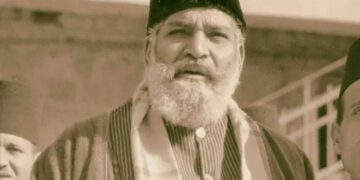
Beyond this narrow perspective, we also witness definitional efforts that carry the concept of ‘Malay’ to a universal dimension. Sinar is a figure whose views merit attention, both as a member of the traditional Malay monarchy and on account of his academic interest and scholarly work. While he brings forward the standard definition of the Malay as one who is Muslim, speaks the Malay language, and adheres to Malay tradition, he does not fall into the confines of the nation-state as in the definition presented above; rather, he lends the concept of ‘Malay’ a highly significant inclusiveness (Sinar, 1996: 1). Just as Sinar concurs with this basic definition, through the view he came to articulate over time he also carries the Malay perspective, or worldview, to geographies beyond the borders of North Sumatra, thereby advancing a claim to universality for the Malay language and culture (Umry, 2011: 2).
The Malay societies that continue to exist in the Southeast Asian geography today deserve to be addressed not through their fragmentation into individual nation-states, but rather in a far more comprehensive and universal character that lies beyond this fragmentation. This is the result of historical processes in which the language inherent to the concept of ‘Malay,’ expanding over time through the Islamization of the region’s societies and its articulation onto the existing cultural structure, came into being and developed. Ultimately, when addressed through its historical, traditional, and religious continuities, the concept of ‘Malay’ is seen to acquire functionality as a highly encompassing concept.
References
‘Bahasa Indonesia’ (1950). Madjallah Rakyat ‘Bahasa Indonesia’, No. 1, Djawatan Pendidikan Masjarakat.
Din, A. (2016). “Asas Kebudayaan Melayu”. Asas Kebudayaan dan Kesenian Melayu, Bangi: Penerbit Universiti Kebangsaan Malaysia. 19-28.
Jones, Russell. (2013). “Introduction”, The Pasai Chronicle, Kuala Lumpur: Institute Terjemahan & Buku Malaysia-ITBM. (xii-xxxii).
Sinar, Tengku Luckman. (1996). “Adat dan Budaya Melayu di Pesisir Timur Sumatera”. Seminar Adat Melayu Serantau, 9-12 September 1996, Kerajaan Negeri Melaka, in cooperation with: Perbadanan Muzium Melaka; Institut Kajian Patriotisme Malaysia, Lembaga Bahasa Melayu, Akademi Seni Melaka, 1-11.
Umry, Shafwan Hadi. (2011). “Tengku Luckman, Tuan Sri Lanang Dari Serdang”. Media Forkala: Media Informasi, Komunikasi Adat dan Budaya Daerah, Edisi I. 2-5.
*Opinions expressed in this article are the author’s own and do not necessarily reflect Platform: Current Muslim Affairs’ editorial policy.